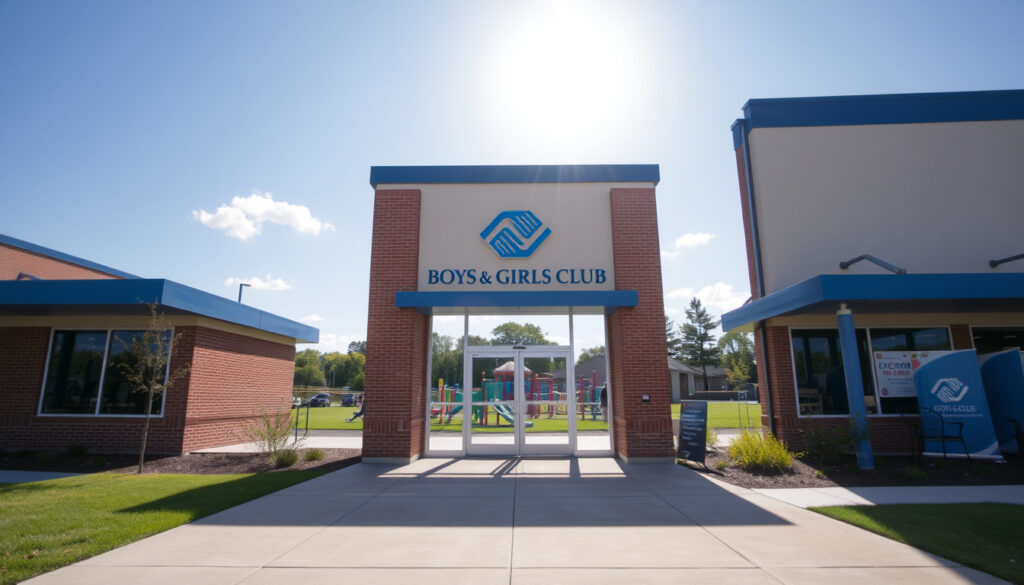
Boys & Girls Club: Cost, Age Limit, Benefits & More
If you’re a parent scanning after-school options, you’ve probably seen the name Boys & Girls Club pop up more than once — with over 4,600 locations across the United States, it’s one of the largest youth development networks in the country, but the details about cost, age limits, and what actually happens inside can feel surprisingly fuzzy. This guide pulls together the most concrete, locally sourced facts about membership, programs, and policies so you can decide if it’s the right fit for your child.
Founded: 1906 (national organization) · Ages Served: 6 to 18 · Number of Clubs: Over 4,600 in the United States · Annual Reach: Nearly 4.5 million youth
Quick snapshot
- National nonprofit providing after-school and summer programs for youth ages 6–18 (Boys & Girls Clubs of America, national organization).
- Membership fees vary by club; some charge as little as $5/year (Boys & Girls Club of the Twin Cities, local chapter).
- Programs include tutoring, STEM labs, sports, and college prep (Boys & Girls Clubs of America, membership page).
- Exact membership fees are not centrally published; each club sets its own rate (BGCA find-a-club page notes local variability).
- Employee salary ranges beyond the standard Youth Development Professional hourly rate are not publicly aggregated (per national organization, compensation details are not centrally released). (BGCA find-a-club page notes local variability)
- Specific LGBTQ+ inclusivity policies differ by individual club (national policy is inclusive but implementation varies). (BGCA find-a-club page notes local variability)
- First Boys Club founded in Hartford, CT (1860).
- Federation of Boys Clubs formed (1906).
- Clubs integrate and begin serving girls; name changes to Boys & Girls Clubs of America (1960s).
- Use the club finder on bgca.org to locate your nearest club.
- Contact the local club directly to confirm fees, age eligibility, and program availability.
- Apply for financial assistance if cost is a concern — many clubs offer sliding-scale fees.
Here’s a quick-reference overview of the national organization’s core details — most pulled directly from the official BGCA site and local chapters.
| Attribute | Value |
|---|---|
| Full Name | Boys & Girls Clubs of America |
| Headquarters | Atlanta, Georgia |
| Founded | 1906 (national); first club in 1860 |
| Mission | To enable all young people, especially those who need us most, to reach their full potential. |
| Ages Served | 6–18 (varies by club) |
| Number of Clubs | 4,600+ nationwide |
| Annual Reach | Nearly 4.5 million youth |
What is the point of the Boys and Girls Club?
Mission and vision
The organization’s stated mission, according to Boys & Girls Clubs of America (national youth development organization), is “to enable all young people, especially those who need us most, to reach their full potential.” That means providing a safe space, mentorship, and structured programs during the critical after-school and summer hours when many kids lack supervision.
The underlying philosophy: youth development isn’t just about keeping kids busy — it’s about building skills, confidence, and a sense of belonging. Clubs operate on evidence-based practices, not just recreational babysitting.
Core programs
Across the network, clubs run programs in five core areas: academic success, character and leadership, healthy lifestyles, the arts, and sports/fitness. A typical week might include homework help, a STEM lab project, a basketball league, and a club-wide community service activity. The national organization provides the curriculum framework, but each local club has flexibility in how it implements the programs.
The pattern: the “point” is to bridge the gap between school dismissal and parental pickup with intentional, skill-building activities rather than unstructured free time.
What is the oldest age for Boys and Girls Club?
Age requirements by club
Most clubs serve youth ages 6 through 18, but the exact range depends on the local chapter. Boys & Girls Club of the Twin Cities (local chapter) states it serves ages 6–18. Boys & Girls Clubs of Central Arkansas (local chapter) also lists ages 6–18 during the school year and summer. Boys & Girls Clubs of Snohomish County (local chapter) serves ages 5–18, while Boys & Girls Clubs of Bloomington (local chapter) starts at age 5 with conditions. The age ceiling is almost always 18, but some clubs allow youth enrolled in high school to stay until graduation even if they turn 19 during the school year.
Exceptions for young adults
A few clubs run programs for young adults up to age 21 or 24, typically focused on career readiness or college transition support. These are not standard; you’d need to check with your local club directly. If you’re a parent of a 17-year-old wondering how long they can attend, the safe answer is through the end of high school.
While the national standard is 6–18, local clubs may extend to age 5 or allow older teens to stay through high school. The only way to know your club’s exact cutoff is to call or check their FAQ page.
The implication: age policies are flexible but require direct inquiry with your local chapter.
Is the Boys and Girls Club good for kids?
Research on academic outcomes
Multiple studies link regular attendance to better school performance. BGCA’s research and impact page (national nonprofit research arm) reports that teens who attend at least one day per week are more likely to expect to graduate from college. A longitudinal study by the organization found that 97% of club members expected to graduate high school, and 74% planned to complete a post-secondary degree. While the research is self-commissioned, it aligns with independent evaluations showing that structured after-school programs improve grades and reduce dropout rates.
Social and emotional development
Clubs emphasize character development through programs like Smart Moves (substance abuse prevention) and Keystone Club (leadership and service). The social environment — mixed-age groups overseen by trained adult mentors — helps kids practice conflict resolution, teamwork, and communication.
Parent testimonials
Parent feedback collected by local clubs frequently highlights improvements in their child’s confidence and willingness to try new things. Boys & Girls Clubs of Snohomish County (local chapter) shares video testimonials from parents who credit the club with helping their shy child become more outgoing. While testimonials are anecdotal, the consistency across many club websites suggests a real pattern.
The catch: the quality of the club experience depends heavily on the local staff and facility. A well-funded club with experienced mentors will look very different from an under-resourced one. Location matters.
Is Boys and Girls Club free?
Membership fees
No — membership is not universally free. Fees vary dramatically by location. Boys & Girls Club of the Twin Cities (local chapter) charges $5 per academic year. Boys & Girls Clubs of the Valley in Arizona (local chapter) charges a $30 annual membership fee plus program fees for members under 13. Boys & Girls Clubs of Southern Nevada (local chapter) charges $40 per year. Boys & Girls Clubs of Central Arkansas (local chapter) lists school-year membership at $150 and summer at $250 — a stark contrast to the $5 fee in Minnesota.
Financial assistance and scholarships
Nearly all clubs offer some form of financial aid. Boys & Girls Clubs of Southern Nevada (local chapter) states that financial assistance is available for qualifying households and may allow one or more children to attend at little or no cost. Boys & Girls Clubs of Central Arkansas (local chapter) notes that membership fees make up less than 10% of the actual cost of running the club, implying the rest is covered by grants and donations — which is why fee waivers are possible. If cost is a barrier, ask about sliding-scale fees or scholarship programs when you visit the club.
What this means: financial aid is widely available, but you must ask — clubs rarely advertise sliding scales prominently.
Is the Boys and Girls Club LGBT friendly?
Inclusive policies
Boys & Girls Clubs of America has publicly stated its support for LGBTQ+ youth. The national organization has celebrated Pride Month on its social media channels and website, and many local clubs have gender-inclusive restrooms and staff training on LGBTQ+ issues. BGCA’s official website (national organization) includes a diversity statement affirming that all youth are welcome regardless of sexual orientation or gender identity.
Pride initiatives and events
Some clubs hold Pride-related programming, such as rainbow flag displays and LGBTQ+ discussion groups. However, the extent of these initiatives varies widely by region. A club in a conservative area may not have visible Pride events, while clubs in more progressive cities often have active LGBTQ+ youth groups. The national policy is inclusive, but local implementation is uneven.
The trade-off: if an inclusive environment is a priority for your family, ask the club directly about their LGBTQ+ policies and programming before enrolling.
What are the benefits of joining the Boys and Girls Club?
Academic support and tutoring
Every club offers homework help during after-school hours. Some run after-school tutoring programs staffed by teachers or college volunteers. The national organization’s membership benefits page (BGCA) lists “homework help, tutoring, educational enrichment, and college preparation” as core membership advantages. Many clubs also have dedicated computer labs or STEM spaces where kids can work on projects beyond school assignments.
Character and leadership development
Keystone Club, Torch Club, and Youth of the Year are leadership programs that build public speaking, community service, and team management skills. These programs are often cited by alumni as the most transformative part of their club experience.
Health and wellness programs
Sports leagues, nutrition education, and physical activity are built into daily schedules. Clubs often partner with local health organizations to offer free health screenings and dental care events.
Career readiness
Teens can access job skills training, resume workshops, and internship placements through programs like CareerLaunch. The goal is to make the transition from school to work smoother for young people who may not have family networks to rely on.
The pattern: the benefits are stacked — academic, social, and practical — and they compound with regular attendance. A kid who shows up three days a week for two years is likely to build skills that last well beyond childhood.
How to join a Boys & Girls Club: a step-by-step guide
Joining is straightforward once you know your local club’s requirements. These steps apply across most locations.
- Use the club finder. Go to BGCA’s Find a Club tool (national directory) and enter your zip code to see nearby locations.
- Check age eligibility. Confirm the club serves your child’s age. Most accept ages 6–18, but some start at 5 or have special programs for younger children.
- Review fees and financial aid. Look for the membership page on the local club’s website or call them. Ask about sliding-scale fees, scholarships, and any additional program fees.
- Complete registration. This typically requires a parent or guardian to fill out a form with emergency contact, health information, and a permission waiver. Some clubs allow online registration; others require in-person drop-off.
- Attend an orientation. Many clubs host a welcome event or tour where kids can meet staff and see the facilities before their first official day.
Some clubs charge annual membership fees and weekly program fees separately. Ask upfront about all costs to avoid surprises — especially for summer programs, which may be priced differently than the school year.
The pattern: preparation prevents hidden charges — always verify total costs before enrolling.
Upsides
- Access to tutoring, STEM labs, and college prep at low cost
- Safe, supervised environment during after-school hours
- Leadership and character-building programs
- LGBTQ+ inclusive at the national policy level
- Financial assistance available at most clubs
Downsides
- Fees vary widely and are not centrally published
- Age limit usually capped at 18, with few exceptions
- Program quality depends heavily on local chapter resources
- Not all clubs have visible LGBTQ+ programming
- Registration may require in-person visit during business hours
Timeline: how the Boys & Girls Club evolved
Understanding the history helps explain why the organization operates the way it does today.
- 1860 — The first Boys Club is founded in Hartford, Connecticut.
- 1906 — The Federation of Boys Clubs (now BGCA) is formed to coordinate efforts nationwide. (BGCA history page, national organization)
- 1960s — Clubs integrate racially and begin admitting girls; the name changes to Boys & Girls Clubs of America.
- 1990s — The organization expands evidence-based youth development programs and forms national partnerships with sports leagues and corporations.
- 2000s–present — Focus shifts to measuring outcomes, expanding STEM, and preparing youth for college and careers.
The takeaway: what started as a simple safe space in Hartford has grown into a massive network with a mission to close opportunity gaps through structured, research-backed programming.
What we know for sure — and what’s still unclear
Confirmed facts
- Boys & Girls Clubs serve youth ages 6–18 (most clubs).
- The organization is a 501(c)(3) nonprofit.
- Clubs provide after-school and summer programs.
- LGBTQ+ events have been publicly celebrated (e.g., Pride Month) at the national level.
- Financial assistance is available at nearly every club.
What remains unclear
- Exact membership fees vary widely and are not centrally published or standardized.
- Employee salary ranges beyond the single Youth Development Professional hourly rate are not provided by the national office.
- Specific inclusivity policies and programming differ by individual club — there’s no national mandate on exactly how clubs implement LGBTQ+ support.
- The quality of the club experience depends heavily on local staff and facility resources.
- Exact membership fees for each club are not centrally published.
What this means: while the national brand provides a baseline, the real picture emerges only from local inquiry.
Voices from the field
“The Boys & Girls Club provides a safe and positive place for young people ages 5-18.”
“Membership fees make up less than 10% of the actual cost of running the Club. The remainder is funded by generous supporters.”
— Boys & Girls Clubs of Central Arkansas, local chapter
“Teens who attend at least one day per week are more likely to expect to graduate from college.”
— Boys & Girls Clubs of America, research and impact page
The shared thread across all three: clubs position themselves as partners in a child’s development, not just after-school babysitters. The data suggests that regular attendance translates into measurable academic and social gains.
What this means for parents and families
If you’re considering a Boys & Girls Club for your child, the biggest takeaway is that the experience is highly localized. The national brand guarantees a baseline of safety, structure, and youth development programming, but the specific cost, age range, and inclusivity practices are determined at the club level. For parents searching for an affordable, evidence-based after-school option, the smart move is to visit your nearest club, ask about fees and financial aid, and observe the atmosphere for yourself. The alternative — skipping the research and assuming all clubs are the same — risks disappointment or missing out on a program that could genuinely benefit your kid.
Frequently asked questions
How do I find a Boys and Girls Club near me?
Use the official club finder at bgca.org or search “boys and girls club near me” on Google. Most local chapters maintain their own website with location details.
What is the Boys and Girls Club Parent Portal?
Many local clubs operate a parent portal for registration, payments, and updates. The URL varies by club — ask your local chapter directly for the login link. There is no single national portal.
How do I volunteer at a Boys and Girls Club?
Volunteer opportunities vary by club. Common roles include tutoring, coaching sports, mentoring, and assisting with special events. Check the “Volunteer” page on your local club’s website or call them directly.
What programs does the Boys and Girls Club offer?
Core program areas include academic success (tutoring, homework help), character and leadership (Keystone Club, Youth of the Year), healthy lifestyles (sports, nutrition), the arts, and STEM. Specific offerings depend on the club.
Is there a dress code for members?
Some local clubs enforce a dress code (often requiring closed-toe shoes and no gang-affiliated clothing). Policies differ, so check with your club. Most do not have a strict uniform.
How can I donate to the Boys and Girls Club?
You can donate to the national organization at bgca.org or directly to a local club. Many clubs accept online donations, recurring monthly gifts, and in-kind contributions like sports equipment or school supplies.
What is the history of the Boys and Girls Club of America?
The first Boys Club opened in Hartford, Connecticut in 1860. The national federation was formed in 1906, and clubs began admitting girls in the 1960s, leading to the name change. Today BGCA serves nearly 4.5 million youth across 4,600+ clubs.
More related posts
 Cast of Leave the World Behind: Full List of Actors
 Corning Museum of Glass: Hours, Tickets, and Visitor Guide
 AT&T Customer Service Number: Official Support Phone Numbers
 Dawn of the Black Hearts: Mayhem’s Most Controversial Bootleg
 2017 Jeep Grand Cherokee: Worth Buying? Problems & Reliability
 Interview with the Vampire: Movie, Serie , Controver y & Sea on 3
 Wordle Unlimited New York Times – Official Status and Alternatives
 Guardian of the Galaxy Ca t Guide: Full Li t of Actor
