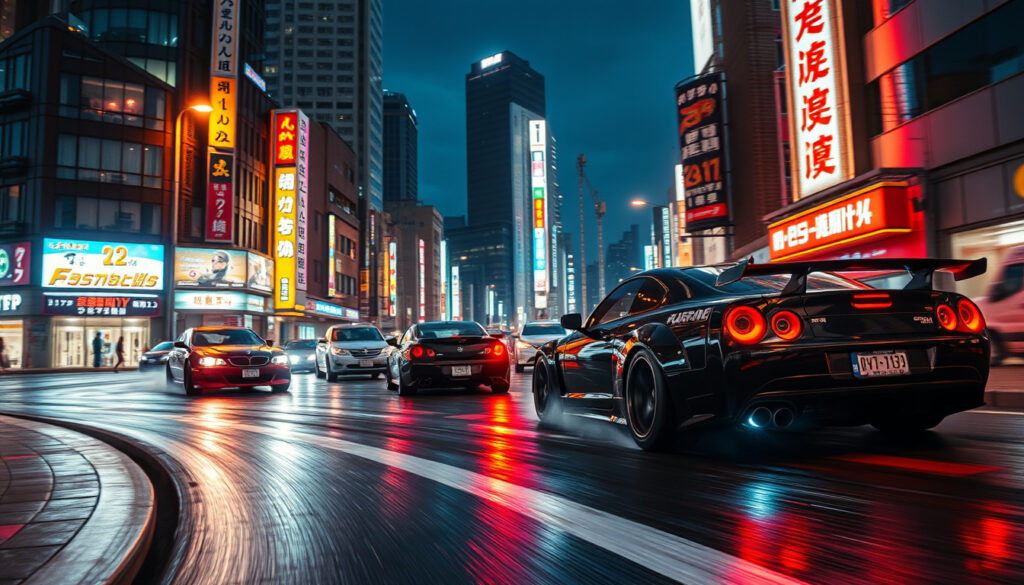
Fast and Furious 3 Cast: Tokyo Drift Stars & Roles
Universal Pictures released The Fast and the Furious: Tokyo Drift in 2006 without its original stars, betting on a newcomer and a completely new direction. That gamble—forced by circumstances beyond the studio’s control—transformed a potential franchise misstep into the origin story for one of the series’ most beloved characters.
Director: Justin Lin · Lead Actor: Lucas Black as Sean Boswell · Key Supporting Role: Sung Kang as Han · Release Year: 2006 · Notable Cameo: Vin Diesel
Quick snapshot
- Lucas Black leads as Sean Boswell (Wikipedia)
- Sung Kang plays Han, who befriends and trains Sean (Wikipedia)
- Vin Diesel’s uncredited cameo bridges the franchise (Screen Rant)
- The exact timeline of when casting decisions locked in
- Which actors were considered for Sean Boswell before Lucas Black
- Han dies in Tokyo Drift but returns in Fast 6 via prequel structure (Screen Rant)
- Tokyo Drift is set chronologically between Fast 4 and Fast 5 (Screen Rant)
- Lucas Black, Bow Wow, and Jason Tobin reprise their roles in later films (Screen Rant)
- Han becomes a central franchise character after Tokyo Drift (Screen Rant)
Five key cast members define Tokyo Drift’s identity: one franchise legend returning for a favor, one character who would reshape the entire series, and three fresh faces carrying a standalone story.
| Role | Actor | Character |
|---|---|---|
| Lead | Lucas Black | Sean Boswell |
| Key Supporting | Sung Kang | Han Lue |
| Love Interest | Nathalie Kelley | Neela |
| Antagonist | Brian Tee | Takashi “D.K.” |
| Comic Relief | Bow Wow | Twinkie |
Why did Paul Walker not do Tokyo Drift?
Paul Walker starred in the first two Fast and Furious films and was contracted for a third. By 2005, however, he had stepped away from the franchise. When asked by the LA Times about his absence, Walker cited “politics, studio stuff and regime decision” (Wikipedia)—a vague explanation that pointed to disagreements over creative direction rather than personal disinterest.
Contractual reasons
Walker’s departure was not entirely voluntary. He had returned for 2 Fast 2 Furious (2003) while Vin Diesel skipped that installment to focus on other franchises. When Universal wanted to continue the series, negotiations with Walker over terms and story direction reportedly broke down. He was later invited back for the fourth Fast and Furious movie, confirming the door had never fully closed.
Franchise direction shift
Without Walker committed, Universal ordered Tokyo Drift as a new stand-alone reboot (Wikipedia). The studio pivoted from continuing Brian O’Conner’s story to launching an entirely fresh protagonist in Sean Boswell, a teenage street racer exiled to Tokyo after a legal incident.
What this means: Without Walker’s departure, Lucas Black never gets his chance to lead a Fast and Furious film, and Sung Kang’s Han likely remains a minor supporting character rather than becoming the emotional anchor of the entire franchise.
Why was Vin Diesel in Fast 3?
Vin Diesel skipped 2 Fast 2 Furious entirely, busy with the xXx franchise and The Chronicles of Riddick. Yet he showed up uncredited at the end of Tokyo Drift as Dominic Toretto (Screen Rant), a cameo that raised immediate questions about his motivation.
Cameo role
Diesel’s appearance occurs only in the film’s final scene, where he meets Han in a Tokyo parking garage. The brief encounter establishes a friendship between the two characters that would become central to the franchise’s later installments. His uncredited status meant audiences weren’t told beforehand—this was a reward for attentive fans.
Fan service connection
The cameo served multiple purposes. Writer Chris Morgan had originally pitched Tokyo Drift starring Vin Diesel as Dom, but the story involved a detective narrative with Dom solving a murder after a family friend is killed (Screen Rant). Universal rejected that direction, but Diesel’s brief appearance kept the door open for future continuity.
What this means: Diesel’s cameo wasn’t just fan service—it was a business deal. He negotiated theatrical rights to the Riddick character in exchange for his appearance, giving his production company One Race valuable IP control.
Why is Tokyo Drift out of order?
Tokyo Drift holds an unusual position in the Fast and Furious timeline. Released as the third film in the series, it is actually set chronologically after Fast & Furious (4) and Fast Five (5)—making it the fourth chapter in the franchise’s ongoing story.
Timeline placement
The film’s events occur after Dominic Toretto’s crew has already operated in multiple international locations. Sean Boswell’s introduction to the Tokyo racing scene happens years after the original Los Angeles events, and Han’s relationship with Dom precedes the dramatic outcomes of Tokyo Drift itself.
Production decisions
Universal switched Tokyo Drift’s focus from a detective story to a high school setting (Screen Rant) after 2 Fast 2 Furious had disappointing box office performance. The studio wanted a younger protagonist and more accessible themes, which pushed the timeline placement into a future that made narrative sense for a fresh start.
What this means: The studio’s pivot to a younger audience and standalone story accidentally created the perfect bridge between the street-racing origins and the global heist films that followed—Tokyo Drift became the connective tissue of the entire franchise.
Why is Han still alive after Tokyo Drift?
Han Lue dies in Tokyo Drift, killed in a street racing accident orchestrated by antagonist Takashi. Yet Sung Kang’s character appears alive and well in Fast 6 (2013), and his backstory is explored across multiple subsequent films—a resurrection that required deliberate franchise-level planning.
Franchise retcon
The fourth, fifth, and sixth Fast and Furious films were produced as prequels to bring back Han after his Tokyo Drift death (Screen Rant). Rather than abandon a popular character, Universal chose to use the prequel structure to recontextualize events and give Han a longer, more complex arc across the franchise.
Later film explanations
Fast 6 reveals that Han survived the crash and went into hiding, with his death in Tokyo Drift revealed as an intentional fake-out. The film also shows the aftermath of Dom’s meeting with Sean Boswell, tying Furious 7 directly back to Tokyo Drift’s events (Screen Rant).
What this means: Sung Kang’s Han became so popular that Universal rebuilt three films around him, proving that a supporting character from a “throwaway” installment could become the emotional core of a multi-billion-dollar franchise.
Fast and Furious 3 Cast
The Fast and the Furious: Tokyo Drift features a distinct cast that prioritized fresh faces over franchise continuity. Justin Lin directed, choosing actors who could carry a standalone story without relying on established character recognition.
Lead actors
Lucas Black plays Sean Boswell, the protagonist whose illegal street racing lands him in Tokyo and under the tutelage of Han. Black was cast as a relative unknown, bringing an everyman quality to the role of a teenager forced to reinvent himself in an unfamiliar culture. He would later be one of the few Tokyo Drift cast members to reprise his role in the broader franchise.
Universal’s decision to cast an unknown as lead proved the franchise could survive and thrive without its original stars—a calculation that gave the studio confidence to expand the universe across subsequent films.
Supporting cast
Sung Kang’s Han Lue started as a supporting character, but his calm demeanor and mentorship dynamic with Sean made him memorable. Brian Tee plays Takashi, the “Drift King” antagonist whose yakuza connections add high stakes to the underground racing world. Nathalie Kelley portrays Neela, Takashi’s girlfriend whose attraction to Sean drives a wedge in the antagonist’s world. Sonny Chiba appears as Kamata, Takashi’s uncle who heads the yakuza organization backing the local racing scene.
Cameos
Vin Diesel’s uncredited appearance as Dominic Toretto occurs only in the film’s final moments, establishing the Dom-Han friendship that would define later films. Bow Wow (Shad Moss) plays Twinkie, Sean’s first friend in Tokyo who provides comic relief and cultural translation for audiences unfamiliar with Japanese racing culture.
Tokyo Drift was positioned as a throwaway reboot, yet it introduced the character who would become the emotional core of the entire franchise—Han, whose death in this “forgettable” installment still resonates in Furious 7’s tribute sequence.
Writer Chris Morgan originally pitched Tokyo Drift with Vin Diesel as Dom solving a murder—a concept Universal rejected in favor of a high school setting that nobody anticipated would become franchise-defining.
Paul Walker explained his absence to the LA Times as resulting from “politics, studio stuff and regime decision”—a description that masked deeper creative disagreements with Universal’s direction for the franchise.
The Tokyo Drift cast reflects a transitional moment in franchise history. Universal needed to rebuild after 2 Fast 2 Furious underperformed, and they took a chance on a new director, new leads, and a standalone story. That gamble paid off in ways nobody expected: Sung Kang’s Han became essential to the series’ emotional weight, Lucas Black carried a story that worked despite missing the original stars, and Vin Diesel’s brief cameo ultimately connected to billions in franchise revenue.
For fans of the franchise today, Tokyo Drift reads differently than it did in 2006. It is no longer the odd third installment—it is the origin story for one of the series’ most beloved characters and the bridge between the street racing films of the early 2000s and the global heist epics that followed. The cast choices that seemed like compromises are now understood as foundations.
Related reading: All Her Fault cast · Spellbound cast
fastandfurious.fandom.com, screenrant.com, rottentomatoes.com, youtube.com, fandango.com, actoragecheck.com
The standout performances in Fast & Furious 3, from Lucas Black’s Sean Boswell to Sung Kang’s Han, find deeper context in this Tokyo Drift cast breakdown exploring the full ensemble.
Frequently asked questions
What year was Fast and Furious 3 released?
The Fast and the Furious: Tokyo Drift was released on June 4, 2006.
Who directed Tokyo Drift?
Justin Lin directed Tokyo Drift. He later returned to direct Fast & Furious (4), Fast Five (5), and Fast & Furious 6 (6).
Who plays Twinkie in Fast and Furious 3?
Bow Wow (Shad Moss) plays Twinkie, Sean’s first friend in Tokyo who introduces him to the local racing scene.
What is the plot of Tokyo Drift?
Sean Boswell, a teenage street racer, is sent to Tokyo after a racing incident. There he learns drift racing, befriends Han, and challenges the local Drift King Takashi.
Who is Clay in Fast and Furious 3 cast?
Jason Tobin plays Clay, a friend of Twinkie’s who initially mocks Sean’s American racing style before supporting him in key moments.
Did Bow Wow star in Tokyo Drift?
Yes, Bow Wow (rapper Shad Moss in his acting debut) plays Twinkie, providing comic relief and serving as Sean’s cultural guide to Tokyo.
What role does Zachery Ty Bryan play?
Zachery Ty Bryan plays Jimmy, a supporting character in the Tokyo racing scene whose role is secondary to the main cast’s arcs.
More related posts
 Boys & Girls Club: Cost, Age Limit, Benefits & More
 What Is a Speakeasy? History, Code, Modern Bars
 S Line Kdrama Where to Watch: Prime Video, Not Netflix
 Can Dogs Have Potatoes? Safe Preparation, Risks & Feeding Tips
 Charlie Kirk Wife and Kids – Erika Frantzve and Family Details
 Equipment Rental Near Me: Find Tool Hire in Dublin & Ireland
 Alison Oliver Movies and TV Shows: Complete Filmography
 What Does Cottage Cheese Taste Like? Flavor, Texture & How to Enjoy It
