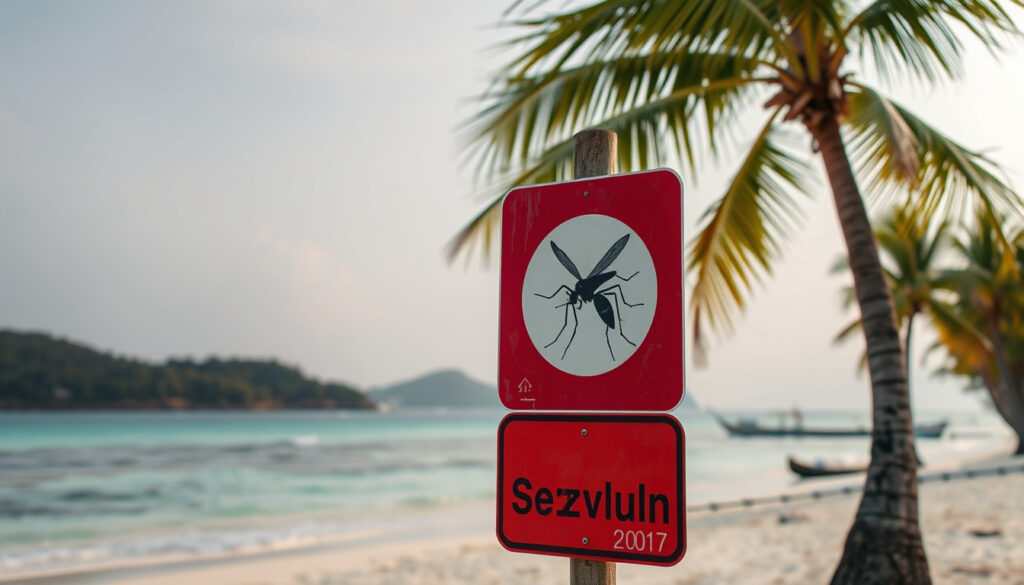
Seychelles Chikungunya Outbreak: Travelers Face High Risk
There’s nothing quite like the sinking feeling of planning a dream trip and then hearing a travel warning has been issued. That’s exactly what’s happening right now for anyone eyeing the beautiful beaches of Seychelles, where a chikungunya outbreak that began in November 2025 has triggered a Level 2 travel notice from the U.S. CDC.
Travel-related cases reported in Europe since November 2025: Over 70 ·
European countries reporting imported cases: 10 ·
CDC travel notice level: Level 2 (Practice Enhanced Precautions) ·
Outbreak onset: November 2025 ·
Death risk: Rare
Quick snapshot
- Outbreak ongoing in Seychelles since November 2025 (World Health Organization)
- 70+ imported cases in 10 European countries (World Health Organization)
- CDC Level 2 travel notice in effect (U.S. Embassy Victoria, Seychelles)
- Exact number of local cases in Seychelles (World Health Organization)
- Duration of the outbreak (Ministry of Foreign Affairs and the Diaspora, Seychelles)
- Effectiveness of current vaccines (none widely available) (European Centre for Disease Prevention and Control)
- Cases increased sharply from mid-December 2025 and peaked in early 2026 (World Health Organization)
- Peak travel period to Seychelles: February–April (European Centre for Disease Prevention and Control)
- ECDC says vaccination of travelers may be considered (European Centre for Disease Prevention and Control)
- Onward transmission risk in Europe currently low due to weather (European Centre for Disease Prevention and Control)
Seven key facts about the outbreak are laid out in the table below.
| Label | Value |
|---|---|
| Outbreak location | Seychelles (Indian Ocean) (World Health Organization) |
| Start date | November 2025 (World Health Organization) |
| Imported cases to Europe (as of Feb 2026) | Over 70 (World Health Organization) |
| Reporting countries | 10 European countries (European Centre for Disease Prevention and Control) |
| CDC notice level | Level 2: Practice Enhanced Precautions (U.S. Embassy Victoria, Seychelles) |
| Common symptoms | Fever, joint pain, rash (U.S. Embassy Victoria, Seychelles) |
| Mortality | Rare (U.S. Embassy Victoria, Seychelles) |
How serious is the chikungunya virus?
For most people, chikungunya is not life-threatening — but it can be deeply unpleasant. Death from chikungunya is rare, according to the U.S. Embassy Victoria, Seychelles. The real burden comes from the symptoms: fever and joint pain that can be severe enough to keep people bedridden for days or weeks.
Chikungunya won’t likely kill you, but it can wreck your travel plans for weeks. The European Centre for Disease Prevention and Control rates the infection risk for travelers to Seychelles as high — meaning if you go unprotected, you have a real chance of coming home sick.
Mortality rate and complications
- Death from chikungunya is rare (U.S. Embassy Victoria, Seychelles).
- Complications are more common in older adults or those with underlying conditions (World Health Organization).
- Most common symptoms are fever and joint pain (U.S. Embassy Victoria, Seychelles).
The implication: while the disease is rarely fatal, vulnerable populations face heightened risk from complications.
Long-term joint pain and recovery
- Joint pain can persist for weeks or months (World Health Organization).
- Most people recover fully within a week, but joint pain may last longer (European Centre for Disease Prevention and Control).
Does Seychelles have chikungunya?
Yes — and the numbers make it clear. The World Health Organization reports that laboratory-confirmed cases in Seychelles increased sharply from around mid-December 2025 and peaked in early 2026, with 53 confirmed cases recorded between January 1 and February 14, 2026 alone — compared to 37 cases in all of 2025.
There is an ongoing outbreak of chikungunya in Seychelles, as confirmed by the World Health Organization. The impact on travelers has been significant: more than 70 chikungunya cases were reported among travelers returning from Seychelles to 10 European countries since November 2025, according to the World Health Organization. The European Centre for Disease Prevention and Control put the figure even higher in a later report, noting more than 110 travel-related cases across 13 EU/EEA countries.
“Since November 2025, more than 70 travel-related cases among travellers returning from Seychelles have been reported by 10 European countries.”
— World Health Organization
Outbreak timeline in Seychelles
- December 2024: Cluster of imported chikungunya cases in Berlin travelers returning from Seychelles (World Health Organization).
- November 2025: Outbreak of chikungunya begins in Seychelles (World Health Organization).
- Mid-December 2025: Cases increase sharply (World Health Organization).
- January 2026: Two German travelers confirmed with chikungunya after separate trips to Seychelles (World Health Organization).
- February 5, 2026: CDC issues Level 2 travel notice (U.S. Embassy Victoria, Seychelles).
- February 27, 2026: ECDC reports over 70 travel-related cases in 10 European countries (European Centre for Disease Prevention and Control).
Current travel advisory details
- CDC issued a Level 2 travel notice on February 5, 2026 (U.S. Embassy Victoria, Seychelles).
- The Seychelles Ministry of Foreign Affairs acknowledged the CDC notice and noted that cases had declined since mid-January 2026 (Ministry of Foreign Affairs and the Diaspora, Seychelles).
- The European Centre for Disease Prevention and Control says the likelihood of chikungunya infection for travelers to Seychelles is high and recommends travelers consider vaccination according to national recommendations.
“There is an outbreak of chikungunya in Seychelles. The most common symptoms are fever and joint pain. Death from chikungunya is rare.”
— U.S. Embassy Victoria, Seychelles (quoting CDC travel notice)
If you’re a traveler planning a trip to Seychelles between February and April — the peak tourist season flagged by the European Centre for Disease Prevention and Control — your exposure risk peaks too, because that’s when both tourist arrivals and mosquito activity are highest.
What are the three symptoms of chikungunya?
The three classic symptoms form a recognizable pattern: fever, joint pain, and rash. According to the U.S. Embassy Victoria, Seychelles, these are the hallmark signs that health officials look for when diagnosing the disease.
Typical symptom triad
- The three classic symptoms are fever, joint pain, and rash (U.S. Embassy Victoria, Seychelles).
- Symptoms usually appear 2–7 days after a mosquito bite (World Health Organization).
- Rash may be maculopapular and appears on the trunk or limbs (European Centre for Disease Prevention and Control).
Additional symptoms in adults
- Other symptoms include headache, muscle pain, and joint swelling (World Health Organization).
- Joint pain is often severe and can affect hands, wrists, ankles, and feet (European Centre for Disease Prevention and Control).
The pattern: symptom onset is quick after exposure, and joint pain severity is the hallmark that separates chikungunya from other mosquito-borne illnesses.
Can chikungunya virus be cured?
The short answer is no — there is no specific antiviral treatment for chikungunya. The World Health Organization states clearly that treatment focuses on relieving symptoms rather than attacking the virus itself.
Current treatment approach
- There is no specific antiviral treatment for chikungunya (World Health Organization).
- Treatment focuses on relieving symptoms (rest, fluids, pain relievers) (European Centre for Disease Prevention and Control).
- Aspirin and NSAIDs should be avoided until dengue is ruled out (World Health Organization).
Recovery and supportive care
- Most people recover fully within a week, but joint pain may last longer (European Centre for Disease Prevention and Control).
- Joint pain can persist for weeks or months (World Health Organization).
You can’t cure chikungunya with medication, but you can manage symptoms — as long as you don’t take the wrong drugs. The World Health Organization warns against aspirin and NSAIDs until dengue is ruled out, because those drugs can trigger severe bleeding if you actually have dengue instead.
Which countries have the chikungunya virus?
Chikungunya has a global footprint that spans tropical and subtropical regions. The World Health Organization notes that the virus is present in Africa, Asia, the Indian subcontinent, and the Americas — and right now, Seychelles is the hot spot drawing international attention.
Countries with ongoing outbreaks
- Chikungunya is present in Africa, Asia, the Indian subcontinent, and the Americas (World Health Organization).
- Seychelles is currently experiencing an outbreak (World Health Organization).
- The three imported cases were recently confirmed in Latvia in people who traveled to Seychelles (World Health Organization).
Risk areas in Europe
- European cases are imported, but local transmission has been reported in parts of Europe (e.g., Italy, France) (European Centre for Disease Prevention and Control).
- Aedes albopictus mosquito has expanded transmission risk in Europe (European Centre for Disease Prevention and Control).
- The likelihood of onward transmission in mainland Europe after introduction by a viraemic traveler was low at this time because environmental conditions were not favorable for Aedes mosquito activity (European Centre for Disease Prevention and Control).
“Two German travelers developed laboratory-confirmed CHIKV infections after independent trips to Seychelles in January 2026.”
— World Health Organization
For travelers booking trips to Seychelles right now, the implication is clear: you face a high infection risk if you don’t use mosquito protection, and your trip coincides with the peak travel period of February through April, when both tourism and mosquito activity are at their highest. But if you’re in Europe, the immediate risk of local transmission remains low because the European Centre for Disease Prevention and Control reports that current environmental conditions don’t support Aedes mosquito activity. The catch: as summer approaches in southern Europe, that could change.
Related reading: Where is Bora Bora? Location, Country, and Travel Guide · American Airlines Carry-On Size: Full Guide & 2026 Rules
thetraveler.org, travelhealthpro.org.uk, dimsumdaily.hk, chikvisualatlas.com, who.int, finanznachrichten.de, healthytravel.ch, travelandtourworld.com, brusselstimes.com
Frequently asked questions
How is chikungunya transmitted?
Chikungunya is transmitted through the bite of an infected Aedes mosquito, primarily Aedes aegypti and Aedes albopictus. These mosquitoes bite during the day, with peak activity in the early morning and late afternoon (World Health Organization).
What is the incubation period for chikungunya?
Symptoms usually appear 2–7 days after a mosquito bite, though the range can extend to 12 days (World Health Organization).
Is there a vaccine for chikungunya?
A vaccine for chikungunya has been approved in the United States and may be available in some European countries. The European Centre for Disease Prevention and Control says vaccination of travelers to Seychelles may be considered according to national recommendations, but availability and coverage vary by country.
How long does chikungunya joint pain last?
Joint pain from chikungunya can persist for weeks or even months after the initial fever resolves. According to the World Health Organization, while most people recover fully within a week, some experience chronic joint pain that lasts for months.
Should I cancel my trip to Seychelles?
That depends on your personal health risk. The CDC recommends practicing enhanced precautions, not canceling travel entirely. However, the European Centre for Disease Prevention and Control rates the infection risk as high for unprotected travelers. If you’re pregnant, older, or have underlying health conditions, consult your doctor before traveling.
What mosquito repellent is effective against Aedes mosquitoes?
The European Centre for Disease Prevention and Control recommends repellents containing DEET, picaridin, or IR3535. Use them on exposed skin and reapply according to the product label. Wearing long sleeves and pants, using insecticide-treated bed nets, and staying in air-conditioned or screened accommodations also reduce risk.
Can chikungunya cause death?
Death from chikungunya is rare, according to the U.S. Embassy Victoria, Seychelles. However, complications can occur in older adults, infants, and people with underlying medical conditions such as heart disease, diabetes, or high blood pressure (World Health Organization).
How can I tell the difference between chikungunya and dengue?
Both diseases cause fever and muscle pain, but chikungunya typically features more severe and persistent joint pain, while dengue often causes severe headache, pain behind the eyes, and bleeding tendencies. The World Health Organization advises that laboratory testing is the only reliable way to distinguish them, which is why aspirin and NSAIDs should be avoided until dengue is ruled out.
The Seychelles outbreak shows exactly how fast a mosquito-borne virus can cross borders in the age of international travel. For travelers booking trips to the Indian Ocean paradise between now and April, the choice is clear: pack mosquito repellent, check with your doctor about the chikungunya vaccine, and monitor the European Centre for Disease Prevention and Control and U.S. Embassy Victoria, Seychelles advisories — or risk bringing home more than souvenirs.
More related posts
 K&N Air Filter: Performance, Downsides, and Longevity
 Delicious in Dungeon Season 2 Release Date: Confirmed News
 How Tall Is Patrick Mahomes? Height, Stats & Facts
 How to Connect AirPods to iPhone, Android & Windows
 Smoky Mountain National Park: Best Time, Location & Tips
 Houston Rockets vs Milwaukee Bucks Match Player Stats Apr 1, 2026
 Game of the Year: Winners, Nominees & Controversies 2026
 Gemini AI Photo Prompt: Complete Guide with Templates
