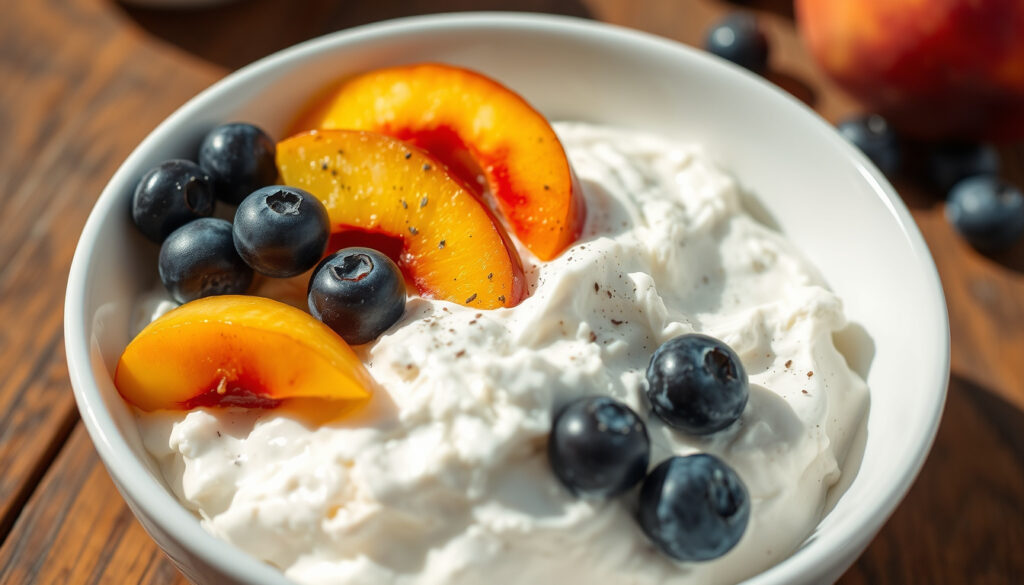
What Does Cottage Cheese Taste Like? Flavor, Texture & How to Enjoy It
If you’ve ever stared at a container of cottage cheese in the dairy aisle and wondered whether it’s worth the gamble, you’re not alone—with about 11 grams of protein per 100 grams, it’s a nutritional powerhouse hiding behind a texture that some find off-putting. This guide breaks down what it tastes like, how it compares, and practical ways to enjoy it.
Average protein per 100g: 11g ·
Calories per 100g (low-fat): 84 ·
Sodium per 100g: 321mg
Quick snapshot
- Mild, slightly tangy flavor with a creamy base (KnowTheCheese (cheese encyclopedia))
- Soft curds create a heterogeneous texture (Wikipedia (general reference))
- Exact date of first commercial production debated (Wikipedia)
- 11g protein per 100g (Penn State Extension (university research))
- 321mg sodium per 100g (UCLA Health (leading medical center))
- Learn how to eat it even if you hate it
- Compare cottage cheese vs. Greek yogurt for health
Six key specs that define the product:
| Attribute | Details |
|---|---|
| Origin | United States, early 20th century |
| Milk type | Cow’s milk (whole, low-fat, or nonfat) |
| Texture | Creamy with curds of varying size |
| Flavor | Mild, slightly tangy, salty |
| Common curd size | Small, medium, or large |
What does cottage cheese taste similar to?
Does it taste like cream cheese?
- Not exactly. Cream cheese is denser, richer, and spreadable without curds. Cottage cheese has a lighter, lumpier body and a milder tang (KnowTheCheese (cheese encyclopedia)).
Does it taste like feta?
- Feta is brinier, saltier, and crumbly. Cottage cheese shares a hint of tang but is far creamier and less sharp (Healthline (nutrition publisher)).
Cottage cheese vs Greek yogurt
- Both have a tangy note, but Greek yogurt is smooth and thick, while cottage cheese offers curds and a saltier finish. Yogurt also contains probiotics, which cottage cheese generally lacks (Health.com (wellness media)).
Taste when cooked
- Heating softens the curds and mellows the tang, making it blend into sauces, eggs, or baked dishes like a mild, creamy base (American Dairy Association (industry authority)).
Taste when spoiled
- Spoiled cottage cheese develops a sour, bitter, or ammonia-like odor and a slimy or discolored surface. If it smells off, discard it immediately (Healthline).
Because texture is the real barrier, haters who blend cottage cheese into smoothies or sauces can still get the protein without the mouthfeel—a small preparation shift that changes the whole experience.
The implication: If you’re shopping for a substitute, reach for fresh ricotta or soft mozzarella, not aged hard cheeses. The flavor family is “dairy-light,” not “sharp.”
Is cottage cheese an acquired taste?
Why some people dislike it
- The primary complaint is texture: the contrast between creamy liquid and soft, squeaky curds can feel jarring. The mild tang is rarely the issue (Academy of Nutrition and Dietetics (dietitian authority)).
- People who dislike yogurt or sour cream often find the tang unpleasant, though it’s far milder than either.
How to develop a taste for it
- Start with small-curd cottage cheese (smoother, less lumpy) and mix it with something sweet like honey or fruit. The sugar balances the salt and tang (Health.com).
- Try it blended into smoothies or egg scrambles where the texture disappears.
- Give it multiple tries—like coffee or dark chocolate, familiarity often breeds liking.
The people who never get past the texture are not wrong—it’s a legitimate sensory preference, not a lack of trying.
What this means: Acquired taste is mostly about texture tolerance. If you can handle the curds, the flavor is easy to like.
What is the tastiest way to eat cottage cheese?
Sweet toppings
- Fresh berries, sliced peaches, honey or maple syrup, granola, and a sprinkle of cinnamon are classic choices (Health.com).
Savory combinations
- Black pepper, chives, cherry tomatoes, avocado, or a drizzle of olive oil turn it into a quick lunch. Some eat it with potato chips or crackers (Academy of Nutrition and Dietetics).
Common pairings
- Fruit (pineapple, berries, peaches) is the most popular addition, followed by savory snacking with black pepper and salt. In the US, many eat it straight from the container.
The pattern: Sweet toppings mask any sour notes, while savory ones accentuate the creamy base. Choose based on whether you want the tang to hide or shine.
How to eat cottage cheese if I hate it?
- Mask the texture: Blend it until smooth and use as a dip for vegetables or spread on toast. The curds disappear, leaving only creamy tang (Health.com).
- Blend it into dishes: Add to smoothies (berry flavors overpower the taste), pancake batter, scrambled eggs, or mac and cheese for a protein boost with no curd presence (Health.com). For a protein boost in baked goods, see our guide on Substitute for Baking Powder: 10 Alternatives You Already Have.
- Start with small amounts: Mix a spoonful into yogurt or oatmeal. Over time, increase the proportion as your palate adjusts.
Haters who blend cottage cheese into smoothies still get 11g protein per 100g without the mouthfeel—a 30-second fix that turns a disliked food into a silent protein source.
Why this matters: For protein-focused eaters who hate the texture, blending is the difference between skipping the ingredient and incorporating it daily.
What’s better for you, yogurt or cottage cheese?
Four nutritional categories, one clear trade-off:
| Metric (per 100g low-fat) | Cottage cheese | Plain Greek yogurt |
|---|---|---|
| Protein | 11g (Penn State Extension (university research)) | ~9g (varies by brand) |
| Calories | 84 (UCLA Health (leading medical center)) | ~97 (plain nonfat) |
| Probiotics | Rarely contains live cultures | High in live cultures (Cleveland Clinic (hospital system)) |
| Sodium | 321mg (UCLA Health) | ~50mg |
Nutritional comparison
- Cottage cheese wins on protein per calorie; Greek yogurt wins on probiotics and lower sodium (Cleveland Clinic).
Probiotics
- Most cottage cheese is pasteurized after culturing, which kills live probiotics. Greek yogurt retains them unless heat-treated.
Protein content
- Cottage cheese consistently delivers more protein per 100g than any yogurt variety, making it ideal for muscle repair (Penn State Extension).
Downsides of eating cottage cheese
- High sodium: 321mg per 100g can add up quickly for those watching blood pressure (Healthline (nutrition publisher)).
- People with lactose intolerance may react because fresh cheeses retain more lactose than aged ones (Verywell Health (health information publisher)).
Upsides
- High protein, low fat for most varieties
- Rich in calcium, phosphorus, vitamin B12
- Versatile in sweet and savory dishes
Downsides
- High sodium in most brands (>300mg per 100g)
- Low in probiotics compared to yogurt
- Lactose content may trouble sensitive individuals
The trade-off: For pure protein density with minimal fat, cottage cheese is superior. For gut health and lower sodium, Greek yogurt wins. Neither is “better”—it depends on your goals. To see how cottage cheese stacks up against other low-calorie foods, read our guide on How Many Calories in Watermelon? Nutrition & Weight Loss.
Confirmed facts
- Cottage cheese is a fresh cheese made from curds.
- Contains about 11g protein per 100g (UCLA Health).
- Flavor is mild and slightly tangy (KnowTheCheese).
What’s unclear
- Exact date of first commercial production is debated.
- Whether texture or flavor is more polarizing varies by individual.
- Some sources debate whether the flavor is best described as mild or tangy.
Cottage cheese is a fresh, soft cheese made from cow’s milk with a mild flavor and a creamy, soft texture.
— KnowTheCheese (cheese encyclopedia)
The curds are then drained and mixed with cream and salt, giving cottage cheese its slightly tangy taste and creamy texture.
For the protein-focused eater watching sodium, the choice is clear: rinse the curds to reduce sodium, then blend into smoothies for a high-protein meal. For probiotic seekers, Greek yogurt is the better daily driver.
Frequently asked questions
Is cottage cheese gluten-free?
Yes, plain cottage cheese is gluten-free. However, flavored brands may contain thickeners or additives that include gluten—always check the label (Healthline).
Can cottage cheese be frozen?
Freezing changes the texture—curds become watery and grainy upon thawing. It’s safe to freeze but best used in cooked dishes afterward (Academy of Nutrition and Dietetics).
Does cottage cheese need to be refrigerated?
Yes, it’s a perishable fresh cheese. Keep it at or below 40°F and use within 1–2 weeks of opening (American Dairy Association (industry authority)).
What is the shelf life of cottage cheese?
Typically 7–14 days after the sell-by date if unopened, and about 5–7 days after opening. Discard if you see mold or smell off odors.
Is cottage cheese keto-friendly?
Yes, because it’s low in carbs (about 4–5g per 100g) and high in protein. Full-fat versions are even better for keto (Cleveland Clinic (hospital system)).
Can lactose intolerant people eat cottage cheese?
Some can, because the culturing process reduces lactose. But fresh cheeses contain more lactose than aged ones—start with a small amount to test tolerance (Verywell Health).
What is the difference between small curd and large curd cottage cheese?
Small curd is made with rennet and cut into smaller pieces, resulting in a smoother, less lumpy texture. Large curd is cut into bigger pieces and often has a creamier, more pronounced curd feel (Wikipedia).
For anyone weighing the cottage cheese vs. yogurt decision, the choice hinges on your primary goal: muscle protein (cottage cheese) or gut health (yogurt). The sodium content in cottage cheese is the catch—but rinsing or choosing low-sodium brands can cut it by nearly half. For the average home cook, keeping a tub of cottage cheese in the fridge pays off as a versatile, high-protein backup.
More related posts
 How to Speak to a Live Person at Amazon: Numbers & Tips
 HVAC Repair Near Me: Costs, Common Problems & DIY Tips
 How Many Epi ode of Stranger Thing Sea on 5?
 Motorcycle Dealers Near Me: Top Ireland Shops Dublin Cork
 How to Read Guitar Tabs: A Beginner’s Guide to Tablature
 Guardian of the Galaxy Ca t Guide: Full Li t of Actor
 Phoenix Suns vs Trail Blazers Match Player Stats: Apr 14
 How Tall Is Patrick Mahomes? Height, Stats & Facts
