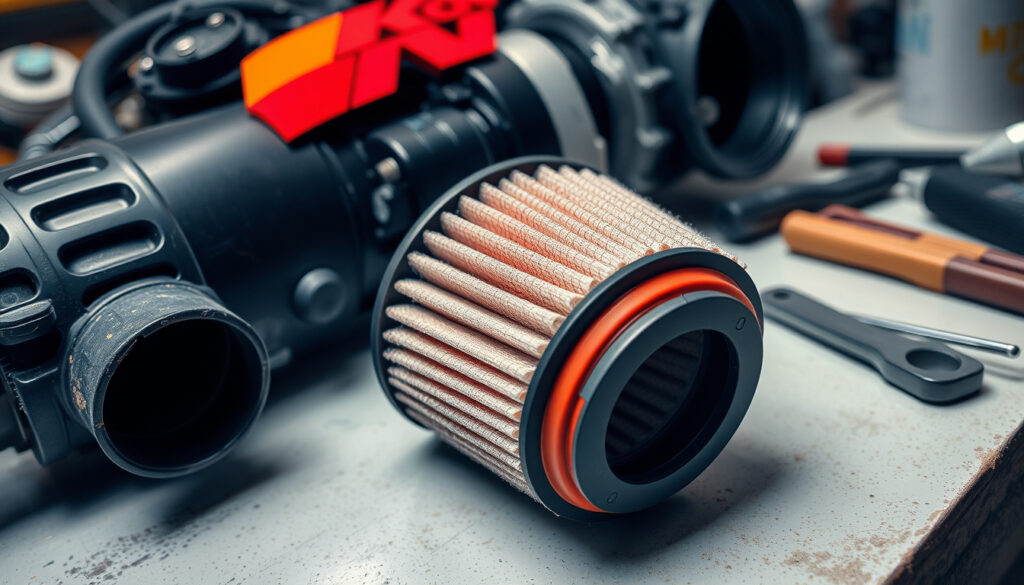
K&N Air Filter: Performance, Downsides, and Longevity
Ask ten car enthusiasts about K&N air filters and you’ll get ten different opinions. Some swear by the horsepower gains; others worry about engine protection. This guide cuts through the noise with facts, numbers, and real-world trade-offs so you can decide if a K&N filter is right for your car.
Products sold: Over 5,000 ·
Countries available: Over 30 ·
Filtration type: Washable cotton gauze
Quick snapshot
- K&N is a U.S. company based in Riverside, California (Wikipedia – company overview)
- Filters are washable and reusable (K&N blog – top 5 reasons)
- Million-mile warranty (K&N warranty page)
- Actual horsepower gains vary by vehicle and intake system (YouTube: K&N vs OEM motorcycle filter)
- Filtration efficiency compared to OEM paper filters remains debated (Nick’s Racing – K&N explainer)
- Cleaning recommended every 50,000 miles (normal driving) (K&N blog – maintenance schedule)
- Filters can last the life of the vehicle with proper maintenance (K&N blog – lifespan)
- K&N continues to expand product line to newer vehicles (K&N product page)
- Independent long-term filtration studies remain sparse (YouTube: K&N 101 pros/cons)
Six key facts at a glance, one pattern: K&N has built a global business on a single design philosophy — more airflow through reusable media — but the real-world trade-offs are what matter.
| Fact | Value |
|---|---|
| Founded | 1969 |
| Headquarters | Riverside, California, USA |
| Products | Over 5,000 |
| Countries | Over 30 |
| Filter type | Washable, reusable |
| Warranty | Million-mile warranty |
What country is K&N from?
K&N Engineering is an American company founded in 1969 and headquartered in Riverside, California (Wikipedia – company overview). The brand operates in more than 30 countries and sells over 5,000 products through distributors worldwide (K&N official site).
What does K&N stand for?
The company name comes from the founders’ initials: Ken and Norm. Ken Johnson and Norm McDonald started the business in Ken’s garage, originally making reusable oiled cotton air filters for off-road motorcycles (Wikipedia – history).
K&N is a family-founded American manufacturer that grew into a global brand — but its origin story matters because the original dirt-bike application shaped its filter design philosophy of high flow over absolute filtration.
Are K&N filters actually an upgrade?
K&N states that its filters flow about 50% more air than an equivalent paper filter on average (Nick’s Racing – K&N explainer page). The company says pleated cotton gauze material flows 6.03 cfm per square inch, compared with 4.95 cfm for the highest-flowing paper media (Nick’s Racing – K&N explainer page).
What advantages do K&N filters offer over stock?
- Increased airflow — K&N claims up to 50% more flow than stock paper filters (Nick’s Racing – K&N explainer)
- Washable and reusable — no replacement needed, just clean and re-oil (K&N blog – top 5 reasons)
- Long lifespan — can last the life of the vehicle if maintained (K&N blog – lifespan)
- Potential horsepower gains — K&N says up to 10 hp on some vehicles (K&N blog – performance claims)
- Higher cost than disposable filters — initial price is typically $40–$70 (MicksGarage – K&N pricing)
- Need oiling maintenance — over-oiling can damage MAF sensors (YouTube: K&N 101 pros/cons)
Two filter types, one pattern: the upgrade trade-off is airflow versus filtration efficiency.
| Aspect | K&N (cotton gauze) | Stock (paper) |
|---|---|---|
| Airflow | Up to 50% more cfm claimed | Baseline restriction |
| Filtration | Oil-coated cotton – may pass more particles | Paper – higher particle retention |
| Maintenance | Clean & re-oil every 50k miles | Replace every 15k–30k miles |
| Cost per mile | Lower if kept for life, but higher upfront | Lower upfront, higher long-term replacement cost |
| Warranty | Million-mile limited warranty | No warranty beyond product |
The implication: K&N filters deliver measurable airflow gains on paper, but whether that translates to a meaningful upgrade depends on your driving conditions and tolerance for maintenance.
Does a K&N air filter increase power?
K&N’s own blog states that its air filters are engineered to deliver more power while filtering contaminants (K&N blog – top 5 reasons). The company claims up to 10 horsepower gain on certain applications (K&N blog – performance claims).
How much horsepower does a K&N air filter add?
Gains depend heavily on the vehicle, intake system, and whether the stock filter is a restriction. Some dyno tests show modest increases of 2–5 hp at the wheels, while other vehicles see no measurable change (YouTube: K&N vs OEM motorcycle filter).
Does K&N really add horsepower?
In a critical review on YouTube, the reviewer argues that claims of higher horsepower gains from a K&N air filter are mostly not true (YouTube: K&N vs OEM – critical review). However, K&N’s flow-bench data suggests the filter removes less restriction than a clogging paper filter, which may help maintain power as the filter loads with dirt (Nick’s Racing – K&N explainer).
A K&N filter may help an engine breathe more freely at high RPM, but for daily street driving the butt-dyno gain is often imperceptible. The real benefit is sustained airflow over the filter’s life, not a spike in peak power.
What are the disadvantages of K&N filters?
- Over-oiling can damage the mass air flow (MAF) sensor – excess oil from the filter can coat the sensor wire and cause incorrect readings (YouTube: K&N 101 pros/cons – MAF warning)
- Some studies and owner tests show reduced filtration efficiency compared to high-quality paper filters – the open cotton mesh may allow more fine particles to pass (YouTube: K&N vs OEM motorcycle filter)
- Requires periodic cleaning and re-oiling – the drying time can be 24 hours, leaving the vehicle without a filter if no spare is available (YouTube: K&N 101 pros/cons – maintenance)
- Higher upfront cost – typically $40–$70 versus $10–$20 for a paper filter (MicksGarage – pricing)
Over-oiling can damage MAF sensors
If too much oil is applied after cleaning, the excess can be drawn into the intake and coat the hot-wire sensor, leading to a lean air-fuel mixture and possible check-engine light (YouTube: K&N 101 pros/cons – MAF warning). For more information on K&N filters, you can consult the Peak Performance Troja Herr Guide.
Less filtration efficiency compared to paper filters
The same open structure that gives higher airflow can also allow smaller particles through. Manufacturers of paper filters often point to ISO tests showing paper filters trap more particulates at the cost of airflow (Nick’s Racing – K&N explainer notes design trade-off).
Requires periodic cleaning and re-oiling
The cleaning process involves removing the filter, spraying cleaner, rinsing with low-pressure water, and letting it dry for hours before applying oil (YouTube: K&N 101 – maintenance steps).
Higher upfront cost
While the million-mile warranty suggests long-term savings, the initial investment plus the cost of a cleaning kit ($10–$15) means the break-even point comes only after several years of use (K&N washable filter range).
If you own a modern car with a sensitive MAF sensor and drive in dusty conditions, the filtration risk may outweigh the airflow benefit. For track-day or off-road vehicles, the trade-off often tilts toward K&N.
How long do K&N air filters last?
K&N claims its air filters can last the life of the vehicle and backs that with a million-mile warranty (K&N warranty page). Under normal highway driving, the filter can go up to 75,000 miles before cleaning is needed (K&N blog – maintenance interval). Oversized conical filters on intake systems can stretch to 100,000 miles (K&N blog – conical filter note).
How often should I clean a K&N air filter?
K&N recommends cleaning every 50,000 miles under normal driving conditions. In dusty or off-road environments, more frequent cleaning is advised (K&N blog – cleaning schedule).
How many miles can a K&N filter go before cleaning?
Up to 75,000 miles for standard panel filters under highway use, and up to 100,000 miles for oversized conical filters used in cold-air intake systems (K&N blog – mileage guidance).
The implication: K&N filters are built to outlast several paper-filter replacements, but only if you stick to the cleaning schedule. Skipping maintenance turns a long-life product into a liability.
Summary
K&N air filters offer a genuine trade-off: more airflow and reusability in exchange for higher upfront cost, periodic maintenance, and a debatable filtration margin. For the weekend enthusiast who wants a filter that never needs replacing and might free up a few horsepower on a dyno, K&N delivers. For the daily driver who values maximum engine protection and zero maintenance, the best paper filter remains a solid choice. The pattern for the European car owner in dusty regions is clear: carry a spare or accept higher engine risk in return for that extra breath.
Drivers considering the upgrade should also check out this K&N air filter review for a balanced perspective on horsepower and health concerns.
Frequently asked questions
Can you clean a K&N air filter with soap and water?
K&N recommends using their cleaning kit. Soap and water may not remove embedded dirt as effectively and could affect the oil’s ability to trap particles (K&N washable filter care).
Do K&N filters need to be oiled after cleaning?
Yes. Re-oiling is essential — the oil is what catches and holds dirt. Running a dry K&N filter drastically reduces filtration and can let particles pass into the engine (YouTube: K&N 101 – oiling step).
Are K&N filters legal for street use?
In most states and countries, yes — K&N filters are CARB-exempt and carry EO numbers for street-legal use (check local regulations).
Does using a K&N air filter void the vehicle warranty?
No. In the U.S. the Magnuson-Moss Warranty Act prohibits voiding a warranty simply because an aftermarket part was used. A manufacturer would need to prove the filter caused a specific failure (Wikipedia – Magnuson-Moss Act).
How much does a K&N air filter cost?
Typical panel filters range from $40 to $70. Cleaning kits cost about $10–$15. Prices vary by vehicle and retailer (MicksGarage – pricing).
Explore more: How to choose an air filter · Understanding cold air intakes · Car maintenance schedule · Best performance upgrades for your car
More related posts
 Oregon vs Indiana Peach Bowl 2026 Player Stats
 How Many Calories in Watermelon? Nutrition & Weight Loss
 Alison Oliver Movies and TV Shows: Complete Filmography
 Spellbound (2024 Film) – Plot, Cast, Netflix Release, Reviews
 Club América vs Cruz Azul: Head-to-Head, History and How to Watch
 Chair Yoga for Seniors – Gentle Poses for Strength Flexibility
 Retail Stores Closing September 2025: Full List & Reasons
 Interview with the Vampire: Movie, Serie , Controver y & Sea on 3
