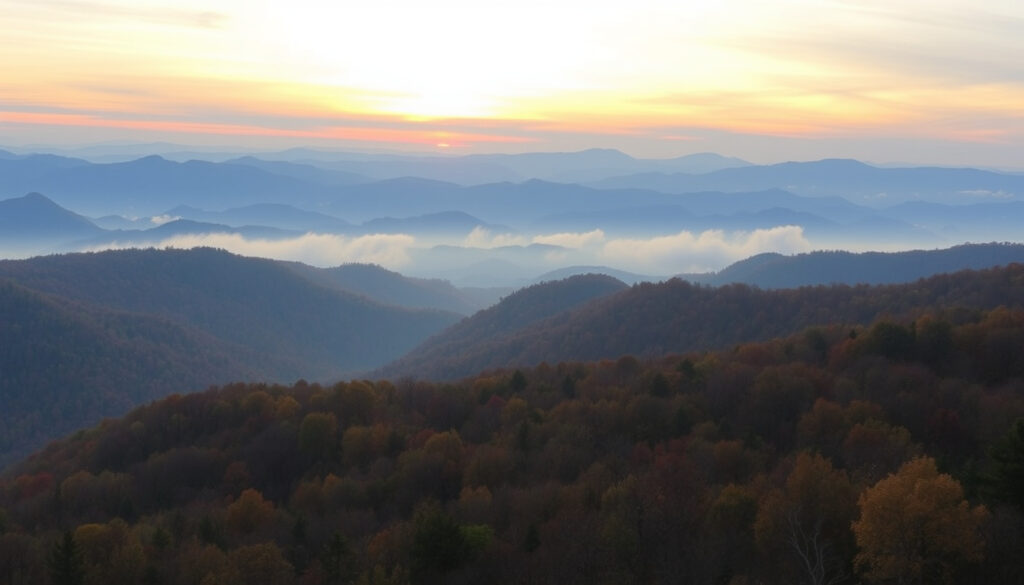
Smoky Mountain National Park: Best Time, Location & Tips
Anyone who’s spent a summer afternoon watching cars crawl along the Cades Cove Loop knows the Smokies are no secret. But with over 12.9 million visitors in 2023, it remains the most-visited national park in the U.S. — and one of the trickiest to plan for.
Visitors per year: 12.9 million (2023) ·
Size: 522,427 acres ·
States: Tennessee and North Carolina ·
Entrance fee: Free (no entry fee) ·
Established: June 15, 1934
Quick snapshot
- No entrance fee — the park is free to enter (National Park Service (official site))
- Park spans Tennessee and North Carolina (Friends of the Smokies (conservation group))
- Gatlinburg, TN is the nearest city to the main Sugarlands entrance (National Park Service (visitor planning page))
- Exact monthly bear activity counts vary by research year (Journal of Mammalogy (peer-reviewed study))
- Future visitation trends may change after 2025 (National Park Service (planning note))
- Park established in 1934 (National Park Service (park history))
- 12.9 million visitors recorded in 2023, the highest annual count (National Park Service (visitation statistics))
- Parking tag required for stays over 15 minutes as of 2025 (National Park Service (parking policy))
- Check the park website for seasonal road closures before your trip (National Park Service (road status))
- Plan to purchase a parking tag online in advance (National Park Service (fee info))
- Prepare for bear encounters with proper food storage and 150-foot distance rules (National Park Service (bear safety))
New parking tags and rising visitation mean the way you access the Smokies is changing. Visitors arriving after 2025 will need to budget an extra $5 for a daily tag — a small cost that helps manage the park’s overcrowding problem.
| Attribute | Value |
|---|---|
| Established | 1934 |
| Annual visitors (2023) | 12.9 million |
| Entrance fee | Free |
| Highest point | Clingmans Dome (6,643 ft) |
| Size | 522,427 acres |
| States | Tennessee and North Carolina |
What city is closest to Great Smoky Mountains National Park?
Gatlinburg, Tennessee sits at the doorstep of the park’s most popular entrance, Sugarlands. According to National Park Service (visitor planning page), Sugarlands is the northern gateway and is right off US 441, about a 10-minute drive from downtown Gatlinburg.
Closest towns to each entrance
- Gatlinburg, TN — main Sugarlands entrance (~1 mile from the park boundary)
- Cherokee, NC — adjacent to the Oconaluftee entrance (North Carolina side)
- Pigeon Forge, TN — 6 miles from the park, but heavily touristy (My Smoky Mountain Park (regional travel guide))
- Bryson City, NC — gateway for the Deep Creek entrance (GreatSmokies.com (visitor resource))
Driving distances from major cities
Six cities, one pattern: the farther you drive, the more you’ll want to plan a multi-day stay to make the trip worth it.
| City | Distance to Gatlinburg entrance | Drive time (approx.) |
|---|---|---|
| Knoxville, TN | 40 miles | 50 min |
| Nashville, TN | 180 miles | 3 hr |
| Asheville, NC | 55 miles | 1 hr 10 min |
| Atlanta, GA | 190 miles | 3 hr 30 min |
| Charlotte, NC | 175 miles | 3 hr 15 min |
| Chattanooga, TN | 130 miles | 2 hr 15 min |
The pattern: Knoxville is the quickest access point; Nashville and Atlanta require a full half-day drive. For anyone coming from Nashville, a stay of at least two nights makes the travel worthwhile.
First-time visitors who drive from Nashville often underestimate the three-hour trip and end up with only an afternoon in the park. A two-night stay unlocks the best trails and wildlife-viewing windows.
Where is Smoky mountain located?
The Great Smoky Mountains National Park straddles the border of Tennessee and North Carolina, covering more than 800 square miles of the Southern Appalachian range. Friends of the Smokies (conservation advocacy group) describes it as a massive wildlife corridor spanning western North Carolina and eastern Tennessee.
Location on the Tennessee–North Carolina border
- The park’s Tennessee side includes Gatlinburg, Pigeon Forge, and Townsend as gateway towns.
- The North Carolina side features Cherokee, Bryson City, and Fontana Dam.
- The Appalachian Trail runs through the park for about 71 miles.
Geography of the Smokies
The park’s highest point is Clingmans Dome at 6,643 feet, according to National Park Service (park facts page). The elevation difference between park valleys and peaks creates diverse ecosystems.
The implication: the park’s geography means you can experience anything from balmy river valleys to cool alpine peaks all in one day, but packing layers is mandatory.
What is the best month to visit Great Smoky Mountains National Park?
October draws the biggest crowds for fall foliage, but April through June offer wildflowers and fewer people. National Park Service (seasonal guide) advises checking the fall color map for peak timing, which varies by elevation.
Fall colors season
- Peak foliage typically hits mid-October at mid elevations.
- Lower elevations peak in late October; higher elevations peak in early October.
- Expect traffic delays on Newfound Gap Road and Cades Cove Loop during October weekends.
Summer crowds
- July and August are the busiest and hottest months, with afternoon thunderstorms common.
- Visitor numbers exceed 1.5 million per month in peak summer.
Winter solitude
- December through February see the fewest visitors.
- Some roads (like Clingmans Dome Road) close from December to March.
- Snowfall is possible at higher elevations, but the main roads are usually clear.
The trade-off: peak fall color versus summer ease of access. If you want to avoid crowds, spring or late September are the sweet spots.
How long does it take to drive through the Great Smoky Mountains National Park?
Driving the entire length of the park from the Tennessee side to the North Carolina side takes about 2–3 hours via Newfound Gap Road (US 441). According to National Park Service (driving guide), the road is 33 miles from Sugarlands to Oconaluftee and takes about 1.5 hours without stops.
Newfound Gap Road drive time
- 33 miles one way, 1.5 hours continuous drive.
- Stops at overlooks add 30–60 minutes.
- Add extra time during leaf season (traffic can double travel time).
Cades Cove Loop
- An 11-mile one-way loop road.
- Typical time: 2–4 hours, depending on wildlife jams.
- Closed to vehicles all day Wednesday from May to September (allows bicyclists and pedestrians).
Roaring Fork Motor Nature Trail
- 5.5-mile one-way loop near Gatlinburg.
- Driving time: about 1 hour with photo stops.
- Closed in winter season.
The implication: even a quick drive-through visit requires half a day. Factor in wildlife jams and parking searches, and a single day feels rushed.
How many days are needed for Great Smoky Mountains National Park?
Three days is the sweet spot for first-time visitors, according to Visit My Smokies (regional travel guide). One day works for a sampler, but serious hikers need at least five.
Itinerary for 1 day
- Morning: drive Newfound Gap Road to Clingmans Dome overlook.
- Afternoon: walk the Cades Cove Loop (arrive before 10 a.m. to avoid traffic).
Itinerary for 3 days
- Day 1: Cades Cove + Laurel Falls hike (2.6 miles round trip).
- Day 2: Alum Cave Trail to Mount LeConte (11 miles round trip) or a shorter hike.
- Day 3: Roaring Fork Motor Nature Trail + visit Oconaluftee Visitor Center.
Best for families vs. hikers
- Families: 2–3 days, focus on short walks (Cataract Falls, Clingmans Dome) and guided tours.
- Serious hikers: 5+ days to cover backcountry trails like the Appalachian Trail section or Ramsey Cascades.
For families from Nashville, a long weekend (Friday to Sunday) is the minimum to avoid feeling rushed. The drive from Nashville eats up half a day each way.
Most visitors underestimate how much time they’ll spend driving between entrances. A 3-day itinerary that includes both Cades Cove and Clingmans Dome can easily log 6 hours of driving inside the park alone.
What month are bears most active in the Smoky Mountains?
Black bears in the Smokies are most active from May through August, with a peak during the June–July breeding season, according to Journal of Mammalogy (peer-reviewed research). The National Park Service (bear safety page) also confirms that bear encounters are higher during this period because it’s the prime foraging and breeding window.
Bear activity by season
- Spring (March–April): bears emerge from hibernation; active in lower elevations.
- Summer (May–August): highest activity, especially along trails with berry patches.
- Fall (September–October): bears enter hyperphagia (eating heavily) before denning.
- Winter (November–February): most bears are denning; very low encounter risk.
Safety tips when hiking
- Make noise on the trail to avoid surprising a bear.
- Store all food and scented items in bear-proof containers or lockers.
- Maintain a distance of at least 150 feet — never approach a bear for a photo.
- If a bear approaches, back away slowly; do not run.
Why this matters: bear encounters peak during the same months that are best for hiking. Visitors who hike in June or July should be especially vigilant and carry bear spray (permitted in the park).
Five distances, one pattern: the closer you start, the more flexibility you have for day trips.
| Starting city | Distance (miles) | Drive time | Closest entrance |
|---|---|---|---|
| Knoxville, TN | 40 | 50 min | Sugarlands (Gatlinburg) |
| Nashville, TN | 180 | 3 hr | Sugarlands (Gatlinburg) |
| Atlanta, GA | 190 | 3 hr 30 min | Sugarlands via I-40 |
| Asheville, NC | 55 | 1 hr 10 min | Oconaluftee (Cherokee) |
| Charlotte, NC | 175 | 3 hr 15 min | Oconaluftee via US 441 |
| Chattanooga, TN | 130 | 2 hr 15 min | Sugarlands or Townsend |
The implication: only Knoxville and Asheville give you a true day-trip option. Everyone else should plan for an overnight stay.
How to plan your visit in 5 steps
- Choose your entrance — Gatlinburg (Tennessee) for most amenities, Cherokee (North Carolina) for quieter access. Check NPS visitor planning page for current conditions.
- Decide how many days — one day for a sampler, three days for a proper visit, five or more for backcountry hiking. Use the itineraries above.
- Check bear activity and safety — from May to August, carry bear spray and practice food storage. Visit NPS bear safety for rules.
- Reserve parking or campsites — a parking tag ($5/day, $15/week) is required for stays over 15 minutes. LeConte Lodge reservations fill months in advance.
- Pack accordingly — layers (elevation changes), rain gear, waterproof shoes, and a good map. Download the NPS mobile app for offline maps.
Confirmed facts
- The park is located in Tennessee and North Carolina (NPS).
- No entrance fee is charged (NPS).
- Gatlinburg, TN is the nearest city to the main entrance (NPS).
- Bears are most active from May through August (Journal of Mammalogy).
What’s unclear
- Exact monthly bear activity counts vary by research year (Journal of Mammalogy).
- Future visitation trends may change after 2025 (NPS).
“Visitors may experience a higher likelihood of bear encounters during the May–August period. Make noise, carry bear spray, and never approach a bear.”
— National Park Service (bear safety guidance)
“Great Smoky Mountains National Park is the most visited national park in the United States, drawing over 12 million visitors annually due to its incredible biodiversity and free admission.”
For the family driving down from Nashville, the choice is clear: a three-day weekend with a pre-booked parking tag and bear spray in the trunk, or a rushed single-day trip that leaves you disappointed and stuck in traffic on the way back. The Smokies reward preparation.
instagram.com, usparkpass.com, usatoday.com, visitmysmokies.com, facebook.com
For a similar high-altitude driving experience, consider Rocky Mountain National Park where the iconic Trail Ridge Road offers breathtaking vistas and its own bear spotting opportunities.
Frequently asked questions
What is the entrance fee for Smoky Mountain National Park?
There is no entrance fee. However, a parking tag is required for all vehicles parked longer than 15 minutes. Daily tags cost $5, and weekly tags cost $15. (National Park Service)
Can you drive through the park in winter?
Yes, but some roads close seasonally. Newfound Gap Road (US 441) usually stays open, but Clingmans Dome Road and Roaring Fork Motor Nature Trail close from approximately December through March. (NPS road conditions)
Are there bears in the Smoky Mountains?
Yes, black bears are abundant. The park estimates a population of roughly 1,500 bears. They are most active from May through August. (National Park Service)
What is the highest peak in the park?
Clingmans Dome, at 6,643 feet (2,025 meters), is the park’s highest point. A steep half-mile paved trail leads to an observation tower with panoramic views. (NPS)
How long is the Cades Cove Loop?
The Cades Cove Loop Road is 11 miles (17.7 km) one way. It typically takes 2–4 hours to drive due to wildlife viewing and traffic. It is closed to vehicles on Wednesdays from May through September. (NPS)
Is the park open year-round?
Yes, the park is open 24 hours a day, 365 days a year. Visitor centers have seasonal hours. Some facilities and roads close in winter. (NPS)
What should I do if I see a bear?
Stay at least 150 feet away. Do not approach, run, or make direct eye contact. Back away slowly. If the bear approaches, make yourself look big and make loud noises. Carry bear spray and know how to use it. (National Park Service)
Are there any campgrounds inside the park?
Frontcountry campgrounds: Cades Cove, Elkmont, Smokemont, Cataloochee, Abrams Creek, Balsam Mountain. Most require reservations, especially in summer. Backcountry camping is also available with a free permit. (NPS)
Related reading
More related posts
 What Is a Speakeasy? History, Code, Modern Bars
 How Long to Air Fry Chicken Breast: Times by Thickness
 Old Farmer’s Almanac Thanksgiving Forecast 2025
 My Big Fat Fabulous Life: Health, Cast & Cancellation Updates
 Mini Split Heat Pump: Pros, Cons, Costs & Is It Worth It
 Gone with the Wind: Controversy, Quotes, Box Office & More
 E-Bikes for Sale: Best Value & What to Avoid
 Atlanta Braves vs Red Sox Match Player Stats – Box Score, Top Performers & Recap
