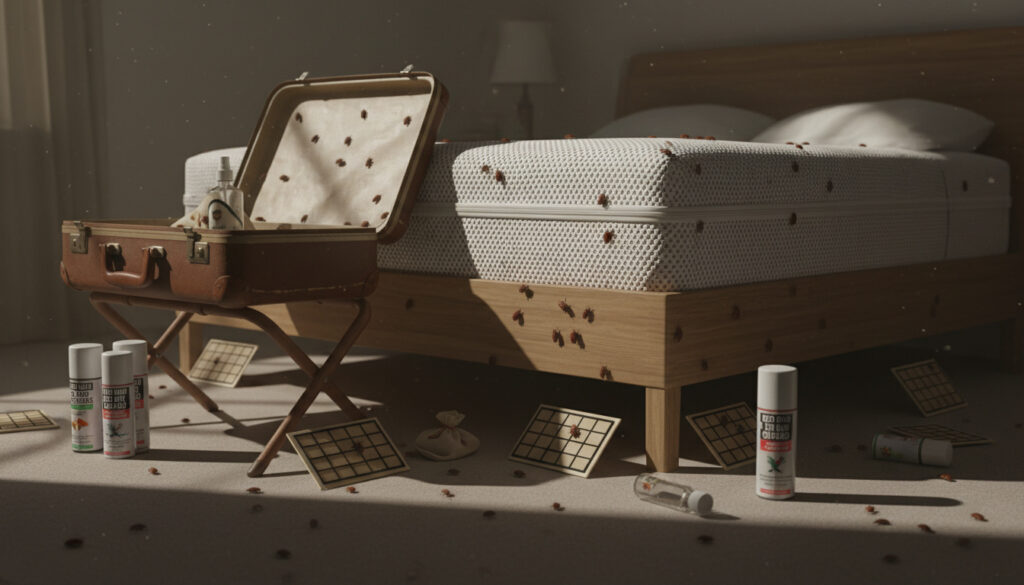
Where Do Bed Bugs Come From – Sources Myths Prevention
Bed bugs do not emerge from dirt, decay, or spontaneous generation. These ancient parasites—scientifically known as Cimex lectularius—have tracked human migration for millennia, spreading from Middle Eastern caves to modern apartments through commerce, travel, and trade.
Today, infestations surge through entirely preventable entry points. Unlike cockroaches or flies attracted to filth, bed bugs seek only blood, warmth, and carbon dioxide. Understanding their true origins dispels decades of misinformation while highlighting why even pristine homes fall victim to these resilient hitchhikers.
Where Do Bed Bugs Come From?
Travel and luggage from infested hotels or accommodations
Used furniture, mattresses, and second-hand items
Dirt or poor hygiene—proven false
Hitchhiking on personal belongings
- Ancient origins trace to Middle Eastern cave dwellings where early humans slept
- Global resurgence post-2000 directly correlates with increased international air travel
- Widespread insecticide resistance has eliminated many chemical barriers
- Multi-unit housing facilitates horizontal migration through wall voids and utility lines
- Cleanliness levels show zero correlation with infestation probability
- Joint EPA-CDC statement recognized bed bugs as public health pests in 2009
| Attribute | Description |
|---|---|
| Scientific Name | Cimex lectularius |
| Adult Appearance | Apple seed-sized (4–5 mm), reddish-brown, oval-shaped |
| Nymph Appearance | Sesame seed-sized, translucent to light brown |
| Egg Characteristics | Pinhead-sized white ovals (1 mm), visible to naked eye |
| Typical Lifespan | 6 to 12 months under favorable conditions |
| Starvation Resistance | Adults survive several months without blood meals |
| Flight Capability | None; crawling only |
| Disease Transmission | No confirmed cases to humans |
Common Entry Points
Infestations begin when insects access interior spaces through specific transportation vectors. Suitcase seams and zipper compartments harbor traveling adults. Backpack folds and laptop bags provide crevices for concealment. Upholstered furniture acquired from secondhand markets carries hidden populations. Cracks in shared walls or utility lines allow migration between apartments in multi-unit buildings.
Travel and Luggage
Hotels, airports, and public accommodations serve as primary exchange points. Guests unwittingly transport bugs home within luggage fabric and clothing folds. Research from Purdue University confirms that single hotel stays can introduce viable breeding populations.
Used Furniture and Items
Curbside mattresses and thrift-store sofas represent high-risk acquisitions. Electrical outlets, picture frames, and baseboard cracks in these items harbor eggs invisible to casual inspection. Consumer Reports investigations document numerous cases traced directly to secondhand furniture outlets.
How Do Bed Bugs Spread?
Hitchhiking on Belongings
The insects cannot fly or jump. Movement depends entirely on physical attachment to hosts or objects. Clothing left on infested furniture, purses placed on contaminated theater seats, and coats in cloakrooms all provide transfer opportunities.
Clothing exposed during travel requires laundering at 60°C/140°F minimum. Suitcase seams merit flashlight inspection before indoor storage.
Neighbor Infestations
In apartment complexes and condominiums, bugs migrate through electrical conduits, plumbing voids, and ceiling cracks. They crawl independently between units, establishing new harborage areas in adjacent bedrooms. Modern Pest documentation indicates that 20% of adjacent units typically require treatment once an index unit shows infestation.
Public Transportation Risks
Buses, trains, rideshare vehicles, and theater seating provide temporary harborage. The insects transfer to new hosts when passengers place bags on contaminated surfaces or brush clothing against infested upholstery.
Do Bed Bugs Come from Dirt or Poor Hygiene?
Debunking the Myth
The persistent belief that bed bugs indicate sanitation failures has no entomological basis. EPA guidance explicitly states that dirt, grime, and housekeeping standards do not attract these parasites. They respond exclusively to carbon dioxide, warmth, and blood proximity.
While clutter provides additional hiding spots, sterile environments offer no protection. Five-star hotels and immaculate residences suffer infestations at rates comparable to unkempt properties.
Real Causes vs. Misconceptions
Confusion arises because cockroaches and other pests correlate with filth. Bed bugs operate differently. Utah Department of Health epidemiologists confirm that affluence, education, and cleaning frequency provide zero immunity.
Where Do Bed Bugs Hide in Your Home?
Bedroom Hotspots
Mattress tags, box spring corners, and headboard crevices concentrate populations. The insects remain within five feet of sleeping hosts during daylight hours. Seams and stitching on bedding provide ideal egg-laying surfaces.
Electrical outlets, peeling wallpaper edges, and picture frame backs in bedrooms often harbor bugs when primary bed habitats become overcrowded.
Furniture and Cracks
Sofas, armchairs, and recliners in living areas attract bugs when residents nap or rest there. Baseboard cracks, door frames, and carpet edges along walls serve as travel highways. Pointe Pest control data indicates 30% of infestations spread beyond sleeping areas within two months.
Signs of Infestation
Dark fecal spots (digested blood) appear as rust-colored smears on mattress tags and walls. Shed skins from molting nymphs accumulate in harborage areas. A sweet, musty odor often indicates established colonies.
How Does an Infestation Develop Over Time?
- Day 0: Introduction occurs via luggage, furniture, or clothing from an infested source.
- Week 1: Insects seek harborage in mattress seams, box springs, or nearby furniture cracks.
- Day 6-10: Eggs hatch into first-instar nymphs, beginning immediate feeding.
- Week 3-4: First generation reaches adulthood; mating begins and egg-laying accelerates.
- Month 2: Population doubles; bite marks and fecal spotting become noticeable to residents.
- Month 3-6: Without intervention, hundreds of individuals occupy multiple rooms through wall voids.
What Experts Confirm vs. What Remains Uncertain
| Established Facts | Remaining Uncertainties |
|---|---|
| Travel and used furniture constitute primary sources | Exact introduction point without professional inspection |
| No disease transmission to humans documented | Individual factors determining susceptibility to bites |
| Heat treatment (115°F+) kills all life stages | Specific genetic markers for insecticide resistance |
| Bed bugs cannot survive sustained freezing below 32°F for 1-2 weeks | Variability in dormancy periods between populations |
Why Have Bed Bugs Resurged Globally?
Post-2000 population explosions stem from converging factors. International travel volumes increased dramatically, moving bugs between continents in luggage compartments. Concurrently, pesticide resistance evolved through genetic mutations to pyrethroids and neonicotinoids. The House of the Dragon Family Tree of bed bug populations shows genetic diversity tracing back to ancient lineages, though modern strains show amplified resistance profiles.
Urban density accelerates spread in multi-unit housing. Economic constraints prevent immediate professional treatment in many communities, allowing populations to establish and migrate. Climate-controlled interiors enable year-round breeding regardless of outdoor conditions.
What Health Authorities Say
Anyone can get bed bugs. Only those who have the resources are able to get rid of them.
— Zachary DeVries, PhD, University of Kentucky entomologist, via Consumer Reports
Bed bugs are a public health pest.
— Joint EPA-CDC statement, 2009
Bed bug control is difficult and requires a complete treatment approach.
— Utah Department of Health, Epidemiology Bureau
Understanding Bed Bug Origins
Bed bugs originate exclusively from other infested locations—never from dirt, darkness, or spontaneous generation. They enter through luggage, furniture, and clothing, then spread through buildings via wall voids. Prompt identification, heat treatment, and professional intervention remain the only reliable countermeasures. For additional historical analysis, see the Trump NORAD Santa Calls History.
Frequently Asked Questions
Can bed bugs come from nowhere?
No. They require introduction via infested items, luggage, or adjacent units. Spontaneous generation does not occur; all infestations trace to existing populations.
How did I get bed bugs if I haven’t traveled?
Used furniture, visiting guests, or neighbors in multi-unit buildings provide entry. Packages and deliveries rarely carry them, but secondhand electronics and clothing do.
Do bed bugs fly?
No. They possess no wings. Movement occurs solely through crawling at speeds up to four feet per minute on most surfaces.
Can bed bugs live in your hair?
No. Unlike lice, they lack claw structures for gripping hair shafts. They feed and immediately retreat to harborage areas.
How long can bed bugs live without feeding?
Adults survive several months without blood meals under optimal temperature and humidity. Nymphs require more frequent feeding to molt.
Can bed bugs transmit diseases?
No confirmed cases exist despite laboratory detection of pathogens in bug bodies. They carry no known human disease agents.
What do bed bugs look like exactly?
Adults resemble apple seeds—4 to 5 mm, reddish-brown, and flat. Nymphs appear as translucent sesame seeds. Eggs are pinhead-sized white ovals.
More related posts
 Braves vs Red Sox – Score, Recap and Series Result
 Homemade Chocolate Chip Cookies Recipe: Easy & Chewy
 Woman in Cabin 10: Why It Got Bad Reviews & Is It Worth Watching
 Direct Download Fast Strong New VPN Filter Breaker
 Where is Bora Bora? Location, Country, and Travel Guide
 Royal Canin Dog Food: Vet Review & Price Guide for Ireland
 Equipment Rental Near Me: Find Tool Hire in Dublin & Ireland
 Get It Sexyy Lyrics by Sexyy Red: Full Lyrics & Clean
