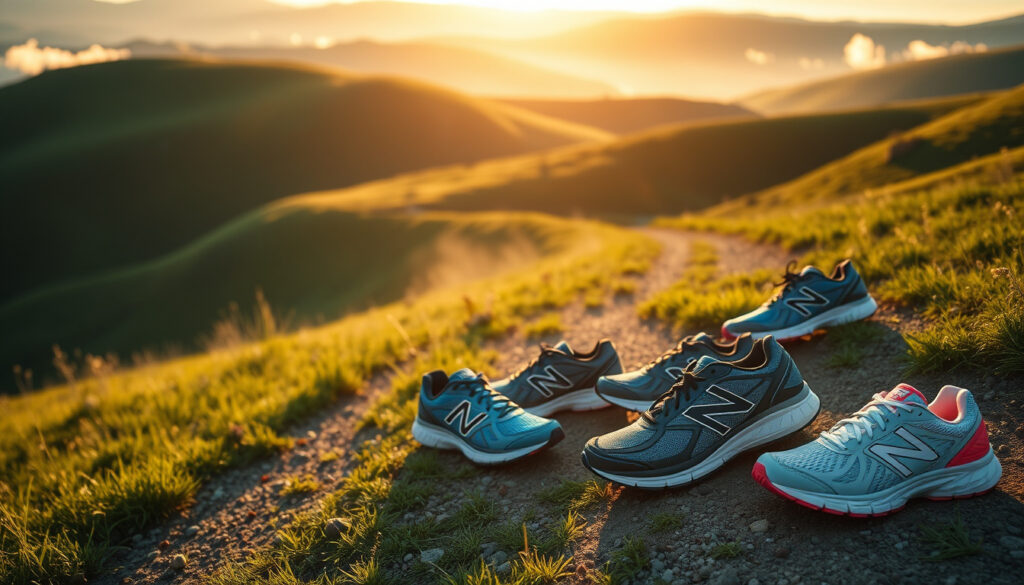
New Balance Running Shoes – Best Picks for Every Runner
New Balance has built a reputation over decades as a manufacturer that prioritizes fit, comfort, and technological innovation. The brand’s running shoe lineup spans everything from maximum cushioning daily trainers to lightweight carbon-plated racers, offering options for nearly every type of runner and budget. Understanding which model suits specific needs requires examining how different technologies, fits, and price points compare across the current range.
Whether someone is lacing up for their first jog or logging weekly marathon training miles, New Balance provides constructed options designed to address varying gait patterns, foot shapes, and performance goals. The distinction between the Fresh Foam and FuelCell cushioning systems plays a central role in determining which shoe delivers the right balance of comfort and responsiveness for individual running styles.
This guide examines the most highly reviewed New Balance running shoes available, explores fit considerations for different foot types, compares the brand against competitors, and provides practical guidance for selecting the right model based on experience level and intended use.
What Are the Best New Balance Running Shoes?
Across major running publications and independent testing labs, several New Balance models consistently rank at the top of their respective categories. These recommendations reflect aggregated scores from real-world testing, user feedback, and lab measurements.
Top Models Overview
Fresh Foam X 1080v15
FuelCell Rebel v5
Fresh Foam X Hierro v9
FuelCell SuperComp Elite v5
Key Insights from Testing
- Fresh Foam X 1080v13 and v14 remain top performers, with v15 adding improved breathability and stability refinements
- FuelCell Rebel v4 earned praise for its lightweight construction and propulsive ride, with v5 building on this foundation
- The 880v14 and v15 deliver balanced cushioning at a moderate price point, making them popular among beginners
- Wide width options (2E and 4E) are readily available across most models, addressing a common runner concern
- Hierro v8 and v9 provide trail-specific traction while maintaining road-shoe comfort levels
- Budget-conscious buyers can access cushioned options under $100, such as the Fresh Foam 680v9
- Carbon-plate racing shoes like the SuperComp Elite line have gained significant traction among marathon runners
Model Comparison Table
| Model | Primary Use | Weight | Drop | Price Range |
|---|---|---|---|---|
| Fresh Foam X 1080v15 | Max cushion, daily/long runs | ~10.5oz | 6mm | $150-165 |
| FuelCell Rebel v5 | Speed, tempo, racing | ~7-8oz | 6mm | $130-140 |
| Fresh Foam X 880v15 | Beginners, value trainer | ~10oz | 8-10mm | $100-140 |
| FuelCell SuperComp Elite v5 | Marathon, racing | ~7-9oz | 4-6mm | $220-250 |
| Fresh Foam X Hierro v9 | Trail running | 9.9-10.9oz | 4-6mm | $155 |
| Fresh Foam X 860v14 | Stability, overpronators | 10.5oz | 8mm | $140-150 |
| Fresh Foam 680v9 | Budget under $100 | N/A | N/A | Under $100 |
| FuelCell SuperComp Pacer v2 | Energy return, hybrid | Moderate | Moderate | $180-230 |
According to RunRepeat’s aggregate rankings, the Fresh Foam X 1080 series consistently earns top honors as the best overall New Balance running shoe, combining plush midsole cushioning with a surprisingly lightweight build. Runner’s World testers praised the 1080v13 for offering what they described as the softest cushion in the brand’s lineup, while the updated v14 and v15 versions introduced firmer foaming in the heel for improved stability during longer efforts.
The Fresh Foam X 1080v13/v14/v15 stands out across multiple publications as the most versatile daily trainer. With a 6mm drop, approximately 10.5-ounce weight, and plush midsole, it handles everything from recovery miles to long runs while remaining responsive enough for faster-paced work.
Are New Balance Running Shoes Good for Wide Feet and Flat Feet?
One of New Balance’s longstanding strengths lies in its commitment to accommodating diverse foot shapes. Unlike brands that offer limited width options, New Balance provides multiple width configurations across most of its running lineup, making it particularly accessible for runners with wider feet or specific support needs.
How New Balance Fits Compared to Other Brands
New Balance running shoes generally run true to size, though the brand is known for a roomier toe box compared to competitors like Nike. This generous front-end space allows toes to splay naturally during the gait cycle, which many runners find improves comfort on longer efforts. Men’s Journal testers noted that the brand’s upper construction tends to accommodate broader feet without requiring special ordering or custom modifications.
Runners transitioning from narrower brands may initially notice the difference in toe box volume. However, this design choice often translates to reduced hot spots and blisters, particularly during runs exceeding 60 minutes where foot swelling becomes more pronounced.
Recommendations by Foot Type
For runners with wide feet, the Fresh Foam X 1080v13 and newer versions offer especially praised roomy fits with effective arch support. The 880v15 similarly delivers stable, accommodating geometry that works well for broader foot shapes. Both models come in extended width options (2E and 4E) that can be found at specialty retailers and directly through New Balance.
Runners dealing with flat feet or overpronation have several targeted options. The Fresh Foam X 860v14 provides moderate stability features without the aggressive medial posts found in some competitors’ stability lines, making for a more natural ride. The Hierro v8 and v9 also incorporate dual-density foam construction that addresses pronation concerns while maintaining trail-ready traction. Doctors of Running’s analysis highlights these models as particularly suitable for flatter foot types seeking both support and comfort.
For marathon runners anticipating significant foot swelling during the race, consider sizing up half a size. This extra room accommodates the natural expansion that occurs over 26.2 miles, reducing pressure on the top of the foot and toenails. Specialty running stores often allow test runs on treadmills to confirm fit before committing to a race-day shoe.
Gender-specific versions typically feature slightly lower weight in women’s models, accounting for average physiological differences. The core fit philosophy remains consistent across versions, meaning wide-footed runners of any gender can access the same accommodating constructions.
Fit Verification Before Purchase
Because fit preferences vary considerably between individuals, several sources recommend trying New Balance running shoes in-store when possible, particularly for wider width configurations. Men’s Journal’s review process emphasizes that even within the same model line, subtle version-to-version changes in upper materials can affect lockdown and width perception.
New Balance Running Shoes vs Nike and Other Brands
Comparing New Balance against other major running shoe manufacturers reveals distinct philosophies in cushioning, fit, and intended use cases. Understanding these differences helps runners make informed decisions when selecting their next pair.
Fresh Foam vs FuelCell: The Core Technology Distinction
New Balance’s two primary cushioning technologies serve different running purposes. Fresh Foam, used in models like the 1080, 880, and Hierro lines, delivers softer, plush cushioning optimized for comfort during longer, easier-paced runs. Running Shoes Guru’s technical analysis notes that Fresh Foam provides a stable base that has improved with each generation, with v14 and v15 versions incorporating slightly firmer construction in key areas to enhance durability and support.
FuelCell technology, featured in the Rebel and SuperComp lines, uses a firmer, more propulsive foam compound designed for speed work and racing. The Rebel v4 and v5 deliver explosive energy return that Run Testers reviewers described as noticeably peppier than Fresh Foam alternatives, making it ideal for tempo runs, intervals, and race day. The SuperComp Elite and Pacer models incorporate carbon fiber plates that amplify the propulsive effect for faster paces.
Runners prioritizing comfort on daily runs and recovery efforts generally gravitate toward Fresh Foam models. Those seeking speed, racing performance, or wanting a more responsive feel for tempo work should consider FuelCell options. Many experienced runners maintain both lines in their rotation, using Fresh Foam for easy days and FuelCell for faster sessions.
Comparing New Balance Against Brooks
Brooks and New Balance share similar philosophies around fit accommodation and stability options. Men’s Journal testing found that New Balance’s FuelCell Rebel and SuperComp v4/v5 offer comparable energy return to Brooks’ FuelCell line while delivering lighter weight and greater versatility across training contexts. New Balance edges ahead in daily comfort for most testers, particularly for runners who spend significant time on their feet outside of running.
Comparing New Balance Against Nike
Nike’s running shoes typically feature more aggressive drops and firmer cushioning profiles compared to New Balance. In independent comparisons, the Rebel v4 outperformed comparable Nike models in lightness and responsiveness according to some testers. The 1080 series provides more overall cushioning than most Nike road running options, making it a stronger choice for runners who prioritize plush comfort over minimalism.
Both brands offer carbon-plated racing options, though they differ in stack height and geometry. Runners with wider feet generally find New Balance accommodates their shape more naturally without requiring special ordering.
How to Choose the Right New Balance Running Shoes for Beginners
First-time and recreational runners benefit from understanding how different New Balance models align with experience levels, training goals, and budget constraints. The brand offers entry points across multiple price tiers while maintaining quality construction throughout its lineup.
Recommendations by Experience Level and Budget
For beginners just starting a running routine, the Fresh Foam X 880v15 emerges as a consistent top recommendation. Runner’s World editors selected this model as best overall for new runners, citing its balanced cushioning, stable platform, and forgiving ride that accommodates developing form. The moderate 8-10mm drop provides a heel-to-toe transition that works well for runners transitioning from walking.
Those with budget constraints under $100 can access the Fresh Foam 680v9, which Runner’s World labeled as the best value option in the lineup. This model delivers reliable cushioning for daily training without the premium pricing of higher-stack alternatives. The trade-offs include less advanced midsole technology and fewer colorway options, but the core running experience remains solid.
While carbon-plated racers like the SuperComp Elite perform exceptionally on race day, their narrower constructions and firmer rides are not ideal for daily training, particularly for beginners. Using maximum-cushion daily trainers like the 1080 or 880 for regular training preserves these specialized shoes for when they provide the greatest benefit.
Use-Specific Recommendations
Runners focusing on trail running should consider the Fresh Foam X Hierro v9, which Runner’s World, Running Shoes Guru, and Run Testers all identified as the best trail option in New Balance’s current catalog. The cushioned midsole maintains road-shoe comfort while the redesigned outsole provides improved traction across varied terrain. The 4-6mm drop and dual-density foam construction offer stability on technical descents without sacrificing comfort on longer trail runs.
For marathon training and racing, the FuelCell SuperComp Elite v5 combines high stack height with carbon plate technology for maximum energy return at race pace. RunRepeat and Run Testers both rank this model as New Balance’s top racing option, noting its compatibility with the Rebel series for a training-to-race progression. Runners can use the Rebel for speed sessions and tempo work before switching to the SuperComp Elite on race day.
Making the Final Selection
Choosing between models ultimately depends on individual priorities. Comfort-oriented runners logging high weekly mileage may prefer the plush 1080 series, while speed-focused athletes might select the lightweight Rebel. Those with specific support needs should prioritize the 860 for stability or Hierro for trail applications.
Test-fitting remains the most reliable method for confirming appropriate selection. Visiting a running specialty store allows runners to try multiple models, assess width accommodations, and receive guidance from staff experienced with New Balance’s current lineup.
The Evolution of New Balance Running Shoe Technology
New Balance’s running shoe development spans several decades, with technological milestones marking significant shifts in design philosophy and performance capability.
- 1970s: New Balance introduced its first dedicated running shoes, establishing the brand’s focus on athletic performance footwear
- 2010s: The Fresh Foam platform launched, representing a data-driven approach to midsole cushioning placement based on pressure mapping
- Early 2020s: FuelCell technology debuted, emphasizing propulsive energy return for speed-focused applications
- 2023: FuelCell SuperComp Elite v3 and v4 released, establishing New Balance as a serious contender in carbon-plated racing
- 2024: Fresh Foam X 1080v14 and FuelCell Rebel v5 introduced refinements in stability and energy return
- 2025-2026: 1080v15 and Rebel v5 continue to build on established platforms with enhanced breathability and updated upper constructions
According to RunRepeat’s historical analysis, the progression from earlier Fresh Foam versions to current models shows consistent refinement rather than dramatic redesigns. Each iteration has focused on incremental improvements in stability, weight reduction, and breathability while maintaining the core cushioning character that defines each line.
What to Consider When Buying New Balance Running Shoes
Understanding both the strengths and limitations of New Balance running shoes helps buyers set realistic expectations and make confident purchasing decisions.
| Established Strengths | Areas of Consideration |
|---|---|
| Excellent width options (2E, 4E available) | Carbon-plated racers less proven at elite level than some competitors |
| True-to-size fit with generous toe box | Some models experience upper wear faster than midsole |
| Fresh Foam provides plush daily comfort | FuelCell can feel too firm for some preferences |
| Strong stability options (860 series) | Trail lineup less extensive than some competitors |
| Budget options under $100 available | Newer v14/v15 versions have slightly firmer cushion than v13 |
Most New Balance running shoes maintain effective cushioning for 300-500 miles, consistent with industry standards. Fresh Foam tends to retain its comfort characteristics longer than FuelCell, which can compress more quickly under aggressive use. Replacing shoes before cushioning breaks down significantly reduces injury risk.
The New Balance Approach to Running Footwear
New Balance operates as one of the few major athletic footwear brands that manufactures a significant portion of its shoes in the United States and United Kingdom, reflecting a production philosophy that prioritizes domestic manufacturing alongside global facilities. This approach differentiates the brand from competitors who have moved entirely to overseas production.
The company’s running shoe development draws on input from professional athletes, recreational runners, and biomechanical research. Men’s Health testing protocols involve hundreds of miles of real-world evaluation across varied terrain and conditions, ensuring models perform beyond controlled lab environments.
New Balance’s commitment to width accessibility sets it apart in the running shoe market. While many brands offer standard and wide options only in select models, New Balance extends 2E and 4E width configurations across most of its running lineup, reducing barriers for runners who historically struggled to find properly fitting athletic footwear.
What Reviewers and Experts Are Saying
“The Fresh Foam X 1080v13 offers the softest cushion we’ve ever tested in a New Balance shoe, making it ideal for runners who log high weekly mileage and need maximum comfort without sacrificing responsiveness.”
— Runner’s World Gear Team
“FuelCell technology has transformed New Balance’s speed options. The Rebel v4 delivers an impressively lightweight ride that competes favorably with significantly more expensive competitors.”
— Men’s Journal Health and Fitness Editors
“For wide-footed runners, New Balance remains one of the few brands where you can reliably find extended width options across multiple performance categories without special ordering.”
— Running Shoes Guru Technical Review
These assessments reflect consistent themes across major running publications: New Balance excels at providing comfortable, well-fitting options for diverse foot shapes while offering technology that spans from casual training to competitive racing. The brand’s willingness to address width concerns proactively differentiates it in a market where many competitors treat accessibility as an afterthought.
Finding Your Ideal New Balance Running Shoe
New Balance has established itself as a reliable choice for runners across all experience levels, from those just beginning their journey to seasoned marathoners seeking every performance advantage. The combination of Fresh Foam comfort and FuelCell responsiveness provides options for every training day and race scenario.
Prioritizing fit remains the most critical factor in the selection process. Runners with wider feet benefit from New Balance’s generous toe boxes and available width configurations, while those requiring stability support can access targeted models without accepting compromises in overall comfort. The best white shoes for women resources may offer additional styling considerations beyond performance.
For those exploring complementary wellness activities, chair yoga for seniors can complement running routines by maintaining flexibility and joint mobility outside of road work.
Ultimately, the best New Balance running shoe depends on individual priorities, foot mechanics, and training goals. The models highlighted in this guide represent the most consistently praised options across independent testing and user feedback, providing a solid foundation for any runner’s decision-making process.
Frequently Asked Questions
Are New Balance running shoes worth the investment?
New Balance running shoes deliver solid value across price points. Budget models like the 680v9 provide reliable cushioning under $100, while premium options like the 1080 and SuperComp Elite justify higher prices with advanced cushioning technology and durable construction. Most models last 300-500 miles with proper care.
How do New Balance running shoes compare to Brooks?
New Balance and Brooks offer similar stability options and width availability. New Balance’s FuelCell technology provides a speed advantage over Brooks for racing applications, while Brooks traditionally excels in maximum cushioning categories. Both brands represent quality choices for different running priorities.
Which New Balance shoe works best for marathon training?
The Fresh Foam X 1080 series serves most marathon trainers well for daily mileage due to its plush cushioning and versatile ride. The FuelCell Rebel provides excellent speed work capability, and the SuperComp Elite can serve as a race-day option. Many marathoners use a combination of these models throughout their training cycle.
Do New Balance running shoes run true to size?
New Balance running shoes generally run true to size, though many runners appreciate the brand’s slightly roomier toe box compared to narrower competitors like Nike. Those with especially wide feet may want to explore 2E or 4E width options. Trying shoes in-store when possible helps confirm proper fit.
What is the difference between Fresh Foam and FuelCell?
Fresh Foam provides softer, plush cushioning optimized for comfort during easy runs and recovery days. FuelCell offers firmer, more propulsive cushioning designed for speed work, tempo runs, and racing. Many runners maintain both technologies in their rotation for different training purposes.
Which New Balance model is best for beginners?
The Fresh Foam X 880v15 consistently ranks as the best New Balance running shoe for beginners, offering balanced cushioning, stable platform, and forgiving ride that accommodates developing form. The budget-friendly 680v9 provides an accessible entry point under $100.
Are there good New Balance options for wide feet?
Yes, New Balance excels in width availability compared to most competitors. Models like the 1080v13+ and 880v15 feature roomy fits praised for wide-foot accommodation. Extended widths (2E and 4E) are available across most models, reducing the need for special orders or custom modifications.
What New Balance shoe is best for trail running?
The Fresh Foam X Hierro v9 ranks as New Balance’s best trail running shoe, combining cushioned road-shoe comfort with improved outsole traction and stable dual-density foam. It handles varied terrain while maintaining the plush ride characteristics the Hierro line is known for.
More related posts
 E-ZPass Toll Text Scam: How to Spot and Report Smishing
 Card Shows Near Me: Find Events Today & This Weekend
 Mad Max: Fury Road: Plot, Cast, Feud, and Box Office Explained
 Dog is Human Reviews: Does It Really Work for Itching? | 2025
 The Couple Next Door: Plot, Seasons, and Where to Watch
 1 Liter to Oz: Conversion, Cups, Bottles, and Health
 Alabama Crimson Tide Football: Nickname, Playoffs & Rivalry
 Can Dogs Have Pistachios? Safe Serving Size & Key Risks
