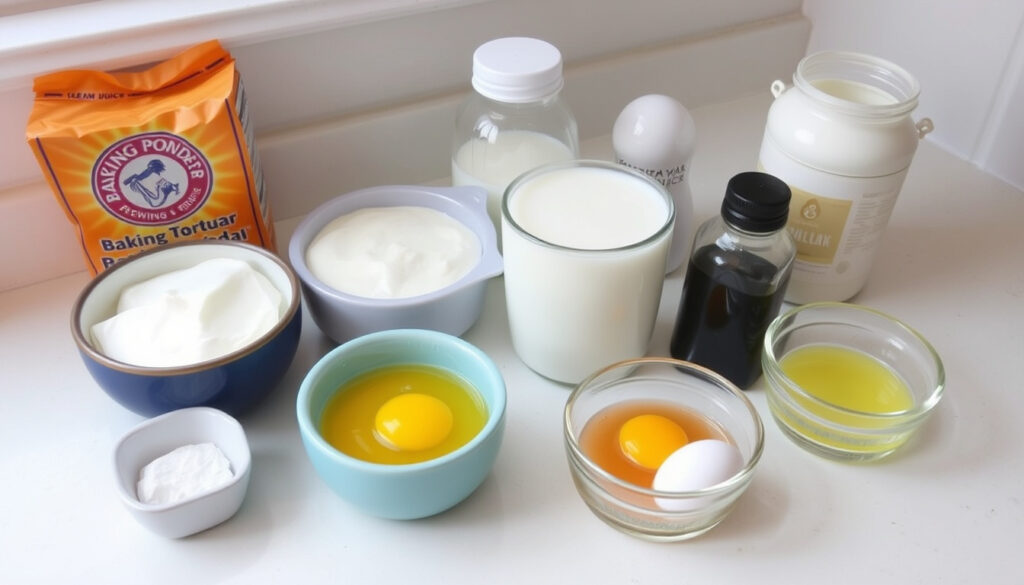
Substitute for Baking Powder: 10 Alternatives You Already Have
You’re halfway through a pancake recipe and reach for the baking powder—only to find the tin’s empty. It’s a kitchen moment that’s happened to just about everyone, but this guide walks through 10 proven alternatives so you don’t have to guess.
Number of common baking powder substitutes: 10 (Healthline) ·
Ratio for homemade baking powder: 1/4 tsp baking soda + 1/2 tsp cream of tartar per 1 tsp baking powder ·
Most versatile substitute: Buttermilk or yogurt (1/2 cup + 1/4 tsp baking soda) ·
Substitute without cream of tartar: Plain yogurt or buttermilk
Quick snapshot
- Buttermilk + baking soda works as a 1:1 replacement for baking powder in many recipes (Healthline)
- Homemade baking powder: 1/4 tsp baking soda + 1/2 tsp cream of tartar (Arm & Hammer)
- Flour cannot substitute for baking powder (lacks leavening agents) (Epicurious)
- Effect of molasses on browning and sweetness when replacing baking powder
- Optimal substitution ratio for aquafaba as a leavening agent is not standardized
- This guide is not time-sensitive; all substitution ratios are stable and well-documented
- Try substitutions in your favorite recipe—adjust liquid content to maintain batter consistency
- Experiment with dairy-free options like vinegar + plant milk for vegan bakes
Here are the key facts about baking powder substitutes, including exact ratios.
| Label | Value |
|---|---|
| What is baking powder? | A dry chemical leavening agent containing baking soda, cream of tartar, and often cornstarch as a buffer. |
| Why substitute? | Running out, dietary restrictions, or wanting to control ingredients. |
| Key rule | Every substitute must provide both an acid and a base (baking soda) to create the leavening reaction. |
| Homemade ratio (standard) | 1/4 tsp baking soda + 1/2 tsp cream of tartar = 1 tsp baking powder (Arm & Hammer) |
| Buttermilk ratio | 1/2 cup buttermilk + 1/4 tsp baking soda = 1 tsp baking powder |
| Yogurt ratio | 1/2 cup plain yogurt + 1/4 tsp baking soda = 1 tsp baking powder |
| Vinegar/lemon juice ratio | 1/2 tsp vinegar or lemon juice + 1/4 tsp baking soda = 1 tsp baking powder (Betty Crocker) |
| Self-rising flour substitute | 1 cup self-rising flour = 1 cup all-purpose + 1.5 tsp baking powder + 1/4 tsp salt (Ugly Duckling Bakery) |
What can you use if you don’t have baking powder?
The simplest swaps rely on an acid-base reaction. Your kitchen likely holds at least one of these.
Buttermilk as a substitute
- Ratio: 1/2 cup buttermilk + 1/4 tsp baking soda = 1 tsp baking powder (Detox Desserts)
- Buttermilk adds tang and tenderness; reduce other liquids in the recipe by 1/2 cup.
Plain yogurt substitute ratio
- Ratio: 1/2 cup plain yogurt + 1/4 tsp baking soda = 1 tsp baking powder
- Greek yogurt works too but may dry the batter slightly; add a tablespoon of milk if needed.
Lemon juice or white vinegar method
- Ratio: 1/2 tsp lemon juice or white vinegar + 1/4 tsp baking soda = 1 tsp baking powder (Betty Crocker)
- Best for recipes where a mild acidic flavor won’t clash (e.g., pancakes, lemon cakes).
Molasses and other sweeteners
- Ratio: 1/4 cup molasses + 1/4 tsp baking soda = 1 tsp baking powder (Detox Desserts)
- Reduce sugar in the recipe by 1/4 cup to compensate for molasses’s sweetness.
Dairy-based substitutes (buttermilk, yogurt) deliver the best rise in baked goods because they combine liquid, acid, and richness. Vinegar works but can leave a detectable sour note if used above 1/2 tsp per recipe.
Bottom line: For a direct acid-base swap, reach for buttermilk or yogurts if you have them. They provide consistent rise and texture across most baked goods.
How to make baking powder if I don’t have any?
You can whip up a batch in 30 seconds with two pantry staples.
Classic homemade baking powder recipe
- Per 1 tsp: 1/4 tsp baking soda + 1/2 tsp cream of tartar (McCormick)
- Per 2 tsp: 1/2 tsp baking soda + 1 tsp cream of tartar (The Spruce Eats)
- Add 1/4 tsp cornstarch per tsp to prevent clumping (optional).
Alternative without cream of tartar
- Use 1/4 tsp baking soda + 1/2 cup buttermilk or yogurt (adjust liquid as above).
- Or 1/4 tsp baking soda + 1/2 tsp white vinegar per tsp of baking powder.
Homemade baking powder loses potency faster than commercial blends because cream of tartar is hygroscopic. Use within a month and store in an airtight jar.
Bottom line: If you keep cream of tartar on hand, homemade baking powder is a perfect 1:1 replacement. Without it, combine baking soda with an acidic liquid ingredient from your recipe.
Can I use flour instead of baking powder?
Plain flour cannot replace baking powder because it lacks any leavening agent. Relying on flour alone will produce a dense, flat bake.
Why flour cannot replace baking powder
- Flour contains no acid or base to create carbon dioxide bubbles.
- Using extra flour just thickens the batter, it does not lighten it. (Epicurious)
Self-rising flour as an alternative
- Ratio: 1 cup self-rising flour = 1 cup all-purpose + 1.5 tsp baking powder + 1/4 tsp salt (Ugly Duckling Bakery)
- If a recipe calls for 2 cups all-purpose flour + 3 tsp baking powder, simply use 2 cups self-rising flour and omit the baking powder and salt.
Substituting plain flour for baking powder is a common mistake that ruins texture. Self-rising flour saves the day—but only if your recipe doesn’t already include salt adjustments.
Bottom line: Never swap plain flour for baking powder. Use self-rising flour instead, adjusting salt down by 1/4 tsp per cup.
What can I substitute for baking powder in pancakes?
Pancakes need a fluffy interior – choose substitutes that add both lift and moisture.
Best substitute for fluffy pancakes
- Buttermilk + baking soda: 1/2 cup buttermilk + 1/4 tsp baking soda per tsp of baking powder (Detox Desserts)
- This classic combo yields the lightest, most tender pancakes.
Buttermilk pancakes substitute ratio
- Replace 1 cup regular milk with 1 cup buttermilk and reduce baking powder to 1/2 the called amount, then add 1/2 tsp baking soda.
Vegan alternatives
- Vinegar + soy milk: 1 tbsp white vinegar + 1 cup soy milk (let sit 5 min) + 1/2 tsp baking soda per tsp baking powder.
- Lemon juice + plant milk: Same ratio, use almond or oat milk.
For vegan pancakes, the acid-milk combination (vinegar + soy milk) creates a buttermilk-style environment that reacts beautifully with baking soda. Avoid apple cider vinegar unless you enjoy a tangy pancake.
Bottom line: Buttermilk + baking soda is the gold standard for pancakes. Vegan options work well when you curdle a plant milk with vinegar or lemon juice first.
What substitute for baking powder works without cream of tartar?
If your pantry lacks cream of tartar, you still have several effective routes.
Yogurt and buttermilk alternatives
- Ratio: 1/2 cup yogurt or buttermilk + 1/4 tsp baking soda = 1 tsp baking powder
- These provide both the acid (lactic acid) and the liquid needed.
Sour milk method
- Add 1 tbsp lemon juice or vinegar to 1 cup milk, let stand 5 minutes. Use 1/2 cup of this sour milk + 1/4 tsp baking soda per tsp baking powder.
Vinegar or lemon juice with baking soda
- Ratio: 1/2 tsp white vinegar or lemon juice + 1/4 tsp baking soda per tsp baking powder (Betty Crocker)
- Works in any recipe that can handle a mild acidic note.
Avoid distilled malt vinegar for sweet bakes; its flavor is too intense. Stick with white vinegar or fresh lemon juice for neutral results.
Bottom line: Without cream of tartar, your best bets are dairy-based acids (yogurt, buttermilk) or a quick vinegar-baking soda reaction. Both deliver reliable lift.
How to substitute baking powder: step-by-step
- Identify your recipe’s leavening needs: Most call for 1 tsp baking powder per 1 cup flour (Sally’s Baking Addiction).
- Pick a substitute from the list above based on what you have and the recipe’s flavor profile.
- Adjust liquid content: When using yogurt, buttermilk, or sour milk, reduce other liquids by 1/2 cup per 1 cup substitute.
- Mix dry ingredients first, then wet. Combine the acid source (buttermilk, yogurt) with the baking soda separately before adding to the batter.
- Bake immediately. The reaction starts as soon as acid meets base; delay reduces lift.
Confirmed facts
- Buttermilk + baking soda works as a 1:1 replacement in most recipes.
- Homemade baking powder: 1/4 tsp baking soda + 1/2 tsp cream of tartar.
- Flour cannot substitute for baking powder.
- Self-rising flour contains leavening and can be used directly.
What’s unclear
- Effect of molasses on browning and sweetness when replacing baking powder (limited data).
- Optimal substitution ratio for aquafaba as a leavening agent.
The implication: when in doubt, choose a substitute that matches your recipe’s liquid and acid requirements.
Expert perspectives on baking powder substitutes
“Buttermilk or yogurt can replace 1 teaspoon baking powder when combined with 1/4 teaspoon baking soda. Reduce the other liquid in the recipe by 1/2 cup to maintain the correct batter consistency.”
“For every 1 teaspoon of baking powder called for in a recipe, use 1/4 teaspoon baking soda plus 1/2 teaspoon cream of tartar. This homemade version works exactly like store-bought.”
The impact of choosing the right substitute
Selecting the correct substitute isn’t just about avoiding a flat cake—it affects the final texture, taste, and even the browning of your bake. Using a buttermilk-baking soda combo in biscuits gives them a tender crumb, while vinegar-baking soda works best in light batters like pancakes. For home bakers who want consistent results, investing in both cream of tartar and buttermilk powder covers almost every scenario. For vegan cooks in the UK or US, vinegar with soy milk offers a reliable, accessible option. The trade-off is clear: you give up a little convenience (measuring two ingredients instead of one) in exchange for control over ingredients and freshness.
Frequently asked questions
Can I use baking soda instead of baking powder?
Yes, but you must add an acid to activate it. Use 1/4 tsp baking soda + 1/2 tsp cream of tartar, vinegar, or lemon juice per tsp baking powder.
How much baking soda equals one teaspoon of baking powder?
1/4 tsp baking soda, combined with an acid (cream of tartar, buttermilk, yogurt, vinegar, etc.) (Arm & Hammer).
Does substituting baking powder affect the taste of the final bake?
Yes. Dairy substitutes add tang, vinegar can add sourness, and molasses adds sweetness. Choose based on your recipe’s flavor profile.
What is the best substitute for baking powder in vegan baking?
Vinegar + plant milk (soy, almond, oat) left to curdle for 5 minutes, then mixed with baking soda. This mimics buttermilk’s acidity.
Can I use cream of tartar alone as a substitute?
No, cream of tartar is an acid and needs baking soda (a base) to create lift. Alone it will not leaven.
How do I store homemade baking powder?
Store in an airtight container in a cool, dry place. Use within 1 month for best potency (The Spruce Eats).
Is self-rising flour a good substitute for baking powder in cake recipes?
Yes, substitute 1 cup self-rising flour for 1 cup all-purpose flour plus 1.5 tsp baking powder. Adjust salt accordingly.
More related posts
 United States Department of Justice: Structure and Key Agencies
 Social Security Payments April 16 2025 – Who Qualifies
 Air Fryer French Fries: Time, Temp, and Tips
 How to Enter Your Microsoft Link Code: Complete Guide
 2024/25 Premier League Table: Standings, Records & FAQs
 Seattle Mariners vs Minnesota Twins Match Player Stats
 Great Wolf Lodge CT: Guide to the New Indoor Water Park
 E-ZPass Toll Text Scam: How to Spot and Report Smishing
