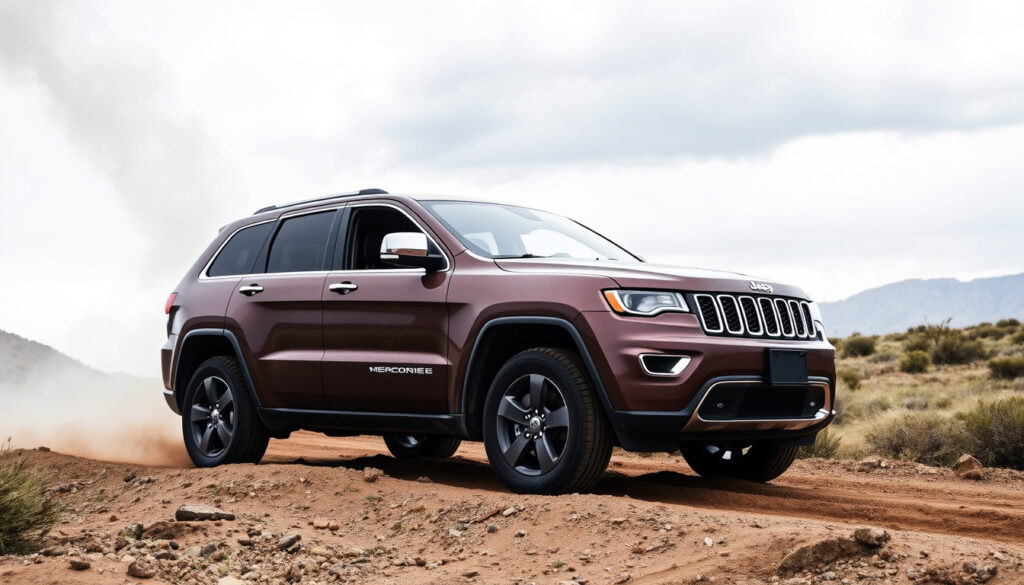
2017 Jeep Grand Cherokee: Worth Buying? Problems & Reliability
If you’re hunting for a used SUV and the 2017 Jeep Grand Cherokee has crossed your radar, you’re not alone. It’s one of those vehicles that owners either swear by or warn against—and the difference often comes down to which version you pick and what to watch for once you’ve got it. This review cuts through the noise with what real owners reported, what independent ratings say, and where the model still holds up versus where it trips up.
Engines Available: Three different engines · Transmission: Eight-speed automatic · 0-62mph Time (Summit): 8.2 seconds · Example Mileage (Owner Report): 68k miles · Towing Capacity: Brawny (not quantified)
Quick snapshot
- 3.5/5 reliability rating from RepairPal (average for class) (Stivers CDJR)
- 71% of owners give 5 stars on Kelley Blue Book (416 of 584 reviews) (Kelley Blue Book)
- Head gaskets fail at 110,000+ miles, often tied to cooling system issues (Consumer Reports)
- Whether 2018+ updates resolved shift and electrical issues
- Whether regional climate significantly affects failure rates
- Exact cost ranges for head gasket and engine seizure repairs
- 65,000 miles: motor mounts start failing with fluid leaks (Jeep Grand Cherokee Common Problems)
- 100,000 miles: radiators begin leaking (Cars.com consumer reviews)
- 110,000+ miles: head gasket failures documented (Consumer Reports reliability data)
- 2017 models now sit in the $20,000–$30,000 used range
- Pre-purchase inspection critical for cooling system and electrical
- Budget an extra $1,500–$3,000 for potential repairs within first 30k miles of ownership
Key specifications for the 2017 Grand Cherokee place it squarely in the midsize-to-full-size crossover segment.
| Field | Value |
|---|---|
| Model Year | 2017 |
| Body Style | SUV |
| Key Engines | Three options |
| Transmission | 8-speed automatic |
| AWD Option | Available |
Is a 2017 Jeep Grand Cherokee Worth Buying?
Whether a 2017 Grand Cherokee makes sense depends heavily on what you prioritize and how much homework you’re willing to do before signing. On paper, the WK2 generation (2011–2022) delivers a solid mix of on-road comfort and off-road capability that still holds up against newer competitors. Owner satisfaction data suggests most buyers don’t regret their choice—71% awarded five stars on Kelley Blue Book (Kelley Blue Book), with 416 of 584 reviews rating it highest marks. The catch is that “worth it” comes with asterisks tied to specific problem areas.
The gap between “great” and “nightmare” ownership often comes down to whether the previous owner kept up with cooling system maintenance. One deferred coolant flush can set the stage for head gasket failure at higher mileage.
Price and Value
Used 2017 Grand Cherokee prices range from roughly $20,000 to $32,000 depending on trim, mileage, and condition. Laredo models cluster at the lower end; Summit and SRT variants command premiums. The value proposition hinges on what you’re comparing against—a 2017 four-cylinder Toyota Highlander or V6 Ford Explorer typically lists within a few thousand dollars of a comparable Grand Cherokee, but the Jeep often wins on standard features and towing capacity.
Depreciation Trends
The 2017 model year follows typical FCA depreciation curves. Models with documented service records and no major red flags hold value better, but anything showing unresolved electrical complaints or cooling system deferred maintenance drops faster. The three recalls documented for 2017 Grand Cherokee Laredos purchased in October 2016 (Cars.com owner reports) suggest some units left the factory with outstanding issues that may not have been fully resolved.
Owner Reviews
Mixed is the honest summary here. Some owners report sailing past 100,000 miles with nothing beyond routine maintenance, while others cite repeated dealer visits for unresolved issues. “I have owned this vehicle for three years and it has given us more problems than the 11 cars my wife and I have owned combined,” wrote one Edmunds reviewer (Edmunds owner review). Contrast that with a Cars.com owner who posted about 68,000 miles with no major issues—a split that tracks with RepairPal’s 3.5 out of 5 reliability rating placing the 2017 roughly average for its class (Stivers CDJR reliability analysis).
The implication: buyers who get lucky inherit a capable SUV that ages well. Buyers who inherit a neglected cooling system or questionable electrical history inherit a money pit in waiting.
What Are Common Problems with a 2017 Jeep Grand Cherokee?
Consumer Reports documented a notably longer list of problem categories for the 2017 Grand Cherokee than for most competitors in the same segment. The issues fall into a few clusters: powertrain-adjacent items (head gaskets, motor mounts, transmission behavior), electrical gremlins (infotainment, radio frequency hub, fuse boxes), and cosmetic fit-and-finish complaints. Knowing which cluster applies to a specific vehicle tells you a lot about what maintenance history to demand.
Consumer Reports flagged 11 distinct problem categories for the 2017 Grand Cherokee—a red flag for shoppers who want a set-it-and-forget-it ownership experience.
Most Frequent Issues
Infotainment system screen failures with air bubbles causing random false selections requiring screen replacement represent one of the most common owner-reported complaints (Consumer Reports reliability page). GPS navigation failures—where the system cannot identify location or direction—also appear frequently. Air suspension pressure loss requiring immediate repair ranks among the powertrain-adjacent issues, alongside motor mount failures that typically begin around 65,000 miles (Jeep Grand Cherokee Common Problems video).
Repair Costs
Owner reports give rough cost anchors without full transparency. Radiator leaking at 100,000 miles with significant repair costs appears across multiple Cars.com reviews (Cars.com consumer reviews). Head gasket repairs run into thousands when water pump or cooling system damage accompanies the failure. Fuel filler neck assembly issues—causing the gas pump to shut off during refueling—represent a less expensive but annoying problem tied to a known design flaw.
Owner Complaints
Edmunds owner reviews paint the most alarming picture for ongoing issues. One owner reported six visits for hard downshifting and metal-to-metal clunk with the issue remaining unresolved (Edmunds owner complaint). Another logged seven visits for suspension issues without resolution. The pattern of “multiple module replacements with defective supplier parts requiring repeated repairs” tracks across Consumer Reports data (Consumer Reports problem tracking), suggesting that for some owners, the dealer visit count never quite ends.
What this means: a low-mileage 2017 with a stack of service records and documented software updates looks very different from a clean-title example with gaps in its history.
Is the 2017 Jeep Grand Cherokee Reliable?
Reliability for the 2017 Grand Cherokee splits into two stories depending on which data you prioritize. The quantitative ratings—RepairPal’s 3.5/5 and Consumer Reports’ owner-reported problem lists—place the 2017 somewhere between “average” and “below average” for the midsize SUV segment. The qualitative data—those 71% five-star ratings on KBB—suggest owners who didn’t hit the problem areas are broadly satisfied. The disconnect likely reflects how the problems cluster: most issues don’t appear until higher mileage, so early-mileage reviews skew positive.
Longevity Expectations
The WK2 generation shows a realistic service life that tracks with the documented failure patterns. Motor mounts start giving trouble around 65,000 miles (YouTube problem compilation). Cooling system components—water pump, radiator, and related seals—tend to need attention by 100,000 miles. Head gaskets failing at 110,000+ miles represent the upper end of the “expensive repair” zone (Consumer Reports reliability data). The owner who posted about engine seizure despite regular maintenance and synthetic oil changes (Cars.com owner report) illustrates the worst-case outcome when cooling maintenance gets missed.
Miles Durability
The Car Talk community expert description of head gasket behavior—”they will easily fail if engine ever significantly overheats, or if cooling system maintenance is deferred or done incorrectly”—frames the durability reality. Under ideal maintenance conditions, the 3.6 V6 and the 8-speed transmission that Car and Driver noted as working capably together can stretch past 150,000 miles. Under deferred maintenance conditions, the cooling system cascade can end an engine before 120,000. The difference comes down to one variable: whether the previous owner treated the cooling system as a priority.
Comparison to Other Years
The 2017 sits in the middle of the WK2 generation’s lifespan, with earlier 2011–2014 models showing higher rates of some electrical issues and later 2018+ models presumably benefiting from component updates. The three recalls affecting 2017 Laredos purchased in October 2016 (Cars.com recall data) suggest FCA was still working through supplier quality issues that later model years may have partly resolved.
The catch: no publicly available data confirms exactly which 2018+ updates addressed which problems, leaving buyers to rely on anecdote rather than documented engineering changes.
What Years to Avoid for a Jeep Grand Cherokee?
For a used buyer targeting the Grand Cherokee platform, the question isn’t just “which year” but “which condition”—though certain model years genuinely carry higher risk profiles. The WK2 generation’s first few years (2011–2013) had more first-run manufacturing issues, while the 2017 sits in the middle of the generation with a documented track record of specific problem areas that a sharp buyer can inspect for.
Worst Model Years
2011–2013 represent the highest-risk window for the WK2 generation due to early-production quality control issues. Electrical module failures, Uconnect problems, and fit-and-finish complaints appeared at higher rates than later model years. The 2014–2016 range improved incrementally, though Consumer Reports data shows the 2017 still carries notable problem categories. Reliability data suggests the worst bang-for-your-buck years to avoid are those with zero service records and undocumented dealer visit histories.
Best Alternatives
For used buyers prioritizing reliability over Jeep-specific features, the 2018–2020 Grand Cherokee models benefit from later-generation component revisions, though they command higher prices. Toyota 4Runner and Ford Explorer from the same era offer different trade-offs—less character and fewer off-road pretensions, but more predictable long-term reliability. The 2017 Grand Cherokee makes sense primarily when the price gap between it and a 2018+ model is substantial enough to absorb potential repair contingencies.
2017 Specifics
The 2017’s specific risk profile centers on three clusters: the cooling system cascade (water pump → radiator → head gasket), the electrical gremlins (fuse box, radio frequency hub, secondary battery), and the air suspension durability questions. A pre-purchase inspection that specifically checks coolant color and history, electrical module response times, and suspension wear patterns will reveal which cluster a specific vehicle falls into. Secondary batteries dying twice in less than four years for some owners (Kelley Blue Book owner reports) signals that even “simple” problems can recur if the root cause isn’t fully diagnosed.
Why this matters: a $3,000 discount on a 2017 with unclear service history is not a discount—it is an advance payment toward cooling system repairs that a thorough inspection would have revealed.
2017 Jeep Grand Cherokee Price, Value, and Specs?
The 2017 Grand Cherokee occupies a specific price and capability niche that still competes with newer crossovers on features per dollar. Three engines, standard 8-speed automatic, and a towing capacity that Auto Express rated as “brawny” keep it relevant against newer alternatives—provided the used example hasn’t accumulated the specific failure patterns documented across owner forums.
Used 2017 Grand Cherokees cost less than new crossovers and offer more standard features, but the ownership cost calculus only works if you account for potential repair contingencies the sticker price doesn’t show.
Dimensions and Interior
The WK2 platform’s dimensions place the Grand Cherokee between midsize and full-size territory—larger than a Honda CR-V or Toyota RAV4, smaller than a Chevy Tahoe. Interior quality in 2017 models varies by trim: Summit variants get leather-wrapped dashes that some owners report peeling and pulling off (YouTube interior review), while base Laredo trims use harder plastics that hold up better. The Uconnect infotainment system’s upper corners peeling on some units (Kelley Blue Book owner notes) represents the most visible cosmetic complaint.
Current Market Prices
Used 2017 Grand Cherokee listings span a wide range: Laredo models with 80,000+ miles hover around $20,000–$24,000; Limited and Overland trims with similar mileage land in the $24,000–$28,000 range; Summit models with lower mileage occasionally crest $32,000+. The KBB data showing 416 five-star ratings from 584 total (Kelley Blue Book review aggregate) suggests strong overall satisfaction despite documented reliability concerns—likely because owners who didn’t hit the problem areas feel they got good value.
For Sale Options
The used market offers plenty of 2017 Grand Cherokees, but condition variance is wide. Private sellers often can’t document cooling system maintenance history; franchise dealers may have performed recon but don’t always disclose repair work done. The fuel filler neck issue causing gas pump shutoff during refueling (Cars.com owner-reported defect) represents the kind of annoyance that doesn’t show on Carfax but affects daily ownership—worth asking about during any test drive.
The implication: a vehicle history report is necessary but not sufficient. The coolant maintenance question and electrical module behavior during the test drive will tell you more than any document.
Detailed specifications reveal the 2017 Grand Cherokee’s mechanical profile across all available powertrains.
| Specification | Detail |
|---|---|
| Engine Options | 3.6L V6 (295 hp), 5.7L V8 (360 hp), 3.0L EcoDiesel (240 hp) |
| Transmission | 8-speed automatic (standard across all engines) |
| Drivetrain | RWD standard, AWD/4WD available |
| 0-62mph (Summit V6) | 8.2 seconds (Auto Express test data) |
| Towing Capacity | Up to 7,200 lbs (V6), up to 7,400 lbs (V8 with max tow package) |
| Wheelbase | 114.8 inches |
| Ground Clearance | 8.1 inches (standard), up to 10.8 inches (with air suspension) |
| Fuel Tank | 24.6 gallons |
| EPA MPG (V6 RWD) | 19 city / 26 highway |
| Cargo Volume | 36.3 cubic feet behind rear seats, 68.3 cubic feet seats folded |
Upsides
- Strong towing capacity for class
- Standard 8-speed automatic across all engines
- 71% owner satisfaction on KBB
- Capable off-road with available Quadra-Drive II
- Three engine options including diesel for efficiency buyers
- Interior space competitive with newer midsize crossovers
The upsides show genuine strengths in towing and drivetrain capability that keep the 2017 competitive against newer crossovers when the price is right.
Downsides
- 11 problem categories flagged on Consumer Reports
- Head gaskets fail at 110,000+ miles without cooling maintenance
- Electrical issues often require repeated dealer visits
- Uconnect screen failures and peeling reported
- Air suspension requires replacement every few years
- RepairPal rates 3.5/5—roughly average for class
The downsides reveal that the most expensive failures are avoidable—but only if a buyer verifies the cooling system history before purchase.
What Owners Say
I have owned this vehicle for three years and it has given us more problems than the 11 cars my wife and I have owned combined.
— 2017 Grand Cherokee owner, Edmunds
I loved my 2017 Jeep Grand Cherokee from the start, bought it brand new and have done all regular maintenance with synthetic oil changes regularly. Now it is just an expensive lawn ornament because the engine seized without warning.
— 2017 Grand Cherokee owner, Cars.com
Head gasket failed at 110,000 miles. Leaking into cylinder and causing it to miss out, use tablets to help seal the gasket. It has helped!
— 2017 Grand Cherokee owner, Consumer Reports
Related reading: repair costs and common fixes · local repair services near you
While 2017 models face head gasket failures around 110k miles, best years for used reliability highlight stronger options in the lineup.
Frequently asked questions
How many miles will a 2017 Grand Cherokee last?
With proper cooling system maintenance, the 2017 Grand Cherokee can reach 150,000+ miles before major repairs. Head gaskets typically fail around 110,000 miles when cooling system maintenance has been deferred. Motor mounts and radiators tend to need attention by 65,000–100,000 miles respectively.
What is the best year model Jeep Grand Cherokee to buy?
For used buyers, 2018 and later model years benefit from component revisions that address some electrical and mechanical issues from earlier WK2 years. Among the 2011–2022 generation, the 2014–2016 range offers a balance of lower prices and accumulated problem data that makes pre-purchase inspections more predictive. The 2017 works best when priced significantly below 2018+ examples.
What years to avoid for a Jeep Grand Cherokee?
2011–2013 represent the highest-risk window for first-run production issues. However, any model year with undocumented service history or gaps in cooling system maintenance represents a year to avoid. The risk isn’t strictly model-year-dependent—it depends more on what maintenance the specific vehicle received.
Which Jeep Grand Cherokee to stay away from?
Steer clear of any 2017 Grand Cherokee where the seller cannot document regular coolant flushes, or where the air suspension shows sign of prior failure without documented repair. Vehicles with electrical complaint histories that were “fixed” without documented software updates may continue to show intermittent issues. Ask specifically about the secondary battery, fuse box, and transmission adaptive learning reset.
Is a 2017 Jeep Grand Cherokee a good buy?
It can be—but only with conditions. A 2017 Grand Cherokee with documented cooling system maintenance, clear title, and verifiable service records offers strong value for buyers who want the Jeep’s towing capacity and off-road capability at a used price. The same model without service documentation is a gamble. Budget $1,500–$3,000 above purchase price for potential repairs within your first 30,000 miles of ownership.
More related posts
 How to Connect AirPods to iPhone, Android & Windows
 T-Mobile Plans: Compare Pricing, Features & Roaming
 Best Colognes for Men 2026: Top Picks from Experts
 How Long Does Poison Ivy Last? Duration & Treatment
 Alycia Debnam-Carey: Biography, The 100, Fan Questions
 Anthony Edwards (Actor): Top Gun, ER, Age, Height, Bio
 Air Fryer French Fries: Time, Temp, and Tips
 Woman in Cabin 10: Why It Got Bad Reviews & Is It Worth Watching
