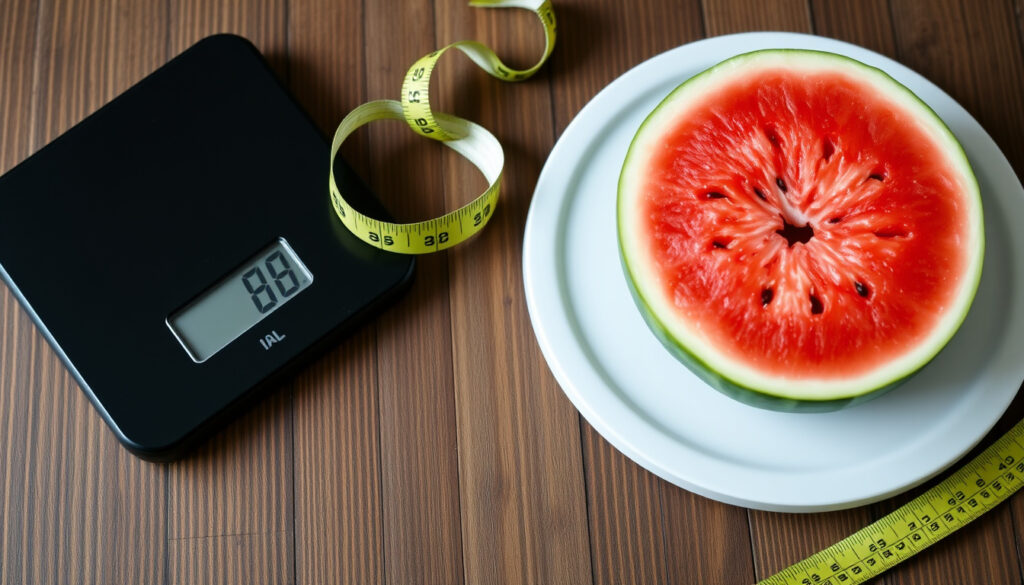
How Many Calories in Watermelon? Nutrition & Weight Loss
You grab a slice of watermelon on a hot day—it’s sweet, refreshing, and you wonder: how many calories am I actually eating? The answer is surprisingly low, and that’s exactly why this fruit has become a go-to for anyone watching their waistline.
Calories per cup (diced): 46 ·
Calories per slice (1/16 of melon): 86 ·
Calories in a whole watermelon: 1360 ·
Carbohydrates per cup: 12 grams ·
Vitamin A per cup: 865 IU ·
Water content by weight: 92%
Quick snapshot
- 46 calories per cup (diced) (USDA FoodData Central)
- 86 calories per slice (1/16) (Healthline)
- 1360 calories per whole melon (USDA FoodData Central) (USDA FoodData Central)
- Vitamin A: 865 IU per cup (N.C. Cooperative Extension)
- Vitamin C: 25% DV per two cups (Watermelon Board)
- Lycopene: 6890 mcg per cup (N.C. Cooperative Extension) (N.C. Cooperative Extension)
- High water content (91–92%) for fullness (Healthline)
- Low calorie density (30 cal / 100g) (USDA FoodData Central)
- May reduce cravings when eaten as snack (Healthline)
- High glycemic index (72–80) (Healthline)
- Can cause bloating in large amounts (Healthline)
- Not a complete meal replacement (USDA FoodData Central)
How many calories are in a whole watermelon?
Most people don’t eat an entire watermelon in one sitting, but knowing the total helps put portion size in perspective. One standard whole watermelon weighs about 4.5 kilograms (that’s roughly 10 pounds). Run the math: at 30 calories per 100 grams, the whole fruit clocks in at about 1360 calories – roughly the same as two slices of pizza or a medium fast-food meal.
- 100 grams: 30 calories (USDA FoodData Central)
- 1 cup (diced, 152g): 46 calories (USDA FoodData Central)
- 1 slice (1/16 of melon, 286g): 86 calories (Healthline)
- 1 wedge (large slice, approx. 400g): 120 calories (USDA FoodData Central)
- Half a watermelon (about 2.25 kg): 680 calories (USDA FoodData Central)
- 1 kilogram: 300 calories (USDA FoodData Central)
The implication: even a generous serving of watermelon – a full slice – contributes less than 5% of a standard 2000-calorie diet. You’d have to eat a whole kilogram to hit 300 calories, which is still a modest energy load for that volume of food.
Watermelon’s low calorie density makes it one of the few fruits where you can eat a large volume without blowing your daily budget. Yet its high glycemic index (72–80) means blood sugar can spike quickly if you eat a lot in one go. The trade-off: volume for glycemic load.
Nutrition facts at a glance
Three key serving sizes, one consistent pattern: watermelon delivers a lot of water and micronutrients for very few calories.
| Measurement | Weight | Calories | Carbs (g) | Sugar (g) | Fiber (g) |
|---|---|---|---|---|---|
| 100 grams | 100g | 30 | 7.6 | 6.2 | 0.4 |
| 1 cup (diced) | 152g | 46 | 11.5 | 9.4 | 0.6 |
| 1 wedge (1/16 melon) | 286g | 86 | 21.7 | 17.7 | 1.1 |
| Whole melon | ~4500g | 1360 | 342 | 279 | 18 |
Data per serving: USDA FoodData Central; wedge estimate based on Healthline.
What this means: if you’re tracking carbs, one cup of watermelon has about the same carbohydrate load as a small slice of bread. But watermelon’s high water content means the net effect on satiety is very different.
Is watermelon good for you when trying to lose weight?
Short answer: yes – and the evidence comes down to three features: low calorie density, high water content, and a volume that fills up your stomach before you’ve eaten many calories. A 2019 study in Nutrients (referenced via Healthline) found that participants who swapped a low-calorie snack for watermelon reported greater satiety and less hunger.
Watermelon and weight loss
- Watermelon is 91–92% water by weight (Healthline). That water adds volume without calories, so you feel full on fewer total calories.
- One cup of watermelon has 46 calories – about the same as 10 almonds, but with roughly 10 times the weight (USDA FoodData Central).
- Watermelon contains a small amount of fiber (0.4g per 100g) – not enough to be a primary source, but the combination of water + fiber + natural sugar can help curb sweet cravings (Healthline).
For someone trying to cut 500 calories a day, swapping a sugary snack bar (250 cal) for two cups of watermelon (92 cal) saves 158 calories while delivering a larger, more satisfying serving. Over a month, that’s nearly 4,700 calories – about 1.3 pounds of body fat.
The pattern: watermelon isn’t a fat burner, but it’s a powerful space filler in a calorie-controlled diet. The catch: it won’t provide lasting fullness on its own. Pair it with protein or healthy fat for sustained satiety.
Can I eat 1 kg of watermelon a day?
Technically, yes – 1 kilogram of watermelon contains about 300 calories, which for most adults is a reasonable snack portion. But the real question is whether it’s wise to eat that much in one day.
Caloric impact of 1 kg watermelon
- 300 calories from watermelon alone (USDA FoodData Central) – about 15% of a 2000-calorie diet.
- That 1 kg delivers about 76g of carbohydrates – over half of which is sugar (Healthline).
- Water content is so high that 1 kg of watermelon contains over 900ml of water – roughly four cups (Healthline).
Potential downsides of large portions
Eating that much watermelon in one session can lead to digestive discomfort – bloating, gas, or diarrhea – because of the high water and sugar load moving through the gut quickly (Healthline). For people with diabetes or insulin resistance, the rapid sugar absorption from a large portion may cause a blood sugar spike despite the moderate total carbohydrate count (Healthline).
The trade-off: for a healthy person, 1 kg spread throughout the day is fine. But eating it all at once – say as a post-dinner “dessert” – is where the downsides kick in.
Is there a downside to eating watermelon?
Watermelon is safe for most people, but it’s not risk-free. The main concerns involve its glycemic index, its effect on digestion in large amounts, and rare allergic reactions.
Possible risks and side effects
- Blood sugar impact: Watermelon has a glycemic index of 72–80 (Healthline). That’s considered high, though the actual glycemic load per serving is low because of the low carbohydrate content per bite.
- Digestive upset: Large servings can cause bloating, gas, or diarrhea due to water and sugar overload (Healthline).
- Allergy: Watermelon allergy is rare but exists, especially in people with pollen-food allergy syndrome (Healthline).
- Nutrient profile: Watermelon is low in protein and fat – it’s not a complete meal. Relying on it alone could lead to missing essential nutrients (USDA FoodData Central).
Who should limit watermelon
People with diabetes or prediabetes should be mindful of serving size. The Healthline experts suggest sticking to one cup per sitting and pairing it with a protein source (like Greek yogurt or nuts) to blunt the blood sugar response.
“Two cups of watermelon has 80 calories, no fat, and provides vitamin C (25% DV).” – Watermelon Board (Watermelon Board)
The catch: the very qualities that make watermelon a weight-loss ally – high water, low fiber, quick sugars – can trip up people who need steady blood glucose. Know your body, and treat watermelon as a treat, not a staple.
Which fruit is best for weight loss?
No single fruit will magically melt fat, but some are better tools than others. Watermelon holds its own because of sheer volume, but it’s not the top contender in every category.
Fruits that promote weight loss
- Berries (strawberries, blueberries, raspberries): Low in calories (32–57 per 100g) and high in fiber (2–6g per cup). Fiber increases satiety and slows sugar absorption (Healthline).
- Apples: About 52 calories per 100g, with 2.4g fiber. The whole fruit’s crunch and chewing time promote fullness (USDA FoodData Central).
- Grapefruit: 42 calories per 100g, traditionally linked to weight loss diets. Some studies suggest it may improve insulin sensitivity (Healthline).
- Watermelon: 30 calories per 100g – the lowest of this group – but also the lowest fiber (0.4g) (USDA FoodData Central).
Watermelon’s low fiber means the satiety effect is mostly due to water volume, which passes through the stomach relatively quickly. Berries and apples, with their fiber, keep you feeling full longer. For weight loss, watermelon is an excellent replacement for high-calorie snacks, but not a substitute for fiber-rich fruit.
“Watermelon is low in calories but high in water and nutrients like vitamin C and lycopene.” – Healthline
How watermelon compares to other fruits
Five popular weight-loss fruits, four different calorie densities – watermelon wins on volume but loses on fiber.
| Fruit (100g) | Calories | Fiber (g) | Water % | Calories per cup |
|---|---|---|---|---|
| Watermelon | 30 | 0.4 | 92 | 46 |
| Strawberries | 32 | 2.0 | 91 | 49 |
| Grapefruit | 42 | 1.6 | 88 | 64 |
| Apple | 52 | 2.4 | 86 | 81 |
| Banana | 89 | 2.6 | 75 | 134 |
Sources: USDA FoodData Central for all values.
Pros and Cons of Watermelon for Dieters
Upsides
- Extremely low calorie density (30 cal / 100g)
- High water content (92%) promotes fullness
- Rich in vitamin C (25% DV per two cups) and lycopene
- Natural sweetness can replace sugary desserts
- Versatile: can be eaten raw, frozen, or blended
Downsides
- Low fiber content (0.4g per 100g)
- High glycemic index (72–80) – may spike blood sugar
- Can cause bloating or diarrhea in large amounts
- Low in protein and healthy fats – not a meal
- Seasonal and perishable – not always available fresh
The implication: watermelon’s upsides make it a powerful tool for weight loss, but its downsides mean it works best as part of a balanced diet, not as a standalone solution.
Frequently asked questions
How many calories are in a slice of watermelon?
One slice (1/16 of a standard melon, about 286g) contains approximately 86 calories, according to Healthline.
Is watermelon fattening if eaten at night?
No – watermelon is not inherently fattening at night. The body processes calories the same way regardless of time. However, eating a large portion close to bedtime may cause digestive discomfort or a blood sugar spike in sensitive individuals (Healthline).
Can watermelon help with belly fat loss?
No food targets belly fat specifically. Watermelon can aid overall fat loss by replacing higher-calorie snacks with a low-calorie, high-volume option. Weight loss from any healthy diet will reduce belly fat over time (Healthline).
What fruits are lowest in calories for weight loss?
Watermelon (30 cal/100g) and strawberries (32 cal/100g) are among the lowest-calorie fruits. Other good choices include cantaloupe, grapefruit, and peaches (USDA FoodData Central).
How much watermelon is too much per day?
For most adults, 1–2 cups (152–304g) per day is a reasonable serving. Eating more than 1 kg in one session may cause digestive issues or a rapid blood sugar rise. Listen to your body and stop when satisfied (Healthline).
Does watermelon have sugar?
Yes – watermelon contains about 6.2 grams of sugar per 100 grams, which is natural fructose and glucose. That’s similar to other melons and lower than grapes or bananas (USDA FoodData Central).
Is watermelon good for hydration during a diet?
Absolutely. With 92% water content, watermelon counts toward your daily fluid intake. It can be a tasty, low-calorie way to stay hydrated, especially after exercise (Healthline).
Related reading: What Foods Are High in Fiber? Best Sources & Tips for More · How Many Steps a Day to Lose Weight? 7,000–10,000 Goal
“One cup of watermelon contains 46 calories, 12 grams of carbohydrates, and 865 IU of vitamin A.” – N.C. Cooperative Extension
Editor’s note: Calorie counts are from official USDA database and cross-verified with health authority sources. Individual fruit sizes vary, so actual numbers may differ slightly. This article is for informational purposes and does not replace medical advice.
For the diet-watcher reading this before their next grocery run, the choice is clear: load up on watermelon as a hydrating, low-calorie snack, but pair it with fiber-rich fruits and a source of protein to keep hunger at bay – or risk the blood sugar rollercoaster that a bowl of plain watermelon can sometimes bring.
More related posts
 Royal Challengers Bengaluru vs Mumbai Indians Match Scorecard – IPL 2024 Full Result and Stats
 My Fault: London – Is It a Sequel? Cast & Plot
 Delicious in Dungeon Season 2 Release Date: Confirmed News
 Lucy Hale Movies and TV Shows: Complete Filmography Guide
 How to See Deleted Messages on iPhone – Recovery Guide
 How to Speak to a Live Person at Amazon: Numbers & Tips
 Austin Butler Movies and TV Shows: Full Filmography & Biography
