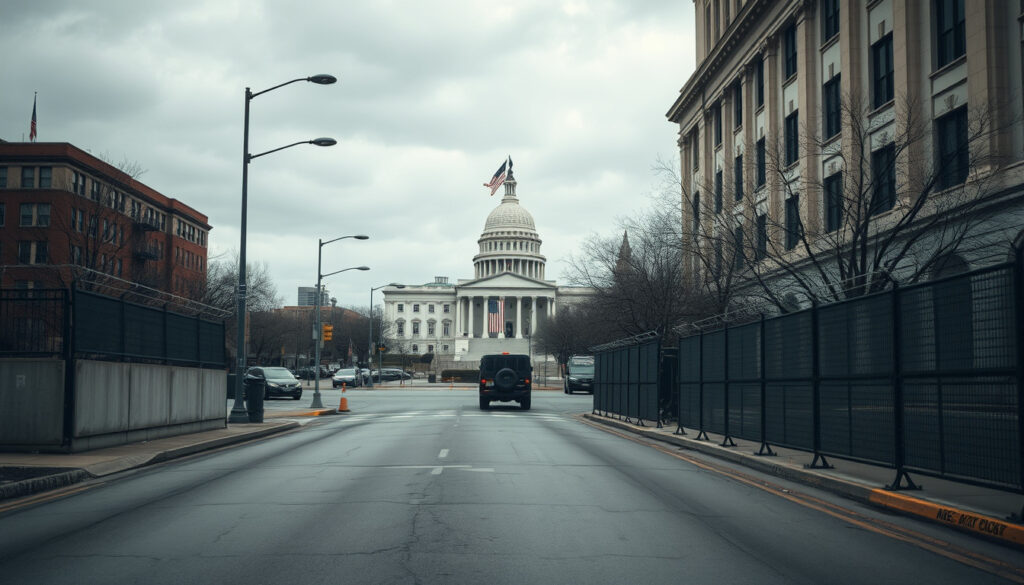
What to Do If Martial Law Is Declared: A U.S. Guide
There’s a reason the phrase “martial law” makes most people stop and listen hard. It conjures images of soldiers in the streets, checkpoints, and suspended freedoms. But the reality of what happens if martial law is declared in the United States is far more nuanced—and knowing the constitutional limits and your rights can make all the difference.
Times martial law declared in the U.S.: Over 68 instances, mostly local, since 1776 ·
Federal martial law declarations: Never declared for the entire United States ·
National Guard deployment authorization: President can deploy via Insurrection Act ·
Constitutional amendments detailing removal: 25th Amendment and impeachment (Article II) ·
Historical duration of martial law: Up to 2 years in Hawaii after Pearl Harbor
Quick snapshot
- The President can deploy the National Guard under the Insurrection Act (League of Women Voters)
- Habeas corpus can be suspended under Article I, Section 9 (FindLaw)
- Impeachment and 25th Amendment are two formal removal processes (LSU Law PDF)
- Whether a full national martial law declaration is constitutional (FindLaw)
- Specific duration limits for martial law in the absence of legislation (LSU Law PDF)
- Enforceability of leaving the country during a declaration (Office of Justice Programs)
- 1862–1865: Martial law in border states during Civil War (Brennan Center for Justice)
- 1941–1944: Hawaii under martial law after Pearl Harbor (FindLaw)
- 1967: Detroit riot: martial law declared by Michigan governor (Brennan Center for Justice)
- 1992: LA riots: local curfews but no formal martial law (Office of Justice Programs)
- Check official sources: state governor or federal declarations
- Follow curfew orders and avoid confrontation
- Document everything and contact legal help if detained
These four numbers frame the legal landscape for martial law in America.
| Fact | Value |
|---|---|
| Total U.S. martial law declarations | 68 instances (most at state or local level) (Brennan Center for Justice) |
| Last major federal martial law | Hawaii, 1941–1944 (after Pearl Harbor) |
| Presidential removal methods | Impeachment, 25th Amendment, resignation (LSU Law PDF) |
| National Guard activation authority | President via the Insurrection Act (Wikipedia) |
What would happen if martial law was declared in the US?
What changes immediately under martial law?
- Military commanders replace local civilian authorities (Office of Justice Programs)
- Civil liberties, including habeas corpus, can be suspended under Article I, Section 9
- Curfews and movement restrictions are typically enforced
What rights are suspended?
- Habeas corpus – the right to challenge detention – may be suspended
- Freedom of assembly can be restricted
- Legal counsel remains available but may be limited
The implication: Understanding these limits ahead of time is the difference between panic and preparedness.
How many times has martial law been declared in the United States?
The most famous historical examples
- 1862–1865: Border states during the Civil War
- 1941–1944: Hawaii after Pearl Harbor – the longest federal martial law period
- 1967: Detroit – state-level declaration by the Michigan governor
State-level vs. federal declarations
According to the Brennan Center for Justice, the U.S. has seen at least 68 instances of martial law, almost all at the state or local level. The federal government has not declared nationwide martial law in its history. The last state declaration was Maryland in 1963 during the Civil Rights Movement.
Every U.S. martial law episode has been temporary and geographically limited. A national declaration would break with more than two centuries of precedent.
The implication: History shows that when martial law appears, it arrives with geographic and time boundaries.
Can the president deploy the National Guard?
What is the Insurrection Act?
The Insurrection Act of 1807 allows the president to deploy the National Guard and active-duty military for domestic law enforcement when requested by a state legislature or governor, or when civil authority has broken down. It was used in the 1950s and 1960s for school desegregation and the 1992 Los Angeles riots.
What restrictions apply to the President’s authority?
The Posse Comitatus Act of 1878 prohibits the Army (and by extension other military branches) from engaging in civilian law enforcement unless Congress explicitly authorizes it. The Insurrection Act is one of those exceptions, but it does not give the president a blank check. Legal scholars argue the Youngstown framework limits what a president can do without congressional approval.
The president’s power to deploy forces is real but bounded. Any use beyond established law invites legal challenges – and potentially impeachment.
The catch: Legal challenges are certain if a president oversteps, but court battles take time—and in a crisis, time is not on the civilian side.
What three things can remove a president from office?
Impeachment and conviction
Article II, Section 4 of the Constitution allows removal after the House impeaches and the Senate convicts for “high crimes and misdemeanors.”
The 25th Amendment
Section 4 of the 25th Amendment lets the Vice President and a majority of the Cabinet declare the president unable to discharge duties, temporarily transferring power to the VP.
Resignation or death
The president can voluntarily resign. These mechanisms exist independent of any martial law declaration; martial law does not alter the removal process.
Rumors that martial law automatically removes the president are false. Removal requires specific constitutional action, not a military decree.
What this means: The constitutional guardrails remain standing even during the worst emergencies.
What are my rights during martial law?
Right to legal counsel and habeas corpus
The Constitution allows suspension of habeas corpus “when in Cases of Rebellion or Invasion the public Safety may require it” (Article I, Section 9). The Supreme Court has never fully defined the limits, but necessity is the key test.
Freedom of movement and assembly
Curfews and travel bans are common under martial law. Movement restrictions can be enforced by military patrols. Violating curfew could lead to detention.
Self-defense and property rights
There is no blanket suspension of the right to self-defense, but military forces may seize property for public use. Compensation is theoretically available under the Fifth Amendment’s Takings Clause.
The bottom line: Rights are not automatically erased, but proactive documentation and legal counsel are your only reliable shields.
How to prepare for martial law?
Action steps before a declaration
- Stockpile food, water, and medical supplies for a minimum of two weeks
- Keep identification documents (passport, birth certificate) and cash easily accessible
- Establish a family communication plan and a safe meeting point
- Learn the curfew rules in your state – check state emergency management websites
What to include in a preparedness kit
- Non-perishable food and bottled water (1 gallon per person per day)
- First aid kit and prescription medications
- Flashlights, batteries, and a battery-powered radio
- Copies of IDs, insurance cards, and a list of emergency contacts
Communication strategies during martial law
Cell networks may be monitored or restricted. Have a backup plan: agree on a meeting location and designate an out-of-state relative as a point of contact. Avoid discussing sensitive plans on social media.
Preparing thoroughly reduces panic, but hoarding or openly resisting may attract military attention. Discretion is your ally.
The trade-off: Preparation buys you options, but discretion keeps you safe.
Confirmed facts
- The President can deploy the National Guard under the Insurrection Act (League of Women Voters)
- Habeas corpus can be suspended under Article I, Section 9 (FindLaw)
- Impeachment and 25th Amendment are two formal removal processes (LSU Law PDF)
What’s unclear
- Whether a full national martial law declaration is constitutional (FindLaw)
- Specific duration limits for martial law in the absence of legislation (LSU Law PDF)
- Enforceability of leaving the country during a declaration (Office of Justice Programs)
“The necessity that justifies martial law also limits its duration – it is never a permanent substitute for civilian government.”
— LSU Law (constitutional legal analysis)
“Martial law is the temporary substitution of military authority for civilian rule, usually invoked when civilian authority has ceased to function.”
— Office of Justice Programs (U.S. research agency)
“The Insurrection Act remains a key legal mechanism that enables or limits federal use of troops in domestic emergencies.”
The historical record is clear: martial law in America has always been temporary and geographically focused. The Brennan Center for Justice documents 68 instances, none at the national level. For Americans, the immediate implication is that a hypothetical nationwide martial law would break all precedent – and its legality would be contested from day one.
Frequently asked questions
Is martial law the same as a state of emergency?
No. A state of emergency is usually a civilian declaration that activates extra resources; martial law replaces civilian authority with military control.
Can martial law be declared without the President?
Yes. State governors can declare martial law within their own borders under most state constitutions.
Does the military have full authority during martial law?
Legal scholars debate this. The U.S. military commander may have broad authority, but the Posse Comitatus Act and constitutional checks still apply.
How long can martial law last?
There is no statutory limit. The legal standard is “necessity”: it can last only as long as civilian authority is unable to function. Hawaii’s lasted nearly three years.
What happens to the Constitution during martial law?
It remains in effect, but certain protections (habeas corpus, free assembly) may be suspended temporarily. The 25th Amendment and impeachment still apply.
Are there countries where martial law is still in effect?
Yes. Currently, martial law or military rule exists in places like Myanmar, Sudan, and Thailand. In the U.S., no nationwide martial law is in effect.
Can state governors declare martial law independently?
Yes. Most state constitutions give governors the power to impose martial law within their borders during emergencies. The federal government has no authority to stop a state governor from doing so unless it conflicts with federal law.
Related reading
More related posts
 Baltimore Ravens vs Pittsburgh Steelers Stats – Head-to-Head Record, Recent Scores
 Never Have I Ever Questions – Curated Lists for Every Group
 NBA Western Conference Standings – Final 2024-25 Records and Playoffs
 Naturalization Ceremony ICE Concerns: Cancellations and Rights
 Alycia Debnam-Carey: Biography, The 100, Fan Questions
 US Dollar to Euro: Live Rate & Why It’s Falling
 Chair Yoga for Seniors – Gentle Poses for Strength Flexibility
 Guadalupe Mountains National Park: Guide to Hikes & Peaks
