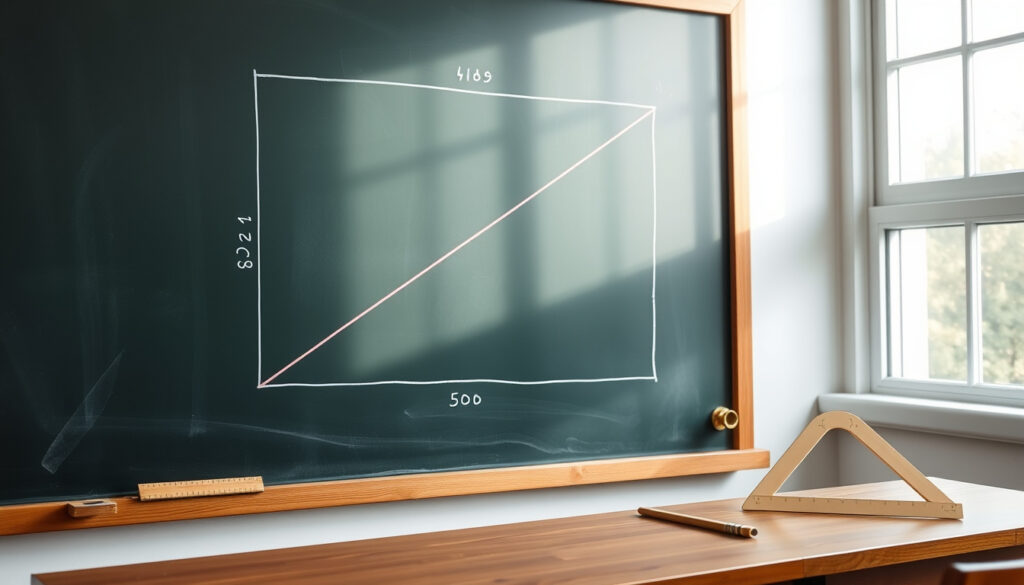
What is a Parallelogram? Definition, Properties, Types
Few shapes in geometry are as immediately recognizable yet as precisely defined as the parallelogram. According to Encyclopaedia Britannica (reference publisher), a parallelogram is a quadrilateral whose opposite sides are parallel — a definition that unlocks predictable rules about its angles, sides, and diagonals.
Sides: 4 · Parallel pairs: 2 · Vertices: 4 · Sum of interior angles: 360° · Area formula: base × height · Perimeter formula: 2(base + side)
“A parallelogram is a quadrilateral whose opposite sides are parallel.” — Encyclopaedia Britannica
Quick snapshot
- Quadrilateral with two pairs of parallel sides (Encyclopaedia Britannica)
- Opposite sides and angles equal (Math Is Fun (math reference site))
- Diagonals bisect each other (Encyclopaedia Britannica)
- Opposite sides parallel and equal (Math Is Fun (math reference site))
- Opposite angles equal (Math Is Fun (math reference site))
- Consecutive angles supplementary (Math Is Fun (math reference site))
- Area = base × height (Math Is Fun)
- Perimeter = 2(base + side) (Math Is Fun)
- Rectangle — four right angles (Encyclopaedia Britannica)
- Square — four equal sides and four right angles (Encyclopaedia Britannica)
- Rhombus — four equal sides (Encyclopaedia Britannica)
- Any quadrilateral with two pairs of parallel sides (Encyclopaedia Britannica)
Six properties, one pattern: every parallelogram, no matter what it looks like, shares the same fundamental rules about side relationships, angle pairs, and diagonal behavior.
The table below summarizes the key properties of a parallelogram.
| Property | Value |
|---|---|
| Number of sides | 4 |
| Number of parallel pairs | 2 |
| Sum of interior angles | 360° |
| Area formula | base × height |
| Perimeter formula | 2(base + side) |
| Diagonals property | Bisect each other |
What is a simple definition of a parallelogram?
Key characteristics
A parallelogram is a quadrilateral — a four-sided polygon — in which both pairs of opposite sides are parallel. That means each side runs alongside its opposite partner without ever meeting. As Cuemath (math education platform) puts it, a parallelogram is a four-sided plane figure with both pairs of opposite sides parallel and equal. This dual condition — parallel and equal — is what sets parallelograms apart from other quadrilaterals like trapezoids, which only require one pair of parallel sides.
Beyond the parallel rule, two more characteristics hold for every parallelogram: opposite sides are identical in length, and opposite angles are identical in measure. MathPlanet (geometry instruction site) explains that a parallelogram is a special type of quadrilateral precisely because these properties are baked into its definition. Once you know a shape is a parallelogram, you can predict its side lengths and angle measures without measuring everything.
Euclidean geometry definition
In Euclidean geometry, the definition is formalized: a parallelogram is a quadrilateral with two pairs of parallel sides. The term itself comes from the Greek parallelogrammon — “bounded by parallel lines.” This definition appears in Euclid’s Elements and remains the standard across mathematics curricula worldwide. The key takeaway: if a shape has four sides and both sets of opposite sides are parallel, it qualifies as a parallelogram, regardless of its specific angles or side proportions.
The parallel-side rule is the single test that decides whether a quadrilateral is a parallelogram. A shape that fails this test — like a trapezoid or a generic irregular quadrilateral — cannot claim the predictable angle and diagonal properties that make parallelograms so useful in construction, design, and geometry proofs.
The implication: the definition isn’t just a label — it’s a gateway to a full set of reliable rules. Once a shape meets the parallel-sides condition, everything else about its geometry becomes predictable.
“Opposite sides of a parallelogram are parallel to each other.” — Math Is Fun
How do you identify a parallelogram?
Check for parallel sides
Start with the simplest test: look at both pairs of opposite sides. In a parallelogram, each pair must be parallel. Math Is Fun (math reference site) states that opposite sides of a parallelogram are parallel to each other — this is the defining property. If you can draw a set of parallel lines for one pair and another set for the other pair, you’ve identified a parallelogram. Visually, this means the shape looks “slanted” or “pushed over” compared to a rectangle, but the top and bottom edges stay parallel, as do the left and right edges.
Verify side lengths and angles
Once you’ve confirmed parallel sides, check the side lengths. In a parallelogram, opposite sides are equal in length — no exceptions. Math Is Fun (math reference site) confirms that opposite sides of a parallelogram are equal in length. Similarly, opposite angles are equal. If you measure angle A and angle C, they should match; angle B and angle D should match. MathPlanet (geometry instruction site) adds that if one angle in a parallelogram is a right angle, then all four angles are right angles — turning the shape into a rectangle.
Use diagonal properties
Another reliable test: draw the two diagonals. In a parallelogram, they bisect each other — meaning they intersect at their midpoints. Encyclopaedia Britannica (reference publisher) states that the diagonals of a parallelogram bisect each other. Additionally, each diagonal divides the parallelogram into two congruent triangles. Third Space Learning (math tutorial platform) notes that each diagonal of a parallelogram separates it into two congruent triangles. If you can verify that the diagonals cross at their midpoints, you’ve confirmed the shape is a parallelogram.
Four checks — parallel sides, equal opposite sides, equal opposite angles, bisecting diagonals — and they all point to the same conclusion. Any one of these properties guarantees the others in a parallelogram, which is why teachers often say “if you know one, you know them all.”
What are the 4 types of parallelograms?
Rectangle
A rectangle is a parallelogram where every interior angle is a right angle (90°). Encyclopaedia Britannica (reference publisher) identifies a rectangle as a type of parallelogram with four right angles. Because it’s a parallelogram, opposite sides remain parallel and equal. The right-angle condition makes rectangles especially common in architecture and design — doors, windows, screens, and books are all rectangles. The perimeter formula stays the same, and the area is simply length × width, which is a special case of base × height where the height equals the side length.
Square
A square is the most constrained type of parallelogram: it has four equal sides and four right angles. Encyclopaedia Britannica (reference publisher) notes that a square is both a rectangle and a rhombus, making it a special case of each and therefore a parallelogram. Every square is a rectangle, a rhombus, and a parallelogram — but not every parallelogram is a square. This hierarchical relationship is a common source of confusion, so it’s worth remembering: a square inherits all the properties of the other three types.
Rhombus
A rhombus is a parallelogram with four equal sides. Encyclopaedia Britannica (reference publisher) defines a rhombus as a type of parallelogram with four equal sides. Unlike a rectangle, a rhombus does not require right angles — its angles can be acute and obtuse, as long as opposite angles stay equal. A diamond shape is a classic example of a rhombus. The area of a rhombus can be calculated using base × height, but also using the formula (diagonal₁ × diagonal₂) / 2, which works because the diagonals of a rhombus are perpendicular.
Rhomboid
A rhomboid is a parallelogram that is not a rectangle, square, or rhombus. It has opposite sides parallel and equal, and opposite angles equal, but no right angles and adjacent sides of different lengths. In other words, it’s the “general” parallelogram — the shape most people picture when they hear the word. A rhomboid has no special symmetry beyond the basic parallelogram properties, making it the most generic member of the family. The area and perimeter formulas for a parallelogram apply directly without any special-case simplifications.
What are the 5 rules of a parallelogram?
Rule 1: Opposite sides are parallel
This is the defining rule. Both pairs of opposite sides must be parallel. Math Is Fun (math reference site) states that opposite sides of a parallelogram are parallel to each other. If you extend the lines, they never intersect. This is what gives the parallelogram its name and its shape.
Rule 2: Opposite sides are equal in length
Not only are opposite sides parallel, but they are also identical in length. Encyclopaedia Britannica (reference publisher) confirms that opposite sides of a parallelogram are equal in length. This means if side AB measures 7 cm, side CD — its opposite — also measures 7 cm, no matter how slanted the shape is.
Rule 3: Opposite angles are equal
The angles directly across from each other are equal. Math Is Fun (math reference site) states that opposite angles of a parallelogram are equal. If angle A is 70°, then angle C is also 70°. This holds for every parallelogram, from a square to a slanted rhomboid.
Rule 4: Consecutive angles are supplementary
Any two angles that share a side — consecutive angles — add up to 180°. Math Is Fun (math reference site) explains that adjacent angles of a parallelogram are supplementary, meaning they add to 180 degrees. So if angle A is 70°, then angle B (next to it) must be 110°. This rule is useful for finding missing angles when you know just one.
Rule 5: Diagonals bisect each other
The two diagonals of a parallelogram intersect at their midpoints. Encyclopaedia Britannica (reference publisher) states that the diagonals of a parallelogram bisect each other. This means the intersection point is the midpoint of both diagonals, splitting each into two equal segments. SplashLearn (educational math resource) also confirms that the sum of the interior angles of any quadrilateral, including a parallelogram, is 360 degrees, which ties all five rules together.
“The diagonals of a parallelogram bisect each other.” — Encyclopaedia Britannica
What is an example of a parallelogram?
Real-world examples in architecture
Parallelograms appear constantly in building design. The facade of the John Hancock Center in Chicago uses a cross-bracing pattern that forms parallelograms in its structural grid. Many modern office buildings use parallelogram-shaped windows to create dynamic facades. Roof trusses often rely on parallelogram-shaped frames because the shape distributes weight evenly across its structure. The slant of a parallelogram allows architects to create visual movement while maintaining structural integrity.
Examples in design and pattern
Tile patterns frequently use parallelograms, especially in herringbone and diamond layouts. A diamond shape on a playing card is a rhombus — a type of parallelogram. Parallelogram-shaped tables are popular in modern furniture design because the angled sides fit together in modular arrangements. Fabric patterns, wallpaper designs, and even the logo of the Paralympics use parallelogram motifs to convey motion and energy. The shape’s asymmetry makes it a favorite in contemporary graphic design.
Geometric shape examples
Every rectangle, square, rhombus, and rhomboid is a parallelogram. So a door (rectangle), a chessboard square (square), a baseball diamond (rhombus), and a generic slanted quadrilateral (rhomboid) are all examples. Cuemath (math education platform) emphasizes that any quadrilateral with two pairs of parallel sides is a parallelogram — meaning the set of parallelograms includes all rectangles, squares, and rhombuses, but not trapezoids or irregular quadrilaterals. The key is always the parallel-sides test.
If you’re studying geometry, the same format used here — definition, properties, types, examples — also appears in other educational guides. For instance, What Is an Adverb? Definition, Types, Examples follows a similar structure for grammar, and Roman Numerals That Multiply to 35: Rule 9 Guide applies rule-based logic to a math puzzle. The pattern of starting with a clear definition, then building up rules and examples, works across subjects.
The implication: once you know the parallel-sides rule, you can spot parallelograms everywhere — from the tiles under your feet to the buildings around you. The shape is far more common than most people realize.
Confirmed facts
- A parallelogram is a quadrilateral with two pairs of parallel sides (Encyclopaedia Britannica)
- Opposite sides are equal in length (Encyclopaedia Britannica)
- Opposite angles are equal (Math Is Fun)
- Diagonals bisect each other (Encyclopaedia Britannica)
- Rectangles, squares, rhombuses, and rhomboids are all types of parallelograms (Encyclopaedia Britannica)
- Consecutive angles are supplementary (sum to 180°) (Math Is Fun)
- Sum of interior angles is 360° (SplashLearn)
- Each diagonal divides the parallelogram into two congruent triangles (Third Space Learning)
- If one angle is a right angle, all angles are right angles (MathPlanet)
- Area = base × height; Perimeter = 2(base + side) (Math Is Fun)
For students preparing for geometry tests or anyone brushing up on foundational math, the core takeaway is practical: a parallelogram’s properties are interconnected. Know one rule, and the rest follow. Students who master these identification shortcuts can quickly recognize parallelograms in any geometry problem.
study.com, en.wikipedia.org, thirdspacelearning.com, study.com, youtube.com, youtube.com
For those looking to apply these properties in calculations, the area of a parallelogram formula provides a clear step-by-step guide.
Frequently asked questions
What is a parallelogram explained for kids?
A parallelogram is a flat shape with four sides where the top and bottom are parallel (they never meet), and the left and right sides are also parallel. Think of a rectangle that got pushed sideways — it still has four sides, but now it’s slanted. A diamond shape on a playing card is a parallelogram.
How many sides does a parallelogram have?
A parallelogram has four sides. It is a type of quadrilateral, which is any polygon with four sides and four vertices. The four sides consist of two pairs of opposite sides that are parallel to each other.
What is the area of a parallelogram?
The area of a parallelogram is calculated using the formula: base × height. The base is the length of the bottom side, and the height is the perpendicular distance from the base to the opposite side. This formula works for all types of parallelograms, including rectangles, squares, rhombuses, and rhomboids.
What does a parallelogram look like?
A parallelogram looks like a slanted rectangle or a pushed-over square. It has four sides where the top and bottom edges are parallel, and the left and right edges are parallel. Common examples include a diamond shape, the face of a book, or a tile in a herringbone pattern.
What are the angles of a parallelogram?
A parallelogram has four interior angles. Opposite angles are equal, and consecutive angles add up to 180° (they are supplementary). The sum of all four interior angles is 360°. If one angle is 90°, then all four angles are 90° and the shape is a rectangle.
Is a rectangle a parallelogram?
Yes, a rectangle is a type of parallelogram. A rectangle has four right angles and opposite sides that are parallel and equal — both conditions satisfy the definition of a parallelogram. Every rectangle is a parallelogram, but not every parallelogram is a rectangle.
Is a square a parallelogram?
Yes, a square is a parallelogram. A square has four equal sides and four right angles, which means it has two pairs of parallel sides. A square is actually a special case of both a rectangle and a rhombus, making it a parallelogram with extra properties.
More related posts
 Turning Point USA Halftime Show 2026: Lineup, Watch, Viewers
 How to Clean a Dishwasher the Right Way (Step-by-Step)
 Michigan Secretary of State: Appointments, Hours & More
 What Is an Adverb? Definition, Types, Examples
 Delicious in Dungeon Season 2 Release Date: Confirmed News
 Love Island Games Cast: Season 1, 2 Full Lists & Updates
 John Wick: Chapter 5: Release Date, Cast & Updates
 Navy Federal EFTA Settlement: $1.7M Claim Deadline & How to File
