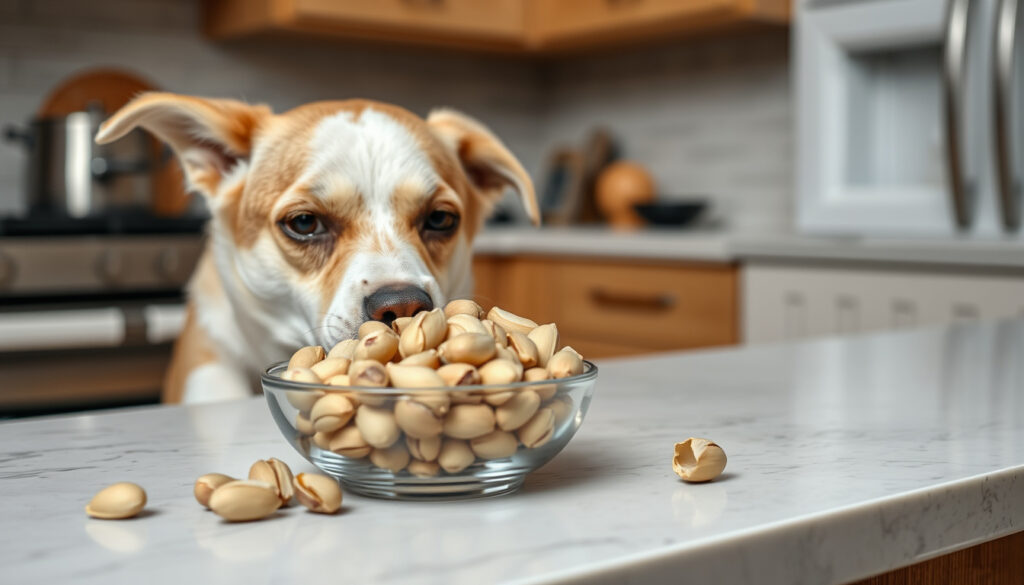
Can Dogs Have Pistachios? Safe Serving Size & Key Risks
You’ve probably been there: snacking on a handful of pistachios, only to find your dog staring at you with those hopeful eyes. The question “can dogs have pistachios?” is more common than you’d think. According to the ASPCA (national poison control authority), pistachios are not listed among the common poisonous foods for pets, unlike grapes or chocolate. But as the American Kennel Club (canine health authority) points out, these nuts are packed with fat and salt — and that’s where the trouble can start.
Pistachios toxicity for dogs: Not toxic in small amounts ·
Average fat content per ounce: 13 grams ·
Safe daily serving for small dogs: 1-2 pistachios ·
Pistachio shell hazard: Choking and intestinal blockage risk
Quick snapshot
- Pistachios are not acutely toxic to dogs (ASPCA)
- Macadamia nuts are highly toxic to dogs (American Kennel Club)
- Pistachio shells pose mechanical GI risks (MetLife Pet Insurance)
- Salted or seasoned pistachios can cause sodium ion poisoning (American Kennel Club)
- If mild symptoms appear, contact your veterinarian (AKC)
- If a shell is ingested and the dog is choking, seek emergency veterinary care immediately (MetLife)
The snapshot shows a clear pattern: pistachios sit in a gray zone — not poisonous, but far from harmless. The table below maps the risk spectrum at a glance.
| Label | Value |
|---|---|
| Toxicity Level | Low (pistachios) – severe (macadamia) |
| Daily Max (pistachio kernels) | 1–5 depending on dog size |
| Shell Danger | High – choking and blockage |
| Calories per kernel | ~4 calories |
| Fat content (per 100g) | 45g |
The implication: owners must weigh a low toxicity risk against very real mechanical and dietary hazards.
Can Dogs Eat Pistachios?
Are Pistachios Toxic to Dogs?
- No — they are not listed on the ASPCA’s toxic foods list.
- PetMD confirms that a few unsalted, shelled pistachios are generally safe for healthy dogs.
What Nutrients Do Pistachios Provide?
- One ounce (49 kernels) delivers 13 g of fat, mostly unsaturated — American Pistachio Growers.
- They also contain fiber, vitamins A, C, B6, and minerals like iron, magnesium, and potassium (Heart Of The Desert).
How Many Pistachios Can a Dog Eat a Day?
Safe Serving Size by Dog Size
- Small dogs (under 20 lb): 1–2 pistachios
- Medium dogs (20–50 lb): 2–3 pistachios
- Large dogs (over 50 lb): up to 5 pistachios
Portion limits recommended by Adopt a Pet and PetMD.
Risks of Overfeeding
- Obesity: even a few extra treats each day can add up (AKC).
- Pancreatitis: high fat intake can trigger inflammation of the pancreas, especially in susceptible breeds (PetMD).
For a 10‑lb dog, a single pistachio is roughly the caloric equivalent of a handful of kibble. Scale up proportionally — and remember that treats should never make up more than 10 % of daily calories (AKC).
The catch: even small dogs can exceed safe fat limits quickly if owners don’t measure portions.
What Happens if My Dog Ate One Pistachio?
What if the Pistachio Had a Shell?
- MetLife Pet Insurance warns that shells are a choking hazard and can cause intestinal blockages.
- If your dog swallowed a shell whole, monitor closely for signs of distress — vomiting, refusal to eat, or straining to defecate.
Signs of Gastrointestinal Distress
- Vomiting, diarrhea, loss of appetite, or lethargy (AKC).
- Most cases are mild and resolve on their own, but contact your vet if symptoms persist beyond 24 hours.
What Are the Most Toxic Nuts for Dogs?
Macadamia Nuts
- Highly toxic — weakness, tremors, hyperthermia can appear within 12 hours. (Veterinary toxicology resources, Pawlicy Advisor lists macadamia as a severe risk.)
Walnuts
- English walnuts are less toxic but high in fat; black walnuts can carry mold toxins (Rover).
Other Dangerous Nuts
- Bitter almonds (cyanide risk), moldy walnuts, and any nuts with heavy salt or seasoning.
Macadamia nuts are the real danger — as few as 6 nuts can cause poisoning in a medium‑sized dog (Pawlicy Advisor). Pistachios, by contrast, are far less risky but should still be fed with care.
The pattern: macadamia nuts demand strict avoidance, while pistachios only require moderation.
Can Dogs Have Pistachios Without Shell?
Why Shells Are Dangerous
- Shells are hard, sharp, and indigestible — choking hazard and intestinal blockage risk (MetLife).
How to Safely Prepare Pistachios
- Remove the shell completely.
- Choose unsalted, unseasoned, raw or dry‑roasted nuts.
- Break the kernel into small pieces to avoid choking.
Upsides
- Safe in very small amounts
- Provide some vitamins and healthy fats
- Novel treat alternative to processed snacks
Downsides
- High fat and salt content
- Choking and intestinal blockage from shells
- Aflatoxin risk from moldy nuts
What this means: the upsides only apply when owners enforce strict portion discipline and shell removal.
What to Do If Your Dog Eats Pistachio Shells (Step-by-Step)
- Stay calm — assess if the dog is choking (pawing at mouth, difficulty breathing).
- Remove any remaining shell pieces from reach.
- If choking: perform the Heimlich maneuver for dogs (call vet immediately).
- If not choking: monitor for 24–48 hours for vomiting, loss of appetite, or constipation (MetLife).
- Offer water and a bland diet (boiled chicken and rice) if stomach upset occurs.
- Contact your veterinarian if symptoms appear or if the shell was swallowed whole by a small dog.
The implication: a clear emergency plan reduces panic and improves outcomes for shell ingestion incidents.
What We Know
- Pistachios are not acutely toxic (ASPCA)
- Macadamia nuts are highly toxic (veterinary consensus)
- Shells pose mechanical GI risks (MetLife)
- Salted pistachios can cause sodium poisoning (AKC)
What’s Unconfirmed
- Long-term aflatoxin effects in dogs (Rover)
- Exact safe threshold for pancreatitis-prone dogs (PetMD)
“Pistachios are not toxic to dogs, but their high fat content can cause gastrointestinal upset.” — PetMD veterinary reviewer (PetMD)
“The high fat and salt content make pistachios dangerous if fed in large amounts.” — AKC expert advice (American Kennel Club)
For dog owners, the choice is clear: offer an occasional unsalted, shelled pistachio as a treat, but keep the bag out of reach. The risk of aflatoxin, salt poisoning, and intestinal blockage far outweighs any nutritional benefit when portions are exceeded.
The implication: owners who follow portion limits and shell-free preparation can treat safely; those who don’t risk serious complications.
Related reading: **Royal Canin Dog Food: Vet Review** · **How Many Calories in Watermelon? Nutrition**
Frequently asked questions
Can dogs eat pistachio ice cream?
No — ice cream often contains sugar, xylitol (in sugar‑free versions), and dairy that can upset a dog’s stomach. Stick to plain pistachio kernels.
Are pistachio shells digestible?
No, shells are indigestible and can cause choking or intestinal blockages (MetLife).
Can dogs eat pistachio butter?
Unsalted, unsweetened pistachio butter in tiny amounts is okay, but check for xylitol and other additives.
What nuts are safe for dogs?
Peanuts (unsalted), cashews (unsalted), and hazelnuts (unsalted) are generally safe in small quantities (PetMD).
Should I worry if my dog ate a pistachio shell?
Yes — monitor for choking and intestinal blockage. Contact your vet if symptoms appear (MetLife).
Can puppies eat pistachios?
Puppies have more sensitive digestive systems — it’s safer to avoid pistachios altogether.
Can dogs eat roasted pistachios?
Dry‑roasted, unsalted are fine; oil‑roasted or salted are not recommended (AKC).
More related posts
 Lucy Hale Movies and TV Shows: Complete Filmography Guide
 Texans vs Patriots Match Player Stats: 28-16 Patriots Win
 Seychelles Chikungunya Outbreak: Travelers Face High Risk
 The Women in the Yard: Story, Meaning, and Review Explained (2025)
 Isabel May Movies and TV Shows: Full Filmography List
 What to Do If Martial Law Is Declared: A U.S. Guide
 What Is a Condo? Definition, Differences, Pros and Cons
 Bangladesh National Cricket Team vs Sri Lanka Match Scorecard
