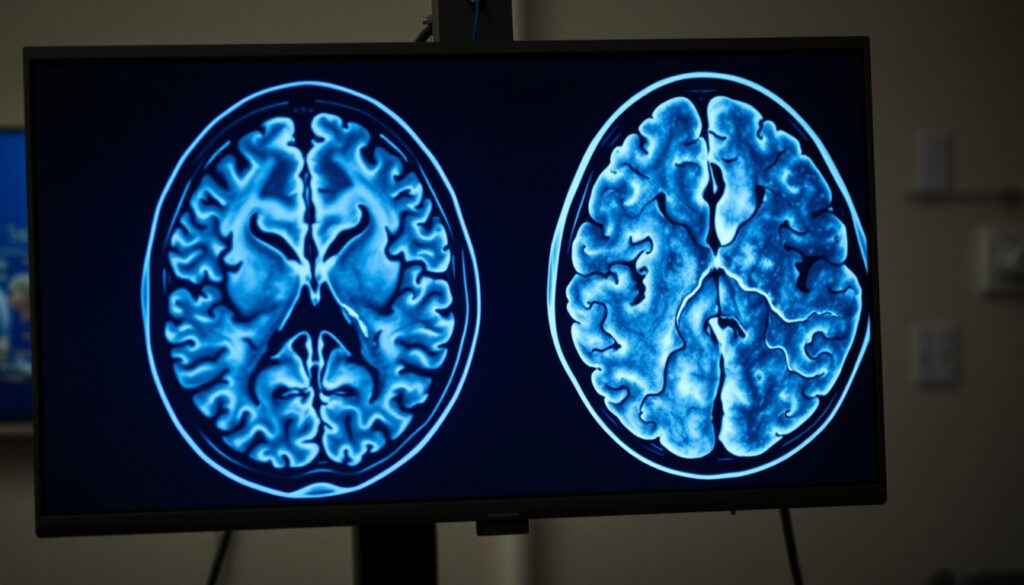
Difference Between Alzheimer’s and Dementia: Key Facts & FAQs
A friend once told me they thought dementia and Alzheimer’s were the same thing — and they’re far from alone. The truth is, while the two terms are often used interchangeably, they describe different things: dementia is a broad syndrome, and Alzheimer’s is a specific brain disease that happens to be its most common cause. Understanding the difference between Alzheimer’s and dementia can change how you approach symptoms, treatment, and care for yourself or someone you love.
Dementia umbrella term: Covers over 100 conditions ·
Alzheimer’s disease most common: 60-80% of dementia cases ·
Alzheimer’s life expectancy at 70: Typically 4-8 years after diagnosis ·
Early detection importance: Can improve quality of life and planning
Quick snapshot
- Dementia is an umbrella term for symptoms affecting memory, thinking, and behavior (Mayo Clinic).
- Alzheimer’s disease is a specific brain disease and the most common cause of dementia (Alzheimer’s Association).
- Exact life expectancy for an individual with dementia at 70 varies widely depending on type and health.
- Effectiveness of brief cognitive tests (5-word, 3-question) in early diagnosis is still being studied.
- Alzheimer’s disease progresses through 7 stages, from no impairment to very severe decline (Alzheimer’s Association).
- Symptoms worsen over years; early diagnosis allows for better planning and care. (Alzheimer’s Association)
- Ongoing research targets disease-modifying treatments for Alzheimer’s and other dementias.
- Care strategies focus on managing symptoms and supporting caregivers through all stages.
| Fact | Value |
|---|---|
| Dementia prevalence | About 55 million people worldwide (World Health Organization) |
| Alzheimer’s prevalence | Most common dementia, ~60-80% of cases (Alzheimer’s Association) |
| Age of onset | Mostly 65+ for Alzheimer’s; earlier for some types (Mayo Clinic) |
| Reversible causes | Some dementias (e.g., thyroid, vitamin deficiency) may be reversible (WebMD) |
How can you tell if it’s dementia or Alzheimer’s?
What is the difference between dementia and Alzheimer’s disease?
Dementia is not a single disease; it is a syndrome — a collection of symptoms caused by underlying conditions (Mayo Clinic). A person with dementia typically has problems in at least two cognitive domains such as memory, communication, focus, reasoning, or visual perception (WebMD). Alzheimer’s disease, by contrast, is a specific brain disease marked by plaques and tangles that damage nerve cells and block nerve signals (WebMD).
Which comes first: dementia or Alzheimer’s?
Dementia is the umbrella term, so the concept of dementia comes first — it is the category. Alzheimer’s disease is the most common cause of dementia, accounting for 60–80% of cases (Alzheimer’s Association). You can have dementia without having Alzheimer’s, but if you have Alzheimer’s, you have dementia.
Is Alzheimer’s a type of dementia?
Yes. Alzheimer’s disease is a specific type of dementia. Other common types include vascular dementia, Lewy body dementia, frontotemporal dementia, and mixed dementia (UCLA Health). Differentiating them matters because each type has a distinct cause, progression pattern, and treatment approach.
What are the 10 warning signs of dementia?
What are the early signs of dementia?
Dementia symptoms must be severe enough to interfere with daily life to meet common clinical descriptions (Alzheimer’s Association). The Alzheimer’s Association lists 10 warning signs that may indicate Alzheimer’s disease. These include memory loss that disrupts daily life, challenges in planning or solving problems, difficulty completing familiar tasks, and confusion with time or place.
What is one of the 10 warning signs of Alzheimer’s?
- Memory loss that disrupts daily life, especially forgetting recently learned information.
- Challenges in planning or solving problems, such as trouble following a familiar recipe.
- Difficulty completing familiar tasks at home, work, or leisure.
- Confusion with time or place, like losing track of dates or seasons.
- Trouble understanding visual images and spatial relationships.
- New problems with words in speaking or writing, such as trouble following a conversation.
- Misplacing things and losing the ability to retrace steps.
- Decreased or poor judgment, like giving large amounts of money to telemarketers.
- Withdrawal from work or social activities.
- Changes in mood and personality, including increased anxiety or agitation.
Normal aging can involve occasional memory lapses, but dementia is more concerning when memory loss affects routine, learning new things, or is noticed by others (Alzheimer Society of Canada).
What are the 7 stages of Alzheimer’s?
What are the stages of Alzheimer’s disease?
The seven-stage Global Deterioration Scale (GDS) describes Alzheimer’s progression from no impairment to very severe decline. Stage 1: no impairment. Stage 2: very mild cognitive decline (age-related forgetfulness). Stage 3: mild cognitive decline (noticeable by close family). Stage 4: moderate cognitive decline (mild or early-stage Alzheimer’s). Stage 5: moderately severe decline (moderate Alzheimer’s). Stage 6: severe decline (moderately severe Alzheimer’s). Stage 7: very severe decline (late-stage Alzheimer’s) (Alzheimer’s Association).
How does Alzheimer’s progress over time?
Alzheimer’s is a progressive disease — symptoms worsen over years. In early stages, memory loss is mild; in late stages, individuals lose the ability to carry on a conversation and require full-time care. Eventually, the disease may affect speaking, swallowing, and walking (Alzheimer’s Association).
The implication: understanding the stage allows caregivers to anticipate changes and prepare support accordingly.
What is the 5 word test for Alzheimer’s?
What is the 3 question test for dementia?
Brief cognitive screenings like the 5-word memory test and the 3-question (three-word recall) test are used to assess short-term memory impairment. In the 5-word test, a person is asked to remember five words and recall them after a delay. The 3-question test often involves remembering three words, then recalling them after a few minutes. These tests can flag potential cognitive problems but are not diagnostic on their own (WebMD).
How are Alzheimer’s and dementia diagnosed?
Diagnosis involves a full evaluation: medical history, physical exam, lab tests to rule out reversible causes (like thyroid dysfunction or vitamin deficiency), and brain imaging. Doctors also consider medication use, alcohol history, and previous illnesses (WebMD). A definitive diagnosis of Alzheimer’s can only be confirmed through brain autopsy, but clinical assessments are highly accurate.
What are three things not to say to someone with dementia?
How should you communicate with someone with dementia?
The Alzheimer’s Society (UK) offers guidance on communication: avoid correcting or contradicting the person, as it can cause frustration and distress. Do not ask “Do you remember?” or “Remember when…” — these put pressure on a failing memory. And never speak about the person as if they aren’t there; address them directly. Use simple, clear language, maintain eye contact, and be patient.
What not to say to somebody with dementia – Alzheimer’s Society
- “You’re wrong, that didn’t happen” – Instead, validate their feelings.
- “Remember our trip to…” – Avoid forcing recall.
- “He/she can’t understand us” – Assume understanding and include them.
A person with dementia lives in their own reality. Correcting them can cause anxiety and erode trust. The goal is connection, not accuracy.
The pattern: effective communication shifts from factual accuracy to emotional validation, which preserves dignity and reduces distress.
What is the life expectancy of a person with dementia at 70?
What factors affect dementia life expectancy?
Life expectancy varies by dementia type and individual health. For Alzheimer’s disease, average survival after diagnosis is 4 to 8 years, but it can range from 3 to 20 years (Alzheimer’s Association). At age 70, someone diagnosed with Alzheimer’s may live on average another 7 to 10 years. Vascular dementia often has a shorter life expectancy due to underlying cardiovascular disease. Early stage at diagnosis and overall health play major roles.
How does Alzheimer’s life expectancy compare to other dementias?
While Alzheimer’s typically offers a life expectancy of 4-8 years after diagnosis, vascular dementia may lead to a shorter survival because of concurrent heart disease. Lewy body dementia and frontotemporal dementia each have their own trajectories. The type of dementia matters for prognosis, which is one reason the distinction between Alzheimer’s and other dementias is so important.
Life expectancy numbers are averages — they don’t predict any one person’s course. For families, focusing on quality of life and advance care planning is more valuable than counting years.
The catch: while average figures provide a rough guide, each individual’s trajectory is unique; advance care planning should be personalized.
Comparison of dementia types
Three major dementia types, one key pattern: each has a distinct cause, early symptom, and typical progression.
| Type | Cause | Early symptoms | Key features |
|---|---|---|---|
| Alzheimer’s disease | Plaques and tangles in the brain | Difficulty remembering new information | Progressive, 7 stages, affects memory first |
| Vascular dementia | Reduced blood flow to the brain (small strokes) | Impaired judgment or planning, not necessarily memory | Stepwise decline, often with cardiovascular disease |
| Lewy body dementia | Abnormal protein deposits in neurons | Visual hallucinations, fluctuating alertness | Movement problems similar to Parkinson’s |
The pattern: Memory loss is the classic Alzheimer’s hallmark, but other dementias often start with different symptoms — which is why a thorough medical evaluation is critical.
Confirmed facts
- Dementia is an umbrella term; Alzheimer’s is a specific disease inside that term (Mayo Clinic).
- Alzheimer’s accounts for 60-80% of dementia cases (Alzheimer’s Association).
- The 7-stage model is widely used for Alzheimer’s progression (Alzheimer’s Association).
What’s unclear
- Exact life expectancy for an individual at 70 varies widely.
- Effectiveness of brief cognitive tests in early diagnosis still being studied.
- Whether all types of dementia are equally preventable through lifestyle changes remains unknown.
“Alzheimer’s is not a normal part of aging. It’s a progressive brain disease that destroys memory and thinking skills, and eventually the ability to carry out the simplest tasks.”
Alzheimer’s Association (leading advocacy and research organization)
“Dementia is not a specific disease. It’s an overall term that describes a group of symptoms associated with a decline in memory, reasoning, or other thinking skills severe enough to reduce a person’s ability to perform everyday activities.”
Mayo Clinic (U.S. academic medical center)
“When speaking with someone with dementia, avoid asking them if they remember something. Instead, try to join them in their reality and respond to the emotion behind their words.”
For millions of families facing memory loss in a loved one, the first question is often “Is it Alzheimer’s or dementia?” The answer shapes the entire journey — whether to seek a reversible cause, which specialist to see, what medications may help, and how to prepare for the years ahead. For caregivers, the distinction is not academic: it means understanding whether the person’s deficits stem from one disease with a known progression or from one of many conditions that may respond to different treatments. The catch is that only a thorough medical evaluation can provide the answer, and delaying that evaluation means losing precious time for planning and intervention.
Related reading: Chair Yoga for Seniors – Gentle Poses for Strength Flexibility · What Foods Are High in Fiber? Best Sources & Tips for More
For a detailed breakdown of how these terms differ, see our guide on the difference between Alzheimers and dementia.
Frequently asked questions
Is Alzheimer’s the same as dementia?
No. Dementia is an umbrella term for cognitive decline severe enough to interfere with daily life. Alzheimer’s disease is the most common cause of dementia, but it is one of many.
Can dementia be reversed?
Some forms of dementia can be reversible if caused by conditions like thyroid problems, vitamin deficiencies, or certain infections. Most dementias, including Alzheimer’s, are progressive and irreversible.
What is vascular dementia?
Vascular dementia is the second most common cause of dementia. It results from reduced blood flow to the brain, often due to small strokes or other blood vessel problems (UCLA Health).
How is Alzheimer’s diagnosed?
Alzheimer’s is diagnosed through clinical evaluation, medical history, cognitive tests, lab tests, and brain imaging. No single test can definitively diagnose it during life, but a comprehensive assessment is highly accurate.
What are the early signs of Alzheimer’s?
Early signs include memory loss that disrupts daily life, difficulty planning or solving problems, confusion with time or place, trouble understanding visual images, and changes in mood or personality.
How long does dementia last?
Duration varies by type. Alzheimer’s patients live on average 4 to 8 years after diagnosis, but some live up to 20 years. Vascular dementia often has a shorter course due to underlying heart disease.
Is there a cure for Alzheimer’s?
As of now, there is no cure for Alzheimer’s disease. Treatments can help manage symptoms and slow progression in some cases, but they cannot stop the disease.
More related posts
 How Many Calories in Watermelon? Nutrition & Weight Loss
 Woman in Cabin 10: Why It Got Bad Reviews & Is It Worth Watching
 Early Stage Cold Sore: Signs, Stages & Fast Relief
 The Chosen Season 4: Watch, Cast Changes & Final Season Guide
 Ritz-Carlton Half Moon Bay: Cost, Movies & the $2,000 Rule
 Phoenix Suns vs Trail Blazers Match Player Stats: Apr 14
 What Does Cottage Cheese Taste Like? Flavor, Texture & How to Enjoy It
 1 Liter to Oz: Conversion, Cups, Bottles, and Health
