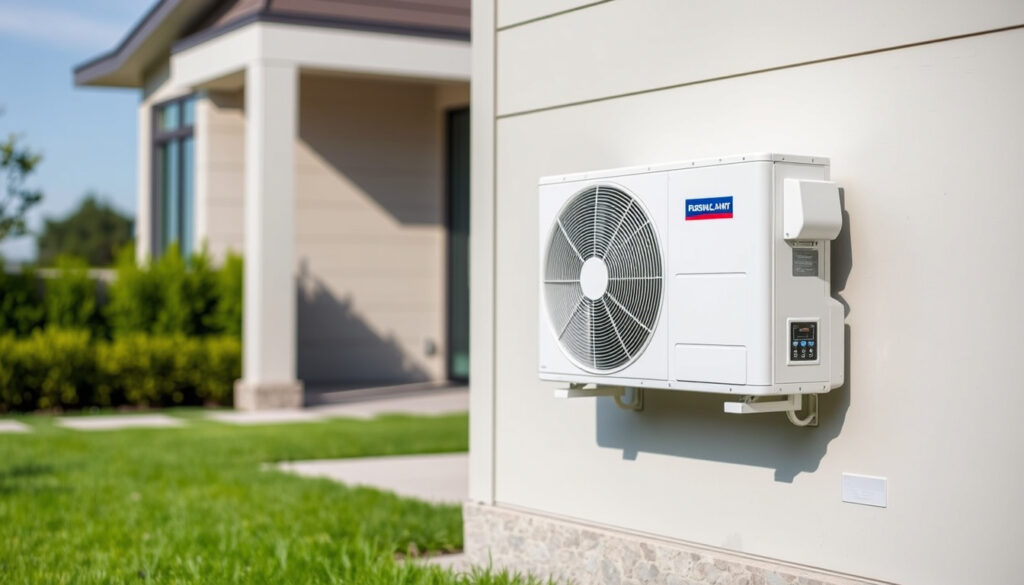
Mini Split Heat Pump: Pros, Cons, Costs & Is It Worth It
Few things spark debate in home heating and cooling quite like the mini split heat pump, as homeowners love the zoned comfort and high efficiency but balk at the upfront cost and the look of wall-mounted units. If you’re weighing a ductless system against a central heat pump, this guide lays out the real numbers—installation, monthly bills, and long-term trade-offs—so you can decide what makes sense for your home.
Average cost per month to run: $50–$150 depending on usage and climate ·
SEER efficiency range: 16–30 SEER for most models ·
Installation cost range: $3,000–$8,000 per zone ·
Heating capacity at -13°F: Up to 100% rated capacity for cold-climate models ·
Typical lifespan: 12–20 years with proper maintenance
Quick snapshot
- Ductless system for heating and cooling Endless Energy (HVAC installer)
- Outdoor compressor + indoor air handlers (Endless Energy (HVAC installer))
- Uses refrigerant to transfer heat (Endless Energy (HVAC installer))
- High energy efficiency (SEER 16–30) Palmetto (solar & home electrification)
- Zoned temperature control (Palmetto (solar & home electrification))
- Easy retrofit in homes without ducts (Palmetto (solar & home electrification))
- Higher upfront installation cost (Reliable Heating & Air (HVAC contractor))
- Requires professional installation Reliable Heating & Air (HVAC contractor)
- Aesthetic concerns with wall units (Reliable Heating & Air (HVAC contractor))
- Installation: $3,000–$8,000 per zone
- Monthly operation: $50–$150
- Lifespan: 12–20 years
Mini splits deliver 3.0 to 4.5 COP efficiency (vs. central heat pumps’ 2.0 to 4.0), but that energy gain comes with a 30% higher system cost. You pay more upfront to save on monthly bills.
The key facts below summarize what you need to know about mini split heat pump specifications and costs.
| Parameter | Value |
|---|---|
| Definition | A ductless heating and cooling system that uses an outdoor compressor and indoor air handlers. |
| Efficiency | SEER ratings from 16 to 30, HSPF from 8 to 13. |
| Installation Cost | $3,000–$8,000 per zone, depending on complexity and brand. |
| Monthly Running Cost | $50–$150 for average household use. |
| Cold Climate Performance | Many models maintain full heating capacity down to -13°F U.S. Department of Energy (federal energy authority). |
| Lifespan | 12–20 years with regular maintenance. |
What is a mini split heat pump?
A mini split heat pump is a ductless system that provides both heating and cooling. It consists of an outdoor compressor unit and one or more indoor air-handling units connected by refrigerant lines. Unlike central systems, it does not require ductwork to distribute conditioned air.
How does a mini split heat pump work?
- It uses the same refrigeration cycle as any heat pump: refrigerant absorbs heat indoors (cooling) or outdoors (heating) and transfers it via the compressor.
- Each indoor unit has its own thermostat, enabling zone-by-zone temperature control.
- A small 3-inch hole through an exterior wall carries the conduit – no ducts needed.
Is a mini split both heat and air?
Yes – all mini split heat pumps provide both heating and cooling in one unit by reversing the refrigerant flow. Some models are cooling-only (mini split AC), but the vast majority sold today are heat pumps.
For homeowners replacing separate furnace and window AC units, a mini split heat pump consolidates two appliances into one – but you pay a single premium for that convenience.
The implication: mini splits are a complete HVAC solution that eliminates the need for separate systems, though the upfront cost reflects that integration.
What are the disadvantages of a mini split heat pump?
Before committing to a ductless system, it’s important to weigh the drawbacks alongside the benefits. The biggest pain points center on cost, aesthetics, and cold-weather efficiency.
Why are mini splits not popular?
- Higher upfront cost: Ductless HVAC systems cost roughly 30% more than forced-air HVAC systems. A multi-zone installation can run $8,000–$20,000.
- Professional installation required: Unlike window units, mini splits must be installed by a qualified contractor, adding to the initial outlay.
- Aesthetic concerns: Indoor units hang on walls or ceilings, which some homeowners find unattractive.
- Loss of efficiency in extreme cold: Air-source mini splits struggle below freezing – though cold-climate models maintain full capacity down to -13°F.
What are the common complaints about mini splits?
The following table lists the issues most frequently reported by homeowners.
| Issue | Detail |
|---|---|
| Indoor unit noise | Some units produce a persistent hum or fan noise – ratings vary. |
| Filter maintenance | Filters need monthly cleaning to maintain efficiency. |
| Refrigerant leak risk | Long refrigerant lines increase leak potential; repairs can be costly. |
| Uneven coverage in open spaces | One indoor unit may not effectively heat/cool a large open-concept area. |
The pattern: mini splits trade lower energy bills for higher initial cost and more visible equipment. For homes with existing ductwork, the trade-off may not be worthwhile.
Is a mini split heat pump worth it?
For many households, the answer hinges on how much you value zoning and whether your home lacks ducts. The energy savings can offset the premium over time, especially with federal tax credits.
What are the advantages of a mini split system?
- High efficiency: SEER ratings of 16–30 mean lower monthly bills. A mini split’s coefficient of performance (COP) ranges from 3.0 to 4.5.
- Zoned control: Each room gets its own temperature, reducing waste on unoccupied spaces.
- No duct losses: Ductwork can lose 20–30% of conditioned air – mini splits eliminate that entirely.
- Easy retrofit: Ideal for additions, sunrooms, or homes without ducts.
How much does a mini split cost to run per month?
Monthly costs range from $50 to $150 for average household use, depending on local electricity rates, unit size, and thermostat habits. Running a single zone for 8 hours typically costs $1.50–$4.50. Compared to window units (which often have EER ratings below 10), a SEER 20 mini split can cut cooling costs by 40–50%.
The payback period for a mini split installation (5–10 years) only makes sense if you stay in the home long enough. Renters or short-term owners may never recoup the upfront cost.
The pattern: mini splits reward long-term homeowners with energy savings but penalize short-term owners who move before the payback period ends.
How is a mini split different than a heat pump?
This is the most common source of confusion. The short answer: a mini split is a type of heat pump – one that is ductless. A standard heat pump (often called a central heat pump) uses the same refrigeration cycle but pushes air through ducts.
What is the difference between a mini split and a central heat pump?
The table below compares the two systems across the features that matter most to homeowners.
| Feature | Mini Split Heat Pump | Central Heat Pump |
|---|---|---|
| Ductwork required | No | Yes |
| Zoning | Yes – each room independently | No – single thermostat or dampers |
| Installation cost (single zone) | $3,000–$5,000 | $4,000–$7,000 (with existing ducts) |
| Efficiency (SEER range) | 16–30 | 14–22 |
| COP range | 3.0–4.5 | 2.0–4.0 |
| Visible indoor equipment | Wall-mounted heads | None (vents only) |
| Cold-climate performance | Good down to -13°F (cold-climate models) | Moderate; often requires backup heat |
| Lifespan | 12–20 years | 15–20 years |
The trade-off: central heat pumps are invisible once installed but require ducts and offer no zone control. Mini splits sacrifice aesthetics for superior per-room efficiency.
Are all mini splits heat pumps?
No – some mini splits are cooling-only (mini split AC). However, most models sold in the U.S. today are heat pumps that can reverse cycle for heating. Always check the product specs before purchase.
How much does it cost to run a mini split for 8 hours?
Based on average U.S. electricity rates (14 cents/kWh) and a 12,000 BTU (1-ton) unit with SEER 20, running a mini split for 8 hours costs roughly $1.50–$4.50, depending on temperature setpoint and outdoor conditions.
What factors affect mini split running costs?
Several variables determine how much you’ll actually pay to operate the system.
| Factor | Impact on cost |
|---|---|
| Electricity rate | Higher rates (e.g., 20¢/kWh) double operating cost |
| SEER rating | SEER 30 uses ~45% less power than SEER 14 |
| Unit size | Oversized units short-cycle, wasting energy |
| Thermostat setting | Each degree of cooling adds ~6% to power use |
| Climate | Extreme temperatures force the compressor to work harder |
Confirmed facts
- Mini split heat pumps provide both heating and cooling.
- They are more efficient than many traditional HVAC systems.
What’s unclear
- Exact payback period varies widely by climate, electricity rates, and usage patterns.
- Long-term reliability compared to central heat pumps is not well-documented in independent studies.
- Exact energy savings depend heavily on local climate and electricity rates.
The catch: without proper sizing, even the most efficient mini split will waste energy, so a professional load calculation is critical.
“Ductless mini-split heat pumps are among the most efficient and easiest-to-install cooling options where ductwork would be intrusive or costly.”
“Mini-split systems can be a good option for adding heating and cooling to specific areas of your home without disturbing the rest of the home’s ductwork.”
U.S. Department of Energy (federal energy authority)
“After testing ductless mini split air conditioners for years, we recommend the Fujitsu Halcyon series for its reliability and efficiency.”
What does this mean for you? If your home has no ductwork and you’re tired of window units, a mini split heat pump is the most efficient upgrade you can make. Monthly savings of $30–$80 can offset the higher installation cost within 5–7 years. For homeowners with well-maintained ducts, a central heat pump remains the simpler, less disruptive bet. The choice is clear: no ducts, go mini split; have ducts, stay central.
For a deeper look at installation costs and efficiency ratings, check out our detailed guide on mini split heat pumps.
Frequently asked questions
Do mini split heat pumps work in cold climates?
Yes – cold-climate models like those from Mitsubishi and Fujitsu maintain full heating capacity down to -13°F. Below that, backup heat may be needed.
Can a mini split heat pump cool a whole house?
Possibly, with multiple indoor units (multi-zone system). A single zone can cover one room or open area. For a 2,000 sq ft home, you’ll need 4–5 zones.
How long do mini split heat pumps last?
With regular maintenance – monthly filter cleaning and annual professional checkups – 12–20 years is typical.
Are mini split heat pumps noisy?
Indoor units produce 20–40 dB (whisper-quiet). Outdoor compressors are similar to central systems. Some budget models may be louder.
Do mini splits require a lot of maintenance?
Filters need cleaning every 30 days. Coils should be inspected annually. Overall, less maintenance than ducted systems but more than window units.
Can I install a mini split heat pump myself?
Not recommended. Installation requires electrical work, refrigerant handling, and precise line-set connections – errors can lead to leaks or voided warranties.
What size mini split heat pump do I need?
Typically 12,000–24,000 BTUs per zone. A proper load calculation by a contractor is essential to avoid oversizing.
Related reading: HVAC Repair Near Me: Costs, Common Problems & DIY Tips · Crawl Space Repair Near Me: Costs, Signs & Fixes 2026
More related posts
 Interview with the Vampire: Movie, Serie , Controver y & Sea on 3
 Gone with the Wind: Controversy, Quotes, Box Office & More
 Avatar: Fire and Ash 2025 showtimes and Ireland tickets
 What is a Parallelogram? Definition, Properties, Types
 Baltimore Ravens vs Pittsburgh Steelers Stats – Head-to-Head Record, Recent Scores
 Royal Caribbean Ships by Size: Full Fleet Ranking
 How to Make Chili – Stovetop and Slow Cooker Recipe
 How Old Is Lionel Richie – Age, Birthday, Height & Bio
