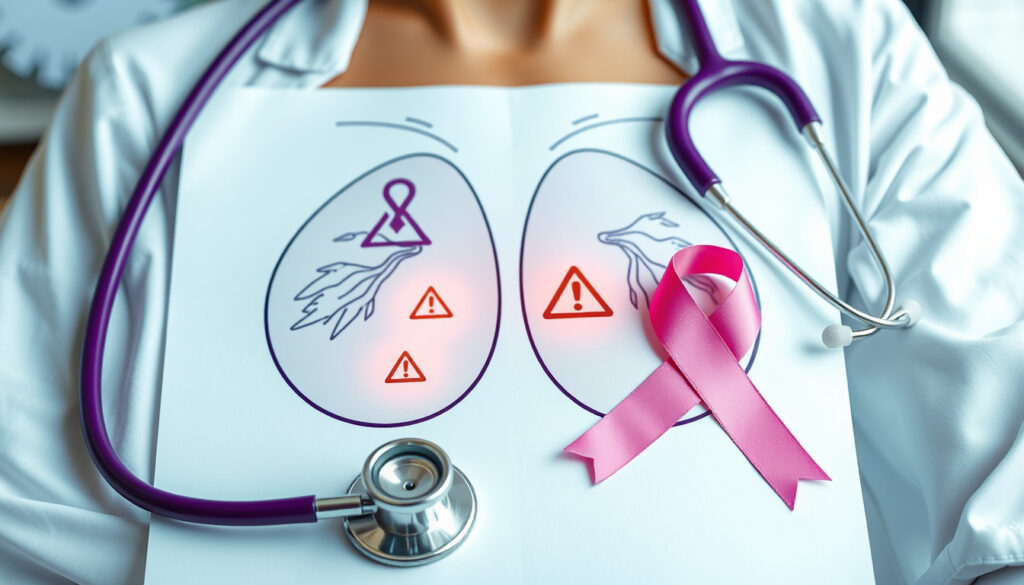
Symptoms of Breast Cancer: Early Warning Signs
You know the statistic—1 in 8 women will face breast cancer—but what does that actually mean for your body? The hardest part is that many early signs have nothing to do with a lump, and that’s where most people get caught off guard.
Lifetime risk for women: 1 in 8 ·
Percentage of breast lumps that are benign: About 90% ·
5-year survival rate for localized stage: 99% ·
New breast cancer cases per year in the US (approx.): 300,000
Quick snapshot
- New lump or mass in breast or armpit (CDC (U.S. public health agency))
- Skin dimpling or puckering (Mayo Clinic (leading academic medical center))
- Nipple retraction or discharge (Cancer Research UK (UK cancer research charity))
- Swelling or redness (CDC)
- Most cases are painless (National Breast Cancer Foundation (patient advocacy organization))
- Persistent localized pain can be a sign (Ohio State Cancer Center (NCI-designated cancer center))
- Breast tenderness unrelated to cycle (Mayo Clinic)
- Inverted nipple (City of Hope / Cancer Treatment Centers of America (national cancer network))
- Persistent itching or rash (CDC)
- Sudden breast enlargement without lump (Ohio State Cancer Center)
- Bloody nipple discharge (Cancer Research UK)
- Visual inspection in mirror (National Breast Cancer Foundation)
- Three-finger palpation circles (National Cancer Institute (U.S. government cancer research agency))
- Monthly check, same time each month (American Cancer Society (nonprofit health organization))
Four key facts that frame the conversation, one pattern: early detection dramatically improves outcomes, but symptoms are more varied than most people realize.
| Label | Value |
|---|---|
| Most common symptom | A new lump or mass (CDC) |
| Percentage of breast cancers not detected as a lump | Approximately 10–15% (Ohio State Cancer Center) |
| Peak age for diagnosis | 55–64 years (American Cancer Society) |
| Survival benefit of early detection | 99% 5-year survival when detected early (National Cancer Institute) |
What are the warning signs of breast cancer?
What is usually the first sign of breast cancer?
A new lump or mass is the most common first symptom. According to the CDC (U.S. public health agency), a lump in the breast or underarm is the symptom most people notice first. But the Ohio State Cancer Center (NCI-designated cancer center) reports that most breast cancers do not start with a noticeable lump, which makes other early changes critical to recognize.
How does breast cancer start showing?
- Thickening or swelling of part of the breast (CDC)
- Skin dimpling that resembles an orange peel (Mayo Clinic)
- Nipple retraction or nipple discharge that is bloody or clear (Cancer Research UK)
- Redness, scaling, or flaky skin on the nipple or breast (CDC)
What are the 7 warning signs?
Health authorities commonly highlight seven warning signs: a new lump, skin dimpling, nipple retraction, nipple discharge, redness or scaling, swelling of part of the breast, and persistent pain in the breast or nipple area. See the Quick Snapshot above for a detailed list with sources.
The implication: early recognition of non-lump symptoms can catch cases that would otherwise be missed.
The Ohio State Cancer Center estimates that 10–15% of breast cancers are never felt as a lump. Relying on a lump alone means missing those cases entirely.
How does the body feel when you have breast cancer?
What kind of breast pain indicates cancer?
Most breast cancers are painless. The National Breast Cancer Foundation (patient advocacy organization) notes that a hard, irregular, non-painful mass is more likely to be cancer, but lumps can also be soft, round, tender, or painful. Persistent, localized pain that does not go away may be a sign, but breast tenderness related to the menstrual cycle is usually not cancer (Mayo Clinic).
Can breast cancer be painless?
Yes. Pain is not a common early symptom. Many women report no discomfort at all when they first notice a change. That’s why relying on pain as a signal can delay diagnosis.
What this means: pain is an unreliable early indicator; other changes demand attention.
What are surprising symptoms of breast cancer?
Inverted nipple
A nipple that turns inward or looks flattened can be an early sign. City of Hope / Cancer Treatment Centers of America (national cancer network) lists nipple inversion among the non-lump symptoms that women often overlook.
Persistent itching or rash
Redness, scaly skin, or persistent itching of the nipple can be Paget’s disease of the breast, a rare form of breast cancer. The CDC includes “redness or flaky skin in the nipple area” as a warning sign.
Swelling of the entire breast
Ohio State Cancer Center notes that sudden enlargement of one breast can be a symptom, especially when it occurs without a lump. Inflammatory breast cancer often presents with swelling and redness but no discrete mass.
Nipple discharge that is clear, bloody, or yellow
Any nipple discharge unrelated to breastfeeding, especially if it’s bloody or clear, requires medical evaluation. Cancer Research UK advises urgent GP contact for persistent discharge.
The pattern: these surprising signs are easily overlooked but just as critical as a lump.
What is the 2 week rule for breast cancer?
What is the three finger test for breast cancer?
The two-week rule is a guideline used in the UK and other healthcare systems: if you have a breast symptom that persists for two weeks, you should urgently see a doctor for referral to a specialist (NHS (UK public health service)). The three-finger test is a self-exam technique where you use the pads of your three middle fingers to feel for changes in small circles, covering the entire breast and armpit.
How to perform a breast self-exam
- Stand in front of a mirror with arms at your sides, then raised overhead, looking for changes in size, shape, or skin texture (National Breast Cancer Foundation)
- Use the pads of your three middle fingers in small circular motions, covering the entire breast from collarbone to bra line, and armpit (National Cancer Institute)
- Repeat this same time each month, ideally a few days after your period ends (American Cancer Society (nonprofit health organization))
- Also do this while lying down—breast tissue spreads evenly, making it easier to feel changes (National Breast Cancer Foundation)
Self-exams are not a substitute for mammograms. The National Cancer Institute is clear: breast awareness helps detect changes, but screening mammography remains the gold standard for early detection.
The takeaway: self-exams complement screening, but they do not replace it.
What are the symptoms of breast cancer in men?
When should you see a doctor for breast changes?
Men can get breast cancer too, though it’s rare (about 1% of all cases). Symptoms in men include a lump, nipple discharge, or skin changes on the chest (CDC). The Mayo Clinic advises men to see a doctor if they notice any persistent breast change, especially a lump or skin dimpling.
Are all breast lumps cancerous?
No. About 90% of breast lumps are benign (American Cancer Society). But the only way to know is through clinical evaluation. The USPSTF recommends mammography for women aged 40–74, but any new lump—whether in a man or woman—should be examined.
The pattern: vigilance applies to everyone with breast tissue, regardless of gender.
Confirmed facts
- A painless lump is the most common early sign (National Breast Cancer Foundation).
- Nipple discharge that is bloody or clear requires medical evaluation (Cancer Research UK).
- Inflammatory breast cancer often presents with redness and swelling without a lump (Ohio State Cancer Center).
- Monthly self-exams help you become familiar with your normal breast tissue (American Cancer Society).
What’s unclear
- Why some breast cancers cause pain while most do not is not fully understood.
- The exact cause of most breast cancer is unknown, though risk factors are identified.
- The role of breast self-exam in reducing breast cancer mortality is debated.
- The optimal frequency of self-exam for early detection is not established.
“A lump is the most common symptom, but other changes—like dimpling, nipple inversion, or a persistent sore—should not be ignored. Any new change lasting more than two weeks needs an appointment.”
Cancer Research UK (UK cancer research charity)
“Persistent pain or skin changes can be early clues. Don’t wait for a lump—listen to what your breast is telling you.”
Ohio State Cancer Center (NCI-designated cancer center)
“Self-exams can help women become familiar with their normal breast tissue, so they can more easily identify changes.”
American Cancer Society (nonprofit health organization)
The evidence is clear: breast cancer doesn’t always come as a lump, and waiting for one can cost you time. Survival rates hit 99% when caught early, yet many people don’t realize that a suddenly inverted nipple, a patch of itchy skin, or a breast that feels different when you raise your arm can be early warnings. For anyone with breast tissue—women and men alike—the choice is simple: learn your normal, check monthly, and act on any persistent change. Your next mammogram is not a substitute for your own eyes and hands.
Recognizing the signs of breast cancer can significantly improve early detection and treatment outcomes.
Frequently asked questions
Can breast cancer cause back pain?
Yes, but usually only in advanced or metastatic breast cancer that has spread to the bones. Back pain alone is not an early symptom. If you have persistent back pain along with other breast changes, mention it to your doctor.
Does breast cancer always feel like a lump?
No. Many breast cancers present with skin changes, nipple discharge, or breast swelling without a discrete lump. The Ohio State Cancer Center reports that most breast cancers do not start with a noticeable lump.
How often should I perform a breast self-exam?
Monthly is recommended. The ideal time is a few days after your period ends when breasts are least tender. Consistency helps you recognize what’s normal for you.
What should I do if I find a lump?
Don’t panic. Most lumps are benign. Schedule an appointment with your healthcare provider within two weeks. They will examine you and may order imaging or a biopsy.
Is breast cancer painful in early stages?
Rarely. The National Breast Cancer Foundation notes that most early breast cancers are painless. Persistent localized pain that does not go away should be investigated.
What are the symptoms of inflammatory breast cancer?
Inflammatory breast cancer often appears as redness, swelling, and warmth of the breast without a lump. The skin may look thick and pitted like an orange peel. This type requires urgent medical attention.
More related posts
 Spellbound (2024 Film) – Plot, Cast, Netflix Release, Reviews
 Can Dogs Have Potatoes? Safe Preparation, Risks & Feeding Tips
 Papa Murphy’s Near Me: Find Locations, Hours & Menu
 Average Car Insurance Cost in Ireland: 2025 Guide & Rates
 Season 3 The Summer I Turned Pretty: Episodes, Release & Spoilers
 Borderlands 4 Shift Codes – Active List and Redemption Guide
 16 Billion Passwords Breach: What Happened & How to Stay Safe
 My Big Fat Fabulous Life: Health, Cast & Cancellation Updates
