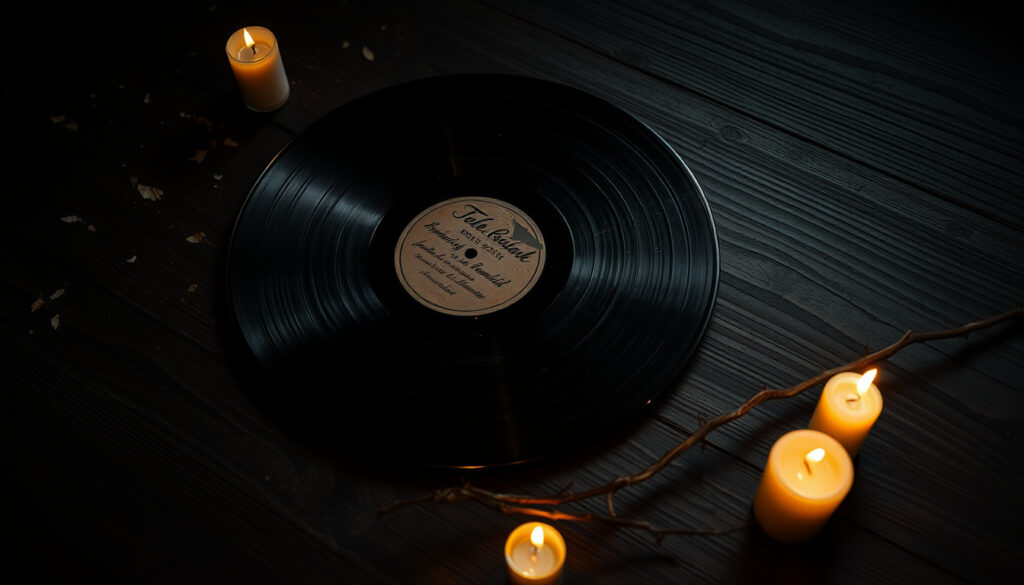
Dawn of the Black Hearts: Mayhem’s Most Controversial Bootleg
There are album covers that make you look twice, and then there’s one that forces you to look away. The bootleg Dawn of the Black Hearts by Norwegian black metal band Mayhem doesn’t just shock — it documents a real death.
Recording date: February 28, 1990 · Bootleg release: 1995 · Venue: Sarpsborg, Norway · Cover photo subject: Dead (Pelle Ohlin) · Number of tracks: 7 · Label: Bootleg (no official label)
Quick snapshot
- The bootleg is a live recording from Sarpsborg on February 28, 1990 (Wikipedia (open encyclopedia))
- The cover shows Dead’s body after his suicide on April 8, 1991 (Wikipedia (open encyclopedia))
- Photograph taken by guitarist Euronymous (Wikipedia (open encyclopedia))
- Whether Dead explicitly consented to the photo being used for a release (Admind Agency (music journalism))
- Exact identity of the bootleg label and initial release date (Admind Agency (music journalism))
- Total number of copies pressed (YouTube (fan documentary))
- Whether the 2017 official reissue was authorized by all surviving members (Wikipedia) (Admind Agency (music journalism))
- 1990: Live recording made in Sarpsborg (Admind Agency)
- 1991: Dead’s suicide (Wikipedia)
- 1995: Bootleg surfaces with corpse photo (Admind Agency)
- Streaming platforms continue to refuse hosting (Admind Agency)
- A 2017 official reissue with alternate cover exists (Wikipedia)
Five facts that define this release, one pattern: every detail circles back to the same macabre center.
| Label | Value |
|---|---|
| Full title | The Dawn of the Black Hearts (Live in Sarpsborg, Norway 28/2, 1990) |
| Photographer | Euronymous (Øystein Aarseth) (Wikipedia) |
| Dead’s age at death | 22 years old (Wikipedia) |
| Bootleg origin | Unofficial release by unknown label (Admind Agency) |
| Known pressing | Limited vinyl and CD runs (YouTube) |
Why is Dawn of the Black Hearts not on Spotify?
The answer lies in a collision of legal gray zones and content policies that no streaming service wants to test.
Official streaming status
- Spotify and similar platforms do not carry the bootleg because it was never officially released or licensed by Mayhem or any record label (Admind Agency)
- A later official live album, Live in Sarpsborg (2017), uses a different cover and is available on some streaming services (Wikipedia)
Bootleg nature and copyright
- The recording was made without any commercial intent and circulated through underground tape trading networks before being pressed as a bootleg in 1995 (Admind Agency)
- No clear copyright holder exists to authorize digital distribution, making it impossible for streaming platforms to legally host the audio (Wikipedia)
Graphic cover controversy
- The cover image — a real photograph of Dead’s corpse with a shotgun wound — violates every major platform’s policy on graphic violence (Wikipedia)
- Even if the audio were cleared, the thumbnail would be automatically blocked or age-restricted, effectively barring the album from mainstream streaming visibility (Admind Agency)
For collectors, the bootleg’s absence from Spotify means it remains a physical-only artifact traded in high-value underground channels. Bargain hunters willing to pay hundreds of dollars for an original pressing (YouTube) may find themselves competing with customs officials who reportedly destroyed many copies shipped outside South America.
The implication: The bootleg’s absence from streaming ensures its status as a collector-only artifact.
What disorder did the lead singer of Mayhem have?
Pelle “Dead” Ohlin’s mental health has been the subject of speculation for decades. Available evidence points to a specific, severe condition.
Dead’s mental health
- Bandmates and biographers describe Dead as deeply introverted and preoccupied with death (Wikipedia)
- He reportedly wore clothes with “I am Dead” scrawled on them and buried his stage clothes before shows (Admind Agency)
Body dysmorphia and Cotard delusion
- Dead experienced body dysmorphic disorder, according to several interviews with those who knew him (Admind Agency)
- Some mental health experts and fans have suggested he may have suffered from Cotard delusion — the belief that one is already dead — though no formal diagnosis exists (Wikipedia)
Impact on his death
- On April 8, 1991, Dead died by suicide in the house shared with bandmates (Wikipedia)
- His note reportedly read “Excuse all the blood” — though the exact wording is disputed in fan circles (YouTube)
While Cotard delusion provides a compelling narrative, no clinical records have ever been made public. The diagnosis remains a retrospective guess by outsiders, not a documented medical fact.
The pattern: The lack of clinical documentation leaves the diagnosis in the realm of informed speculation.
Was Pelle Ohlin a nice person?
Testimonies from bandmates and friends paint a complex portrait of an artist who was gentle offstage but consumed by internal darkness.
Testimonies from bandmates
- Euronymous described Dead as “not a bad person” but “very special” and difficult to reach (Admind Agency)
- Former bassist Necrobutcher recalled Dead as quiet and polite, though prone to long silences (Wikipedia)
His behavior on and off stage
- On stage Dead cut himself and threw raw meat into the audience, but offstage he was known to be shy and avoid confrontation (Admind Agency)
- Friends said he was deeply committed to his art and rarely discussed personal feelings (Wikipedia)
Legacy among fans
- Despite his macabre stage persona, many who met him describe a kind but troubled young man (YouTube)
The catch: His public persona contrasted sharply with his private gentleness, creating a lasting paradox.
Why is Mayhem hated?
Mayhem’s infamy extends beyond the bootleg cover. The band is a lightning rod for criticism on multiple fronts.
Church burnings and violence
- In the early 1990s, members of the Norwegian black metal scene, including people connected to Mayhem, were implicated in a series of church arsons (Wikipedia)
- While Mayhem’s direct involvement varies by account, the band’s association with that era fuels public condemnation (Admind Agency)
Euronymous murder case
- In 1993, Mayhem guitarist Euronymous was murdered by former bandmate Varg Vikernes (Wikipedia)
- The crime, combined with the church burnings, cemented the band’s reputation as a symbol of extreme violence (Admind Agency)
Graphic imagery and Satanism
- The Dawn of the Black Hearts cover alone is enough to draw widespread disgust and ethical criticism (Wikipedia)
- Mayhem’s early promotion of Satanic and anti-Christian themes alienates religious audiences and many casual listeners (Admind Agency)
The implication: The band’s infamy is built on real violence, not just musical shock value.
Are Mayhem a satanic band?
The answer depends on whether you look at lyrics, public statements, or actual beliefs of current and former members.
Lyrical themes
- Mayhem’s early lyrics openly reference Satan, anti-Christianity, and death worship (Wikipedia)
- The track “Freezing Moon” and others contain explicit invocations of darkness and evil (Admind Agency)
Members’ personal beliefs
- Euronymous claimed to be a Satanist and ran a record store called Helvete that promoted Satanic ideology (Wikipedia)
- Later members, including vocalist Attila Csihar, have distanced themselves from organized Satanism, describing it as a stage aesthetic (Admind Agency)
Media perception vs reality
- The mainstream media often labels Mayhem as a Satanic band, but the current lineup rejects that label and focuses on musical aggression (YouTube)
The pattern: The band’s Satanic label is more about past identity than current practice.
Timeline: Key events in the Dawn of the Black Hearts story
- February 28, 1990: Mayhem performs live in Sarpsborg, Norway – the recording that later becomes the bootleg (Admind Agency)
- April 8, 1991: Pelle “Dead” Ohlin dies by suicide at age 22 (Wikipedia)
- 1995: The Dawn of the Black Hearts bootleg surfaces, using Dead’s autopsy photo as cover (Admind Agency)
- 1990s–2000s: Bootleg spreads through underground trading; outrage over the cover grows (Wikipedia)
- 2010s: Streaming platforms refuse to host the album due to graphic content (Admind Agency)
Clarity check: What’s confirmed and what’s unclear
Confirmed facts
- Dead’s suicide and the photo taken by Euronymous (Wikipedia)
- The bootleg was recorded live in Sarpsborg on Feb 28, 1990 (Admind Agency)
- The cover shows Dead’s body with a shotgun wound (Wikipedia)
What’s unclear
- Whether Dead explicitly consented to having his corpse photographed for release (Admind Agency)
- Exact identity of the bootleg label and initial release date (Admind Agency)
- Total number of copies pressed (YouTube)
- Whether Euronymous had Dead’s permission to take the photo (Wikipedia)
Voices from the scene
“Dead was a very special person. He was not a bad person, but he had his own world. I took the picture because it was artistic — it was real.”
— Euronymous, speaking in a 1990s interview (cited by Admind Agency)
“When I saw the cover I felt sick. The bootleg should never have been made. It’s a sad part of our history, and we wish it would just disappear.”
— Attila Csihar, later Mayhem vocalist, reflecting on the bootleg (via Admind Agency)
“He was a quiet kid who carried a tremendous weight. Anyone who spent time with him could see he was struggling, but he never let anyone help.”
— A close friend of Dead, speaking in a documentary (YouTube)
For a band that built its legend on transgression, Dawn of the Black Hearts remains the one artifact that even the members themselves seem uneasy about. The bootleg is not a celebration — it’s a document of a tragedy, and its circulation continues to raise ethical questions for fans and collectors alike. For the underground metal community, the choice is clear: treat this as a historical artifact or a piece of exploitative memorabilia, but never both at once.
Explore more: How to Read Guitar Tabs: A Beginner’s Guide to Tablature and Gone with the Wind: Controversy, Quotes, Box Office & More.
thegallery.gr, reddit.com, last.fm, reddit.com, youtube.com, facebook.com, youtube.com, facebook.com, metal-archives.com
Frequently asked questions
What does ‘Dawn of the Black Hearts’ mean?
The title is a phrase taken from the lyrics of the Mayhem song “Freezing Moon,” written by Dead. It refers to the emergence of darkness and death, consistent with the band’s early Satanic and misanthropic themes (Wikipedia).
How many copies of the bootleg exist?
No exact number is known. The bootleg was pressed in limited runs on vinyl and CD, and reportedly many copies were destroyed by customs when shipped outside South America (YouTube). Surviving copies can trade for several hundred dollars on the secondary market.
Did Mayhem authorize the release?
No. The bootleg was an unofficial release by an unknown label, likely via Colombian correspondent Bull Metal. Mayhem has never officially endorsed or authorized the cover image (Admind Agency).
Can you buy Dawn of the Black Hearts legally?
Because it is a bootleg with no copyright holder, buying it is technically purchasing an unauthorized recording. It is not available from official retailers or streaming services. The 2017 official reissue Live in Sarpsborg is the legal alternative (Wikipedia).
What songs are on the album?
The bootleg contains seven live tracks including “Deathcrush,” “Freezing Moon,” “Carnage,” “Necrolust,” “Chainsaw Gutsfuck,” “Pure Fucking Armageddon,” and “Funeral Fog” (Wikipedia).
Who is the band pictured on the cover?
The cover shows the body of vocalist Pelle “Dead” Ohlin after his suicide. The photograph was taken by guitarist Euronymous (Wikipedia). No other band members appear in the image.
Why is the cover considered one of the most controversial in music history?
Because it is a real, unaltered photograph of a dead body. Unlike many album covers that simulate violence, this one documents an actual death, which raises profound ethical questions about exploitation, artistic freedom, and respect for the deceased (Admind Agency).
Did Dead know the photo would be used?
It is unclear whether Dead ever consented to the photograph being taken or used. Euronymous claimed artistic intent, but no evidence of Dead’s permission exists. The question remains one of the most painful and debated aspects of the bootleg (Wikipedia).
More related posts
 Can Dogs Eat Nuts – Safe Vs Toxic Varieties Guide
 Roman Numerals That Multiply to 35: Rule 9 Guide
 Joker: Folie à Deux: Flop or Hit? Reviews & Box Office
 Long Sleeve Mini Dresses – Style, Fit & Shopping Advice
 Retail Stores Closing September 2025: Full List & Reasons
 Game of the Year: Winners, Nominees & Controversies 2026
 How to Get Rid of Drain Flies Permanently
 Where Do Bed Bugs Come From – Sources Myths Prevention
