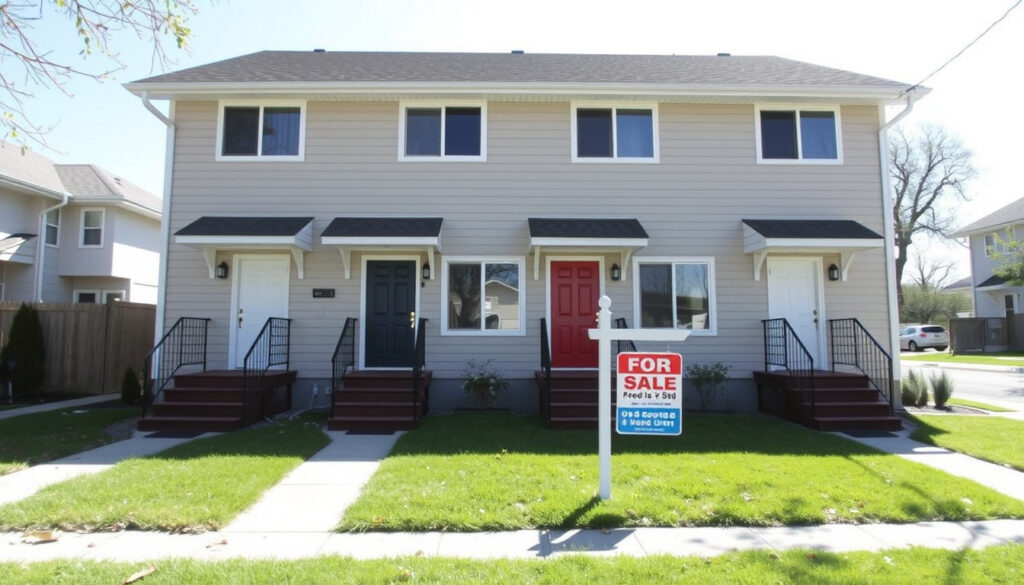
Duplex for Sale Near Me: Buyer’s Guide & Trends 2026
You’re scrolling through property listings, and you spot it: a “duplex” with three bedrooms, two floors, and a price tag that makes you blink twice. In Ireland’s tight housing market, that sticker shock is the reason more buyers are swapping the search for a house for a duplex instead.
Average duplex price in Dublin (2025): €400,000 ·
Average duplex price in Cork (2025): €300,000 ·
Typical energy rating (BER): A3 to B3 ·
Typical floor area: 100–120 m² ·
Share of new builds classified as duplexes (Dublin): ~15%
Quick snapshot
- Duplexes are typically cheaper than equivalent 3-bed houses (The Irish Times)
- Help to Buy (HTB) scheme applies to new duplexes (Revenue)
- Management fees are typically required (The Irish Times)
- Whether duplexes appreciate at the same rate as houses over 10+ years
- Exact trajectory of property prices in Ireland in 2026
- Future management fee inflation rates
- 2020–2021: Pandemic spike in demand for space; duplexes become popular alternative to apartments
- 2024: Stabilization. Duplexes remain a key entry point for first-time buyers
- Forecast shows slight price moderation 2025–2026, but ongoing supply gap supports values
- New developments in Dublin and Cork offer more duplex inventory
Five key facts about Irish duplexes, one pattern: they offer house-like space at apartment-level prices, but bring trade-offs in fees and appreciation.
| Metric | Value |
|---|---|
| Avg Duplex Price Dublin | €400,000 |
| Avg Duplex Price Cork | €300,000 |
| Typical BER Rating | A3 / B3 |
| Average Size | 110 m² |
| Typical Bedrooms | 2 or 3 |
| Annual Management Fees | €600–€2,000 |
| Share of New Builds (Dublin) | ~15% |
What Is a Duplex in Ireland?
Irish planning guidance defines a duplex unit as a building divided into two residential units that may be stacked on separate floors, with separate entrances in some definitions (An Bord Pleanála report ABP-320049-24). For most buyers, a duplex feels like a two-storey house but sits inside a multi-unit development — a hybrid between an apartment and a detached home.
How Is a Duplex Different from an Apartment?
- A duplex spans two floors inside the building; an apartment typically occupies one level.
- Duplexes usually have their own front door at ground level, whereas apartments share a hallway.
- In Ireland, duplexes are often classified as apartments for planning purposes but have house-like features (RTÉ).
What Are the Typical Layouts for Irish Duplexes?
Most new duplexes in Ireland have BER ratings between A2 and B3 (SEAI). Layouts commonly feature a combined kitchen/dining/living room downstairs and two or three bedrooms upstairs, plus a bathroom. Floor areas range from 90 to 120 m².
A duplex looks like a house from the inside, but it exists in a planning category that often exempts it from the same developer levy as apartments. That loophole is why you see so many duplexes in new Irish build estates.
The implication: Buyers who want a house-like layout without the premium of a detached home will find duplexes a natural fit — but they must accept the multi-unit surroundings.
Is a Duplex Better Than a House?
The Irish Times reported that duplexes can be cheaper than houses on a per-square-foot basis and may offer the living space of a three-bed semi-detached home (The Irish Times). That saving can be as much as €100,000 less than a house with the same number of bedrooms in the same area.
Single-Family House vs. Duplex: Which Is the Smarter Investment?
Three differences, one pattern: duplexes demand less upfront cash but cost more in ongoing fees, while houses offer stronger long-term appreciation.
| Factor | Duplex | Single-Family House |
|---|---|---|
| Purchase price (Dublin, 3-bed) | €400,000 | €500,000+ |
| Annual management fees | €600–€2,000 | €0 |
| Garden space | Balcony/patio | Private garden |
| Noise transfer risk | Yes (between floors) | Minimal |
| Capital appreciation (10-yr average) | Moderate | Stronger historically |
First-Time Buyer’s Dilemma: Duplex or House?
Wicklow County Council consultation material described own-door duplexes as an attractive affordable alternative to traditional houses for owner-occupiers (Wicklow County Council consultation). The construction costs for own-door duplexes are on a par with house construction costs, but the overall purchase price is lower because duplexes occupy smaller land footprints.
The trade-off: First-time buyers can enter the market sooner with a duplex, but they sacrifice the privacy and outdoor space of a detached house. For a young professional or couple, that trade-off often makes sense.
Why Are Duplexes Cheaper?
Duplexes have lower land costs and smaller footprints. Developers build duplexes to maximize unit density on available land (Wicklow County Council consultation). That density means each unit carries a smaller share of the land price, which gets passed to the buyer.
Is a Duplex a Good Investment?
- Lower purchase price means lower mortgage and deposit requirements.
- Rental demand for duplexes is strong, especially near commuter towns.
- Management fees can offset some of the purchase price savings — typical annual fees range from €600 to €2,000 (The Irish Times).
Understanding Duplex Value for Money
The Irish Times reported that some duplexes in Ireland can cost as much as €100,000 less than a house with the same number of bedrooms in the same area (The Irish Times). That’s a 20% saving on a €500,000 house — enough to cover a deposit on a second property or to invest in renovations.
That €100,000 saving comes with a recurring cost: management fees. Over 10 years, €1,200/year in fees adds up to €12,000 — eating into the headline saving. Buyers should factor in the net present value of those fees.
The pattern: Duplexes are cheaper because they are more land-efficient, but the saving is partially offset by ongoing fees. For buyers who can live with that, the value proposition is real.
What Are the Disadvantages of Owning a Duplex?
Duplex living comes with trade-offs that many buyers discover only after moving in. The most common issues are management fees, noise, and limited outdoor space.
Common Maintenance Issues in Duplexes
The Irish Times reported that many older duplex blocks use electric storage heating and may lack mains gas, limiting utility options (The Irish Times). That can mean higher running costs in winter compared to a gas-heated house.
- Noise transfer between floors is a downside of duplex living, although insulation can help mitigate it (The Irish Times).
- Management fees apply for common areas — these can rise over time.
- Limited outdoor space (garden vs. balcony/patio).
What Are the Downsides of Duplex Living?
Wicklow County Council consultation material noted that some buyers still prefer houses because they want gardens (Wicklow County Council consultation). Own-door apartment/duplex housing suits buyers who want an own-door home but no garden.
Upsides
- Lower purchase price
- Good rental potential
- Newer builds with high BER ratings
Downsides
- Management fees required
- Less garden space
- Potential noise from neighbours
The trade-off: If you value a private garden and hate maintenance fees, a duplex will frustrate. If you want a lower entry price and don’t mind shared spaces, duplexes are a solid choice.
Are Irish House Prices Dropping?
CSO data shows house prices stabilized in 2024 after two years of rapid growth (CSO Housing Statistics). The SCSI Annual Property Review indicates that demand continues to outstrip supply, especially in Dublin and Cork (SCSI).
Will Property Prices Fall in 2026?
Forecasts for 2026 suggest moderate growth with potential dips. The ESRI Housing Reports project that supply constraints will keep prices from falling sharply (ESRI). However, a combination of ECB rate decisions and new housing completions could slow the market.
What Is the Hardest Month to Sell a House?
January and August are typically slower months for sales, according to IPAV market insight (IPAV). If you’re buying, those months may offer more negotiating room.
The implication: For duplex buyers, the window of opportunity is now — while prices are stable and before any potential 2026 dip attracts more competition.
How to Find the Best Duplex for Sale Near Me
Finding a duplex near you requires a slightly different approach than searching for a house. Use filters on Daft.ie or Myhome.ie for “duplex” type. Check the BER certificate, management fee schedule, and parking arrangement.
Searching for a Duplex in Dublin, Cork, and Beyond
Local estate agents often have duplex expertise. The IPAV market insight suggests that agents in major cities see more duplex listings than rural agents (IPAV).
- Set up alerts on Daft.ie for “duplex” within your radius.
- Visit new developments — many have duplex phases not yet on the open market.
- Ask your agent about off-market duplexes in gated communities.
What to Look for When Viewing a Duplex
gov.ie guidance on buying after sale agreed recommends a building condition survey before signing contracts (gov.ie). Also obtain a lender letter of offer before signing the contract of sale.
Citizens Information stated that booking deposits when buying through an estate agent are usually between 1% and 3% of the purchase price (Citizens Information Board). First-time buyers can generally borrow up to 90% of the purchase price of a principal dwelling home where the property value is €220,000 or less.
The duplex you view today may have a management fee that increases by 5% annually. Ask for the last three years of fee statements and any sinking fund contributions.
The pattern: A good duplex search is about due diligence — checking the management company’s track record is as important as the property itself.
Timeline: Duplex Market in Ireland
- 2020–2021: Pandemic spike in demand for space; duplexes become popular alternative to apartments.
- 2022–2023: ECB interest rate hikes slow demand but prices remain high due to supply shortage.
- 2024: Stabilization. Duplexes remain a key entry point for first-time buyers.
- 2025–2026: Forecast shows slight price moderation, but ongoing supply gap supports values.
The timeline signal: Duplexes have moved from niche to mainstream in just five years, driven by affordability pressure and developer preference for higher-density builds.
Clarity: What We Know and What We Don’t
Confirmed facts
- Duplexes are cheaper than equivalent 3-bed houses (The Irish Times)
- Help to Buy (HTB) scheme applies to new duplexes (Revenue)
- Management fees are typically required (The Irish Times)
What’s unclear
- Whether duplexes appreciate at the same rate as houses over 10+ years
- Exact trajectory of property prices in Ireland in 2026
- Future management fee inflation rates
Expert Perspectives
“Duplexes offer a genuine pathway for first-time buyers who are priced out of the detached house market. The lower entry point is a lifeline, but buyers must be aware of the ongoing fees.”
SCSI President, commenting on housing supply and duplex demand
“In Dublin and Cork, a well-located duplex can be easier to rent than a comparable house, because tenants often prefer the modern finishes and lower heating costs.”
IPAV Agent, advising on duplex buying in Dublin/Cork
“The average price of a duplex in Dublin is around €400,000, which is roughly €100,000 less than a similar three-bed house in the same postal district.”
CSO Statistician, citing average house and duplex price data
“New duplexes are eligible for the Help to Buy scheme, which can give first-time buyers a rebate of up to 10% of the purchase price.”
Revenue Spokesperson, on Help to Buy scheme eligibility for duplexes
Summary: Your Duplex Decision
For the Irish first-time buyer staring at a €500,000 house they can’t afford, a duplex is the workaround that works. It offers house-like space at a price that doesn’t break the bank, but it comes with fees and trade-offs. The market is stable now, and the window is open. For the buyer who values a garden and hates fees, the choice is clear: keep saving for a house. But for the buyer who wants to stop renting and start building equity, a duplex for sale near you is the smarter play — or the missed opportunity.
For a comprehensive breakdown of Irish regulations and pricing, check out this detailed duplex buying guide tailored to local buyers.
Frequently asked questions
Can you get a mortgage for a duplex in Ireland?
Yes, most lenders treat duplexes like apartments for mortgage purposes. First-time buyers can borrow up to 90% LTV on properties €220,000 or less (Citizens Information Board).
Are duplexes freehold or leasehold?
Most new duplexes are sold as freehold with a management company for common areas. Some older developments may be leasehold — always check the title deeds.
Do duplexes have higher management fees than apartments?
Management fees for duplexes are typically similar to apartments, ranging from €600 to €2,000 per year (The Irish Times).
Is a duplex easier to rent than a house?
Yes, duplexes in city centres and commuter towns tend to rent quickly due to demand from professionals and couples who want more space than an apartment.
What is the difference between a duplex and a townhouse?
A townhouse is a single unit in a row of attached houses, often with a garden front and back. A duplex is a two-storey unit within a multi-unit building, typically with shared access and land.
How long does it take to sell a duplex compared to a house?
Duplexes often sell faster than houses because they attract a larger pool of first-time buyers and investors. However, the time on market varies by location and price.
Are new duplexes eligible for the Help to Buy scheme?
Yes, new duplexes are eligible for the Help to Buy (HTB) scheme, which provides a rebate of up to 10% of the purchase price (Revenue).
Related reading
More related posts
 The Haunting in Connecticut – True Story Behind the Movie
 What Is Monk Fruit – Benefits, Uses and Safety Facts
 Best Colognes for Men 2026: Top Picks from Experts
 How to Get Rid of Drain Flies Permanently
 When Is Charlie Kirk’s Funeral – Memorial Date and Details Confirmed
 House of the Dragon Family Tree – Targaryen Lineage Explained
 Average Car Insurance Cost in Ireland: 2025 Guide & Rates
 My Big Fat Fabulous Life: Health, Cast & Cancellation Updates
